
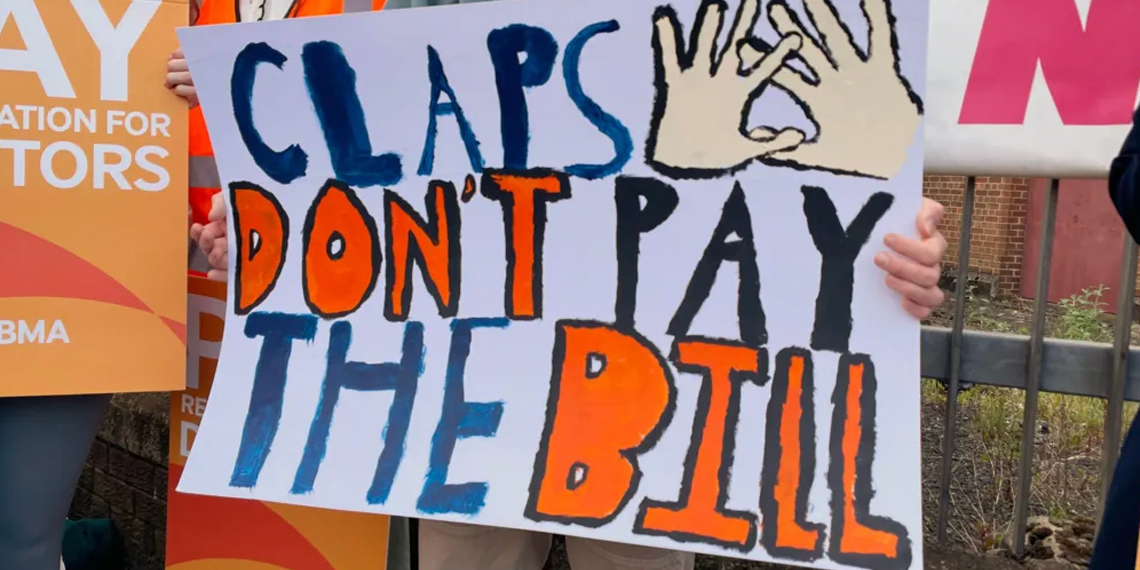
Specialist doctors in Northern Ireland have announced plans to join industrial action later this month after rejecting a 3.5% pay rise, intensifying an ongoing dispute over medical staff pay and working conditions.
Specialist, Associate Specialist and Specialty (SAS) doctors will stage two separate 24-hour strikes on 25 June and 29 June, following similar action backed by consultant and resident doctors earlier this week.
The British Medical Association (BMA) said emergency care services will continue to operate during the walkouts, but the strikes are expected to place additional pressure on the health service.
According to the BMA, 90% of SAS doctors who took part in the ballot voted in favour of industrial action, reflecting growing frustration over pay levels and long-term wage erosion.
Dr Leanne Davison, chair of the BMA’s Northern Ireland SAS Committee, said doctors had not taken the decision lightly.
“This clear ‘yes’ vote shows that we have reached a tipping point. SAS doctors are prepared to stand up for the future of the medical workforce and the care we provide to patients.”
She argued that doctors have experienced years of declining real-term pay.
“The result reflects the strength of feeling across our workforce about pay erosion,” she said, adding that salaries have been “steadily eroded” since 2008.
Davison also stressed that further industrial action could still be avoided.
“Strike action is still avoidable. It is now up to the government to come forward with a meaningful and credible offer that makes real progress towards pay restoration.”
Northern Ireland’s Health Minister, Mike Nesbitt, warned that the strikes could undermine recent efforts to reduce lengthy waiting lists across the health service.
He said there was currently no funding available within his department’s budget to improve the pay offer beyond 3.5%.
“So, calling on me to act fails to recognise this is an executive decision,” Nesbitt said.
Meanwhile, Dr Clodagh Corrigan, deputy chair of the SAS committee, claimed doctors in Northern Ireland are now among the lowest-paid hospital doctors across the UK and Ireland.
“It’s reached a stage where we are now losing our medical staff, we’re haemorrhaging our talent and we can’t provide service,” she said.
“If we continue in this way, we won’t have a service to provide.”
The latest strike announcement adds to growing concerns over staffing shortages, recruitment challenges and workforce retention across Northern Ireland’s healthcare system.