
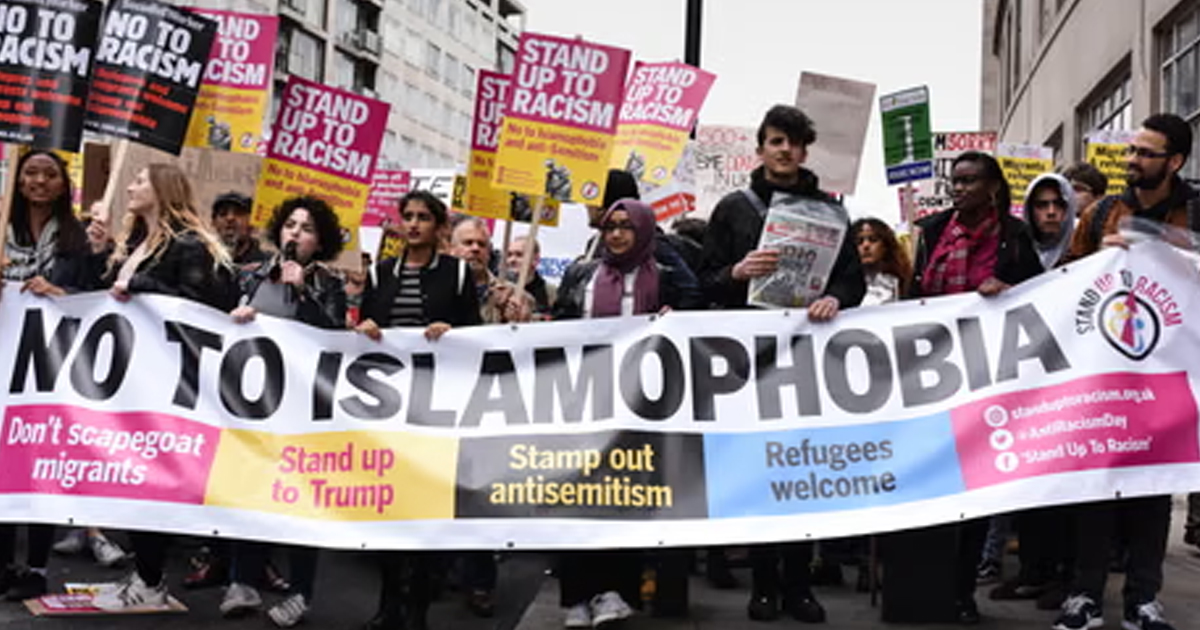
More than half of Muslims in Britain experienced prejudice because of their faith over the past year, according to a new report, although a large majority still believe the UK remains a good place to live as a Muslim.
The report, Understanding Anti-Muslim Hostility: Foundations for Action, was published by British Future and the British Muslim Trust. It is based on surveys of more than 1,000 Muslims across Britain and a further 2,000 adults from the general public.
Researchers found that 56% of British Muslims experienced some form of religious prejudice during the past 12 months. More than a quarter (27%) reported facing hostility in public places such as streets or public transport, while 19% encountered prejudice in workplaces or public institutions, including the NHS. A further 34% said they had experienced anti-Muslim hostility on social media.
The findings also suggest that many Muslims feel less secure following last year’s Unite the Kingdom protests. Around 61% of Muslim respondents said they felt more concerned about their personal safety after the demonstrations, rising to 69% among Muslim women.
The report highlights concerns about public attitudes towards Muslims, revealing that around one in six people hold strongly negative views. Some 17% of respondents said they “strongly agree” that “The growth in the Muslim population poses a foundational threat to UK culture”.
Meanwhile, 19% disagreed with the statement that “Muslims born in this country are as British as white, non-Muslim people born here”, although a majority of the public supported that view.
Despite these concerns, the research also points to strong levels of confidence among British Muslims about their place in society. Nearly seven in ten Muslims (69%) agreed that Muslims born in Britain are just as British as their non-Muslim counterparts, while 73% said the UK is a good place to be Muslim.
Three-quarters of Muslims and 57% of the wider public also agreed that “It is possible for Muslims and non-Muslims to live well together in towns and cities around the UK”.
The survey found broad public support for tackling anti-Muslim prejudice. Nearly two-thirds of respondents (63%) acknowledged that prejudice against Muslims exists, while 61% backed government action to address the issue.
Commenting on the findings, Sunder Katwala, Director of British Future, said: “It’s deeply worrying that one in six people hold sweeping, hostile prejudices towards Muslims in Britain.”
He added: “It cannot be OK for a section of our society to be subjected to such hostility because of their religion. This shouldn’t be a matter for polarised political debate, but a basic norm that we can all agree on.”
Akeela Ahmed, Chief Executive of the British Muslim Trust, described the findings as alarming.
“More than half of British Muslims experienced prejudice in the last year, and most are more fearful for their safety since the Unite the Kingdom Rally,” she said.
“That number is shocking, and it is utterly intolerable for anyone who cares about community cohesion and public order.”
Ahmed added that Muslim communities were not seeking special treatment but simply wanted to live freely without fear of discrimination.
The report also revealed a significant generational divide in attitudes towards Muslims. People aged over 65 were far more likely to view Muslims’ contribution to British society negatively, while younger adults aged 18 to 24 generally held much more positive views.
Researchers also found that regular contact with Muslims was linked to more favourable attitudes, suggesting that interaction between communities plays an important role in reducing prejudice.
When asked about treatment by different institutions, Muslim respondents expressed the least confidence in the media. More than half felt Muslims were treated worse than the wider public by news organisations and broadcasters.
The report is the first in a wider research project examining public attitudes towards Muslims in Britain. Future studies will explore the causes of anti-Muslim hostility and develop recommendations aimed at improving community relations and reducing discrimination.