
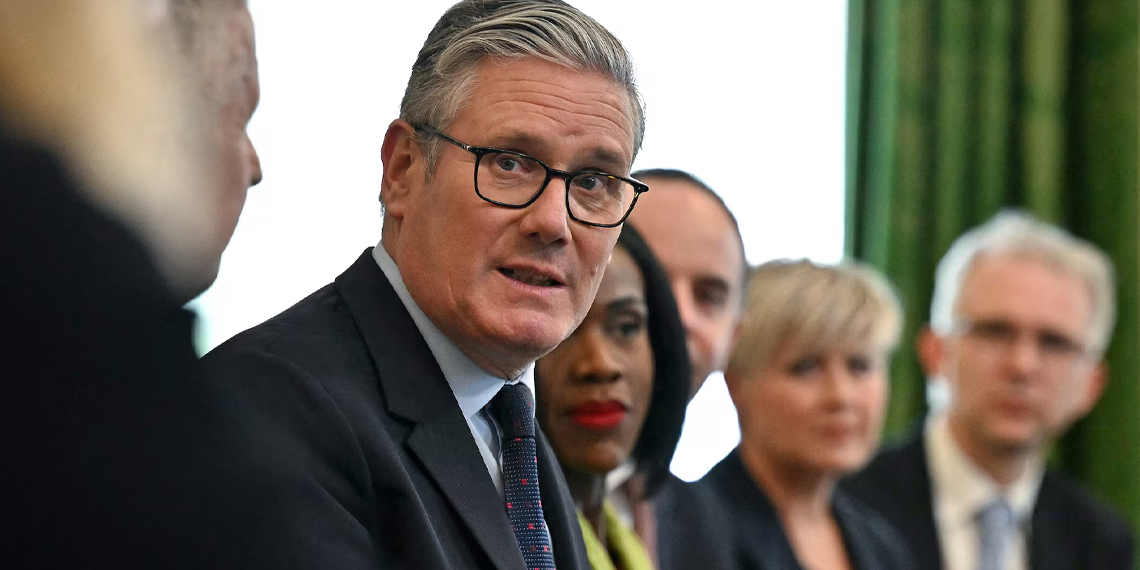
Britain is set to introduce one of the most far-reaching child online safety measures in the world after Prime Minister Keir Starmer announced plans to prohibit children under the age of 16 from accessing social media platforms. The proposed legislation, which the government intends to introduce before the end of the year, forms a central pillar of a broader strategy to strengthen online safety, combat cyberbullying, and address growing concerns surrounding the impact of digital platforms on young people’s mental health.
The announcement marks a significant shift in the United Kingdom’s approach to regulating social media use among minors and places the country at the forefront of international efforts to create safer digital environments for children and teenagers.
UK Government Targets Child Online Safety
Speaking from Downing Street, Starmer described the proposed ban as a necessary intervention designed to protect children from the harmful effects increasingly associated with social media use. According to the Prime Minister, evidence gathered through government consultations and public engagement exercises demonstrated widespread concern among parents, educators, and child welfare advocates regarding the role digital platforms play in shaping young people’s wellbeing.
Starmer argued that social media has contributed to rising levels of anxiety, cyberbullying, online abuse, and social pressure among children. While acknowledging that digital platforms can offer educational and social benefits, he emphasized that the government must prioritize child safety over commercial interests.
The Prime Minister stressed that the decision was not taken lightly and followed extensive consultation with experts, campaign groups, families, and technology stakeholders. Nevertheless, he maintained that the scale of the challenge required decisive action.
Social Media Ban To Extend Across Major Platforms
Under the proposed framework, children under the age of 16 would be prohibited from accessing major social media networks operating in the UK. The restrictions are expected to apply to leading global platforms and could require companies to implement stricter age-verification measures to prevent underage access.
In addition to social networking sites, the government is reportedly considering further controls on digital products frequently used by children, including gaming applications and online communication services.
Among the measures under discussion are restrictions that would prevent minors from engaging in conversations with unknown individuals through gaming platforms and online messaging systems. Policymakers believe such safeguards could reduce exposure to online predators, harassment, and inappropriate content.
Protecting Children’s Mental Health
A central argument underpinning the government’s proposal is the growing body of research linking excessive social media use to mental health challenges among young people.
Officials have highlighted concerns that algorithm-driven content feeds can contribute to anxiety, depression, body image issues, social isolation, and diminished self-esteem. Cyberbullying, exposure to harmful content, and constant online comparison have also emerged as significant issues affecting children and adolescents.
Starmer argued that government intervention is necessary to create a healthier digital environment that allows children to develop without the pressures often associated with social media engagement.
According to the Prime Minister, the proposed reforms are intended to provide children with greater security, more time for real-world development, and stronger opportunities for healthy social interaction away from digital platforms.
Learning From International Examples
The UK’s proposal follows similar initiatives introduced elsewhere, most notably in Australia, which became one of the first countries to establish stringent restrictions on social media access for minors.
However, British officials believe the UK framework could go further by incorporating additional safeguards beyond social networking platforms alone. The government has examined international experiences and consulted extensively on how best to implement restrictions while minimizing unintended consequences.
Addressing concerns that technologically savvy teenagers may attempt to circumvent the rules, Starmer argued that enforcement challenges should not deter policymakers from establishing clear societal standards.
He compared the proposed restrictions to existing age-based regulations governing alcohol and other age-restricted activities, emphasizing that laws serve not only as enforcement mechanisms but also as expressions of national values and expectations.
Strong Public Support For New Measures
Government officials have pointed to substantial public backing for stricter online safety regulations. Responses gathered during the government’s consultation on children’s digital experiences indicated overwhelming support among parents for stronger protections.
According to government data, approximately nine out of ten parents who participated in the consultation supported establishing a minimum age threshold of 16 for social media access.
Supporters of the proposal argue that parents have increasingly struggled to manage children’s online exposure amid rapidly evolving technology platforms and sophisticated engagement algorithms designed to maximize screen time.
Child safety advocates have also welcomed the announcement, viewing it as a long-awaited response to mounting evidence regarding the risks facing young internet users.
Technology Sector Faces Regulatory Challenge
The proposed legislation is expected to trigger significant debate within the technology industry. Major social media companies may be required to overhaul existing age-verification systems and introduce additional safeguards to comply with UK regulations.
Technology firms have historically argued that online platforms provide important opportunities for communication, education, and creativity. Critics of age-based restrictions also question whether bans can be effectively enforced in practice.
Despite the anticipated resistance, Starmer rejected suggestions that stronger regulation would undermine Britain’s ambitions to become a global leader in technology and artificial intelligence.
He maintained that innovation and child protection are not mutually exclusive goals and argued that technological advancement must be accompanied by responsible safeguards.
Legislation Expected By Next Spring
The government aims to introduce legislation before the end of the year, with implementation expected as early as next spring. If enacted, the reforms would represent one of the most significant overhauls of online child protection policy in recent UK history.
As lawmakers prepare to debate the proposals, the announcement signals a broader shift toward greater accountability for digital platforms and a stronger emphasis on protecting children in an increasingly connected world.
With concerns over online safety continuing to rise, the forthcoming legislation is likely to become a defining component of the government’s digital policy agenda and a landmark development in the global conversation surrounding children’s wellbeing in the digital age.