
A lengthy planning investigation into the use of a Worcester asylum hotel has concluded with city officials determining that no planning laws were breached, bringing an end to months of political controversy and public debate surrounding the accommodation of asylum seekers at the Fownes Hotel.
Worcester City Council confirmed that its planning enforcement team found no evidence of an unlawful “material change of use” at the hotel, meaning the property could continue operating without requiring additional planning permission.
The investigation was launched after complaints from Reform UK councillor Alan Amos, who argued that the use of the hotel to house asylum seekers represented a substantial operational change that should have triggered a formal planning application process.
However, council officials ultimately concluded that the hotel’s current use remained within existing planning classifications and did not breach development control regulations.
Council Concludes No Planning Rules Were Violated
In an official statement, Worcester City Council said the investigation had now formally closed.
“We can confirm that a planning enforcement investigation into the use of the Fownes Hotel has now been concluded,” a council spokesperson said.
“It found that a material change of use has not occurred, and as such there is no breach of planning control.”
The council further explained that investigators found no significant structural or operational alterations to the building itself and no evidence of substantial negative impact on the surrounding area.
According to the findings, there had been no physical redevelopment of the property and no sufficient planning basis to justify enforcement action.
The decision effectively allows the hotel to continue accommodating asylum seekers under current arrangements.
Political Dispute Intensifies Over Hotel Use
The issue has become politically contentious within Worcester, reflecting wider national tensions surrounding asylum accommodation policies across the UK.
Alan Amos criticised the council’s decision, describing the outcome as “entirely predictable” and questioning the length of time taken to complete the inquiry.
Amos argued that the investigation process, which lasted approximately 10 months, raised concerns about transparency and urgency.
“This is a subjective decision from a planning officer, and was entirely predictable given that this so-called enquiry has taken an extraordinary 10 months,” he said.
He also claimed that the hotel’s use had contributed to heightened social tensions within the area.
According to Amos, security arrangements implemented at the hotel demonstrated that the building was no longer functioning as a conventional hospitality venue.
“The main entrance is locked and there is a security presence which has never happened at this hotel before, and is not part of any definition of a hotel,” he added.
His remarks reflect broader criticism voiced by some political groups and residents regarding the use of hotels to accommodate asylum seekers under government contracts.
Protests Highlight Wider National Debate
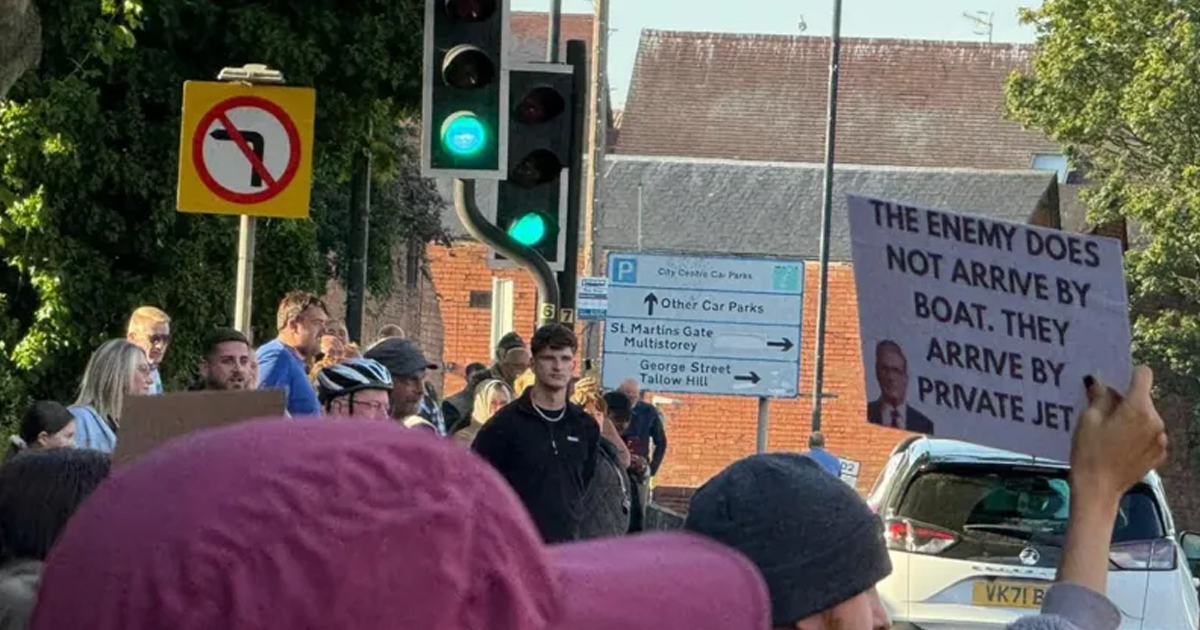
The controversy surrounding the Fownes Hotel previously drew national attention following protests outside the property last year.
Demonstrations against the housing of asylum seekers at the hotel attracted both anti-immigration protesters and counter-demonstrators supporting refugee accommodation efforts.
Police arrested three individuals during the unrest as tensions escalated around the site.
The protests mirrored similar demonstrations seen in other parts of the UK where hotels have been temporarily repurposed to house asylum seekers amid ongoing pressures on Britain’s asylum processing system.
The use of hotels has become increasingly controversial nationally due to rising accommodation costs, local opposition campaigns and wider debates surrounding immigration policy and border management.
Liberal Democrats Defend Investigation Outcome
Members of Worcester’s Liberal Democrat administration defended the council’s findings and criticised the resources spent pursuing what they described as an unfounded planning complaint.
Jessie Jagger argued that the evidence simply did not support claims of a planning breach.
“Unfortunately, Reform sought to present this as a straightforward planning issue when the evidence simply did not support that claim,” she said.
“The investigation found no planning breach, no significant increase in anti-social behaviour, and no significant impact on the local area.”
Jagger also suggested that the investigation consumed considerable public resources despite ultimately producing no enforcement outcome.
Her comments reflect growing frustration among some local authorities over politically charged disputes surrounding asylum accommodation, particularly when councils possess limited authority over national asylum housing decisions managed by central government contractors.
Growing Pressure on UK Asylum Accommodation System
The Worcester case emerges amid continuing strain on the UK’s asylum accommodation infrastructure.
Successive increases in asylum applications, combined with significant backlogs in processing claims, have forced the government to rely heavily on temporary hotel accommodation across multiple regions of the country.
The policy has generated mounting financial costs as well as political controversy.
Critics argue that the use of hotels places pressure on local services and communities, while supporters maintain that temporary accommodation remains necessary until asylum claims can be processed more efficiently.
The issue has become a major point of debate within British politics, particularly following increased crossings through the English Channel and growing public concern over migration management.
At the same time, legal and planning disputes involving asylum accommodation sites have become increasingly common as local authorities face pressure from residents, campaigners and political groups demanding greater oversight.
Planning Law and “Material Change of Use”
Central to the Worcester investigation was the legal concept of “material change of use” under UK planning law.
Planning permission is generally required when a property undergoes a significant operational transformation that alters its planning classification or substantially affects neighbouring properties and communities.
However, determining whether such a change has occurred can involve subjective legal interpretation based on factors including operational activity, physical alterations, traffic impact, security arrangements and community effect.
In this case, council planners determined that the hotel’s primary function as temporary accommodation remained sufficiently consistent with its approved use.
The absence of structural redevelopment or demonstrable large-scale impact appears to have played a key role in the council’s conclusion.
Continuing National Debate Over Immigration Policy
Although the planning investigation has concluded, the broader political debate surrounding asylum accommodation is unlikely to subside.
Immigration and asylum policy continue to dominate political discourse across the UK, with disagreements intensifying between parties over border control, refugee obligations, local authority responsibilities and public spending.
For councils such as Worcester City Council, disputes over asylum accommodation increasingly place local governance at the centre of national political tensions.
Meanwhile, uncertainty remains over how long hotels such as the Fownes Hotel may continue to be used within the government’s asylum accommodation network as ministers seek longer-term alternatives to temporary hotel housing.
As debate continues nationally, the Worcester case highlights the growing intersection between immigration policy, local planning law and community relations across the United Kingdom.
