
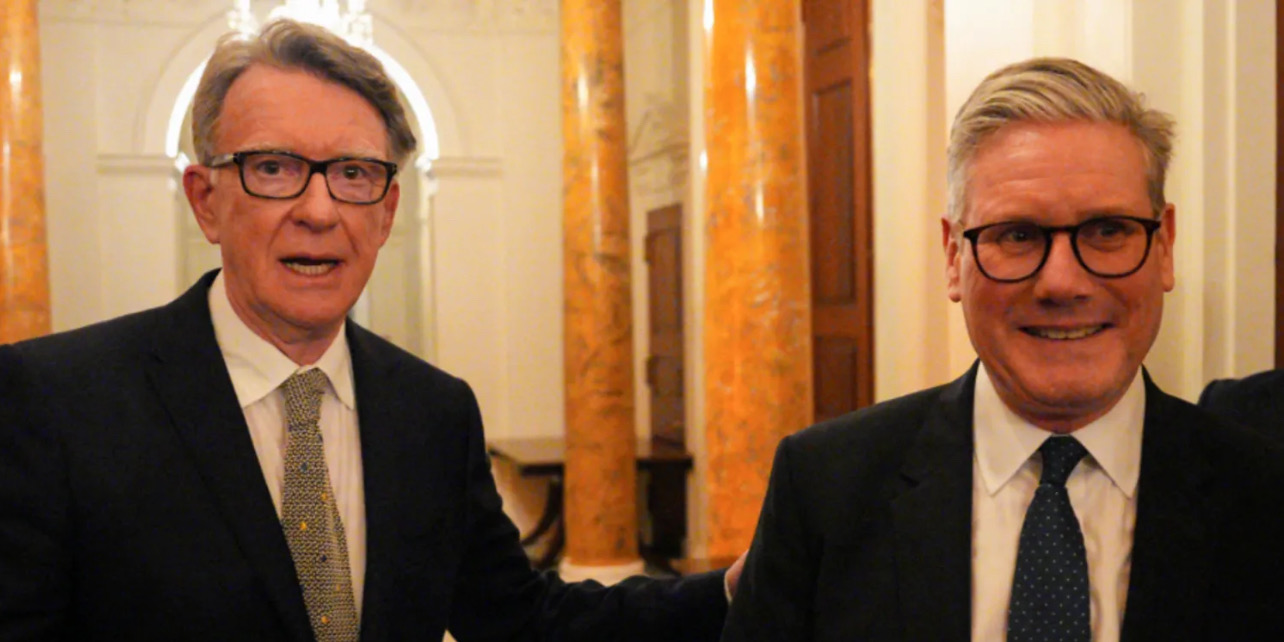
MPs have approved the release of Lord Mandelson ambassador documents relating to his appointment as the UK’s ambassador to the United States, following a dramatic Commons revolt that forced the government into a late climbdown after initially seeking to withhold sensitive material.
Prime Minister Keir Starmer told MPs he supported publication of the files but insisted documents that could endanger national security or diplomatic relations would not be released. That position collapsed after fierce opposition from Labour backbenchers, culminating in a cross-party agreement to involve Parliament directly in scrutinising what can and cannot be made public.
Labour backlash forces government reversal
Pressure mounted during a tense Commons session as senior Labour figures, including former deputy leader Angela Rayner, publicly challenged the government’s handling of the issue. Their intervention forced ministers to abandon plans for unilateral redactions and instead refer disputed material to the Intelligence and Security Committee of Parliament (ISC).
The concession marked a significant retreat for Downing Street and exposed divisions within Labour over transparency, accountability, and the vetting of senior political appointments.
Appointment under scrutiny after police investigation
The vote comes amid a growing scandal surrounding Peter Mandelson, who was dismissed as UK ambassador last year following renewed revelations about his relationship with the disgraced financier Jeffrey Epstein.
The controversy intensified after the Metropolitan Police launched a criminal investigation into allegations that Mandelson shared sensitive government information with Epstein while serving as a cabinet minister in the Labour government under Gordon Brown.
Starmer admits he was misled
At Prime Minister’s Questions, Starmer made an extraordinary admission, telling the Commons he had been misled about the “sheer depth and extent” of Mandelson’s relationship with Epstein.
“He lied repeatedly to my team when asked about his relationship with Epstein before and during his tenure as ambassador,” Starmer said. “I regret appointing him. If I knew then what I know now, he would never have been anywhere near government.”
Starmer also acknowledged that he was aware Mandelson had maintained contact with Epstein after his 2008 conviction for soliciting prostitution from a minor, a disclosure that further inflamed Labour MPs who questioned why the appointment went ahead in 2024.
The BBC understands Mandelson’s position is that he answered all vetting questions accurately and disputes the prime minister’s account.
Commons anger and cross-party intervention
Opposition leader Kemi Badenoch accused the government of attempting to “sabotage” the disclosure process, arguing that claims of national security were being used to protect political reputations rather than the public interest.
“This is not about national security,” she told MPs. “This is about his job security.”
A heated debate followed, with MPs eventually backing proposals to release the documents without forcing a formal division. However, anger flared again when it emerged that some material could still be withheld.
In a decisive moment, Rayner and several Labour backbenchers demanded that any disputed documents be reviewed by the ISC, a move that ministers ultimately accepted.
Police warning over document release
Cabinet Office minister Chris Ward said the government wanted to publish the documents as quickly as possible but confirmed discussions were ongoing with the Metropolitan Police.
In a statement released during the Commons debate, the Met said it had advised the government not to publish “certain documents” at this stage, warning that doing so could undermine its investigation.
Labour MPs openly question Starmer’s judgment
The scale of Labour unrest appeared to catch Downing Street off guard. Several MPs publicly criticised the prime minister’s handling of the affair, with Rebecca Long-Bailey describing Mandelson’s appointment as a “catastrophic misjudgement”.
“There are huge questions to be answered,” she said, adding that Starmer must now explain how he intends to restore public trust.
Veteran Labour MP Barry Gardiner accused the prime minister of trying to “duck and hide behind process”, saying backbenchers were visibly uncomfortable during the Commons session.
When asked whether Starmer should consider stepping down, Gardiner said the prime minister needed to “think very hard about what is in the country’s best interest”.
Conservative pressure and political fallout
The Conservative motion was designed to maximise pressure on Labour by forcing disclosure of a broad range of communications, including emails and messages involving Mandelson, senior ministers, and Starmer’s chief of staff Morgan McSweeney.
Badenoch said the opposition had “forced Number 10 to come clean”, adding: “This appointment was not an accident. It was a choice.”
Allegations at the centre of the investigation
Documents released by the US Department of Justice appear to show Mandelson forwarded Epstein an internal Downing Street memo in 2009 discussing potential government asset sales during the financial crisis.
Other emails suggest Mandelson gave Epstein advance notice of a €500bn EU bailout package in 2010. Separate financial records refer to three payments of $25,000 made to Mandelson in 2003 and 2004, which he says he has no recollection of receiving.
Mandelson has denied any criminal wrongdoing, insisting he did not act for financial gain and apologising for continuing his friendship with Epstein after the financier’s conviction, saying he believed “lies he told me and so many others”.
End of Mandelson’s public roles
Over the weekend, Mandelson resigned his Labour Party membership and stepped down from the House of Lords. The government has confirmed it is drafting legislation to formally remove his peerage and revoke his lifetime membership of the Privy Council.
The unfolding scandal has left Starmer facing one of the most serious political crises of his premiership, raising lasting questions about vetting, transparency, and leadership judgment at the highest levels of government.
