
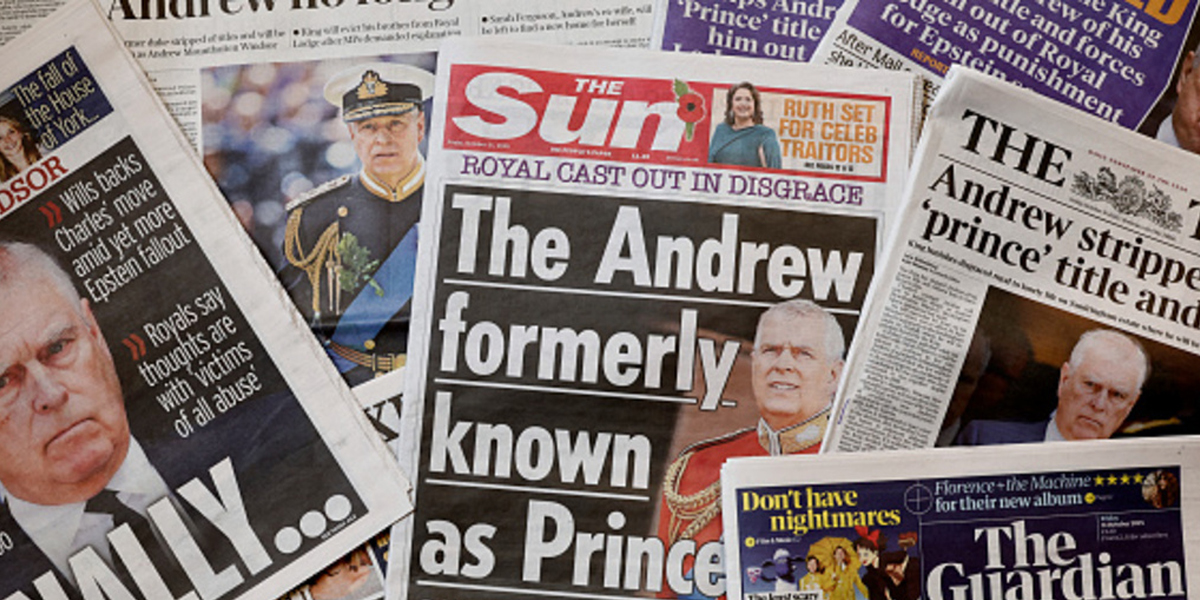
The finances of the British royal family have come under renewed scrutiny following the latest fallout surrounding Prince Andrew, with a parliamentary investigation set to examine how royal properties are managed and whether taxpayers are receiving value for money.
The controversy marks a shift towards closer examination of royal financial arrangements, an area that has traditionally faced limited oversight. MPs are preparing to launch a formal inquiry later this year after reports revealed that Andrew Mountbatten-Windsor had paid only a minimal rent to live at Royal Lodge, a 30-room mansion on the Windsor estate, since moving in more than two decades ago.
Prince Andrew vacated the property this week after fresh disclosures from US authorities detailed further evidence of his close relationship with convicted sex offender Jeffrey Epstein. The new revelations have intensified pressure on the monarchy and added momentum to calls for greater transparency.
King Charles III removed his younger brother’s remaining royal roles and honours last year, responding to mounting public and political anger over Andrew’s long-standing association with Epstein.
Royal Lodge is part of the Crown Estate, an independent commercial organisation that manages large parts of the royal property portfolio. While it is linked to the monarchy, the Crown Estate is not privately owned by the monarch, and its profits are transferred directly to the Treasury for public spending.
Parliament’s Public Accounts Committee has confirmed plans to review the lease arrangements for Royal Lodge. Committee chair Geoffrey Clifton-Brown has raised concerns over whether the agreement delivered proper financial returns, warning that reduced rental income ultimately represents a loss to taxpayers.
Following his departure from Royal Lodge, Prince Andrew has relocated to a property on the Sandringham estate in Norfolk. That estate is privately owned by King Charles, who is expected to cover his brother’s housing and living costs.
The developments have brought wider attention to the complex structure of royal finances and the growing role of Parliament in scrutinising them. Academic experts say the inquiry reflects a changing constitutional balance, with the monarchy facing closer oversight than in previous decades.
Former Liberal Democrat MP Norman Baker said the Andrew affair had opened the door to deeper questioning of how much the monarchy truly costs the public. His recent research focuses on the long-term growth of the Sovereign Grant, the public funding mechanism that supports official royal duties.
The Sovereign Grant has risen sharply since reforms in 2011 linked it to profits from the Crown Estate. Under the current system, 12 percent of Crown Estate profits are returned to the royal household. That has seen annual funding rise from under £8 million in 2011 to more than £132 million today, with further increases forecast for the coming financial years.
Much of that growth has been driven by a surge in income from leasing seabed rights for offshore wind farms, which has significantly boosted Crown Estate revenues. Parliamentary projections suggest the grant could rise further in 2026 and beyond.
Critics argue this upward trend sits uneasily with claims that the monarchy is being streamlined. While the number of working royals has been reduced, overall public funding has continued to increase.
Supporters of the monarchy counter that the Crown Estate now delivers record sums to the Treasury, with annual contributions exceeding £1 billion in recent years. Government figures show billions have been transferred to the Exchequer over the past decade, leading royal commentators to argue that the monarchy represents good value for money.
They also point to the monarch’s diplomatic and symbolic role on the world stage, arguing that the institution delivers significant soft power benefits that are difficult to quantify financially.
However, campaigners for greater transparency also highlight royal tax exemptions as a further area of concern. The Duchies of Cornwall and Lancaster, which generate private income for the king and the Prince of Wales, are exempt from several forms of taxation, including inheritance tax and some corporate levies.
While senior royals pay income tax on duchy earnings, full details are not routinely disclosed. Critics argue this lack of visibility leaves the public unable to fully assess the true cost of maintaining the monarchy.
As Parliament prepares its inquiry, the Prince Andrew scandal is likely to accelerate demands for deeper financial transparency and stronger oversight of royal assets, marking a potentially significant shift in how the monarchy is held to account.
