
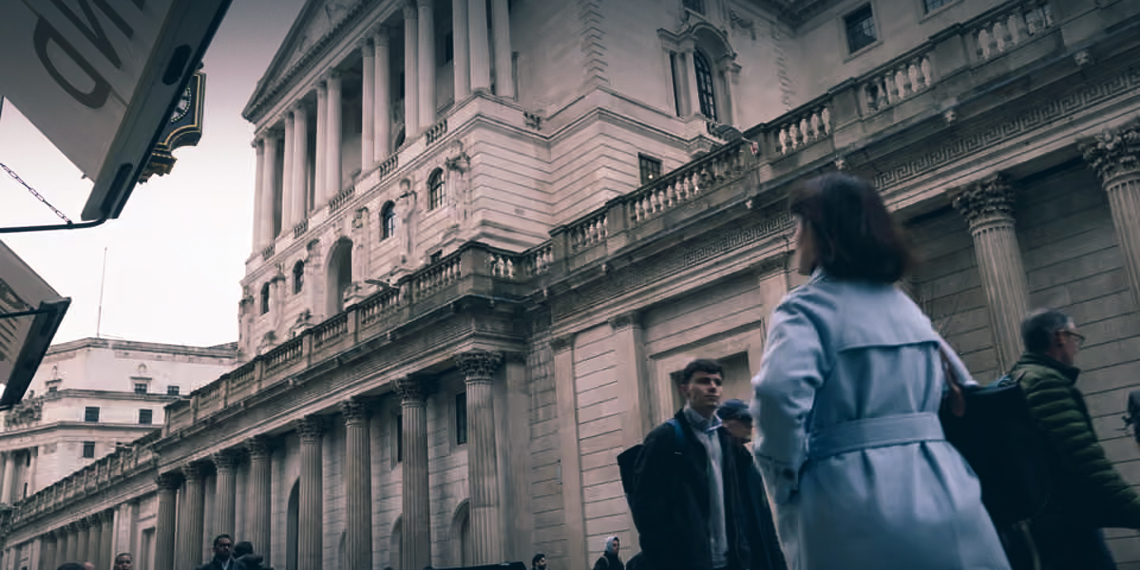
The Bank of England interest rates have been kept on hold at 3.75%, but policymakers signalled that falling inflation driven by cost-of-living measures in Chancellor Rachel Reeves’s budget is likely to open the door to further cuts later this year.
The nine-member Monetary Policy Committee (MPC) voted to leave borrowing costs unchanged despite revising down its forecasts for both economic growth and inflation compared with its previous quarterly projections in November.
Narrow vote split signals rate cuts ahead
Although the decision was to hold rates, the closer-than-expected 5–4 split among MPC members reinforced market expectations that interest rate cuts are approaching. The committee has already cut rates six times since mid-2024 as inflation pressures eased from their post-pandemic peak.
Bank governor Andrew Bailey, who voted to keep rates steady, said the outlook for inflation had improved significantly.
“We now think that inflation will fall back to about 2% by the spring. That’s good news,” Bailey said. “We need to make sure inflation stays there, so we’ve held rates unchanged at 3.75% today. All going well, there should be scope for some further reduction in bank rate this year.”
Growth outlook downgraded in latest forecast
In its latest Monetary Policy Report, published alongside the decision, the Bank forecast that UK gross domestic product would grow by just 0.9% this year. That represents a notable downgrade from the 1.2% growth predicted only three months ago.
The weaker outlook reflects subdued consumer demand, fragile business confidence and tighter financial conditions following years of elevated borrowing costs. Economists have warned that although inflation is easing, the legacy of higher interest rates continues to weigh on investment and household spending.
Budget measures seen as key to inflation fall
Reeves’s late-November budget included a package of anti-inflation measures designed to ease pressure on household bills and accelerate the return of inflation to target. These included cuts to utility bills and a freeze on rail fares, both scheduled to take effect from April.
Largely because of these policies, the Bank now expects inflation to fall “much more than expected”, reaching 2.1% by the second quarter of 2026. That is just above the government’s 2% target and far below the 3.4% rate recorded in December.
Reeves has described 2026 as the year Britain will “turn the page” on inflation, following the surge in prices triggered by the reopening of the economy after Covid lockdowns and Russia’s full-scale invasion of Ukraine.
Economists welcome easing price pressures
Yael Selfin, chief economist at KPMG, said the downward revision reflected government intervention.
“The downward revision in inflation largely reflects the impact of the measures announced in the autumn budget, which will see energy prices ease from April onwards,” she said.
Lower inflation is expected to provide relief to households struggling with high living costs, but the Bank cautioned that this improvement could come alongside weaker labour market conditions.
Unemployment expected to rise
The Bank now expects unemployment to rise to 5.3% this year, compared with its earlier forecast of 5% in 2026. Policymakers pointed to signs of a softening jobs market after employment growth flatlined over the past year.
The MPC said Labour’s rise in employers’ national insurance contributions and the higher minimum wage had contributed to this slowdown. However, officials believe weaker employment growth could help cool wage inflation, reducing the risk of price pressures becoming entrenched.
Debate inside the MPC intensifies
As inflation moves closer to target, the MPC said decisions on further cuts would become “a closer call”, repeating language used when rates were last reduced in December. The next MPC meeting is scheduled for 19 March.
Four members voted for an immediate quarter-point cut: senior Bank officials Dave Ramsden and Sarah Breeden, alongside external economists Alan Taylor and Swati Dhingra.
Taylor suggested that a base rate of 3% — implying three further cuts — should now be “in our sights”, citing what he called a continued drift in forecasts towards weaker growth and lower inflation.
Warnings against cutting too fast
More hawkish voices urged caution. Independent MPC member Megan Greene warned that strong wage growth and elevated inflation expectations among consumers still posed risks.
She cautioned against a “policy error” if rates were cut too quickly in line with market expectations, arguing that inflationary pressures could re-emerge if monetary policy were loosened prematurely.
Bailey comments on Mandelson revelations
At the post-decision press conference, Bailey also addressed the widening controversy surrounding Peter Mandelson, following revelations that the former minister had leaked sensitive government information to Jeffrey Epstein during the financial crisis.
Bailey said he was “shocked by what we are hearing”, adding that it exposed ethical failures in lobbying during a period of national emergency.
“We do learn from that that there are times when lobbying happens which has ethics attached to it which I do find shocking, frankly,” he said.
Emotional tribute to Alistair Darling
Bailey appeared visibly moved when recalling his work with the late chancellor Alistair Darling during the 2008–09 crisis.
“To see those pictures of Peter Mandelson with Alistair Darling,” Bailey said, pausing, “Alistair Darling was doing all the right things, and he was doing them with a thorough sense of honesty and decency. And he can’t speak for himself today, sadly.”
His remarks underlined the broader political and ethical fallout from the Epstein disclosures, which continue to reverberate across government and financial institutions.