
The government is weighing a potential UK shadow fleet seizure of a Russia-linked oil tanker in a move that could escalate tensions with Moscow and open a new front in the confrontation over the Kremlin’s war in Ukraine, at a time when Russia’s oil revenues are already under growing pressure.
British defence sources confirmed that military options to capture a tanker suspected of evading sanctions have been discussed with Nato allies, although no operation has yet been launched. The discussions come more than a month after a US-led seizure of a Russian-linked tanker in the Atlantic, which highlighted the growing risks around Moscow’s expanding “shadow fleet” of oil tankers.
Nato allies discuss maritime enforcement options
According to Lloyd’s List Intelligence, 23 shadow fleet ships using false or fraudulent flags were detected in the Channel or Baltic Sea in January alone. Many of these vessels are believed to be transporting Russian crude oil to major buyers such as China, India and Turkey.
A joint statement issued last month by the UK, Germany, France and other Nato countries bordering the Baltic and North Seas warned that all vessels must comply with international maritime law. Despite setting out conditions under which seizures could take place, no coordinated action has followed.
Richard Meade, editor-in-chief of Lloyd’s List, said ships sailing under false or multiple flags could be considered stateless under maritime law and therefore vulnerable to seizure. However, he warned that enforcement carries serious escalatory risks.
Royal Marines brief MPs on Arctic and maritime threats
The Royal Marines recently briefed MPs and peers on Russian activity in the Arctic and the High North, with one attendee saying military personnel were eager for authorization to act against rogue vessels.
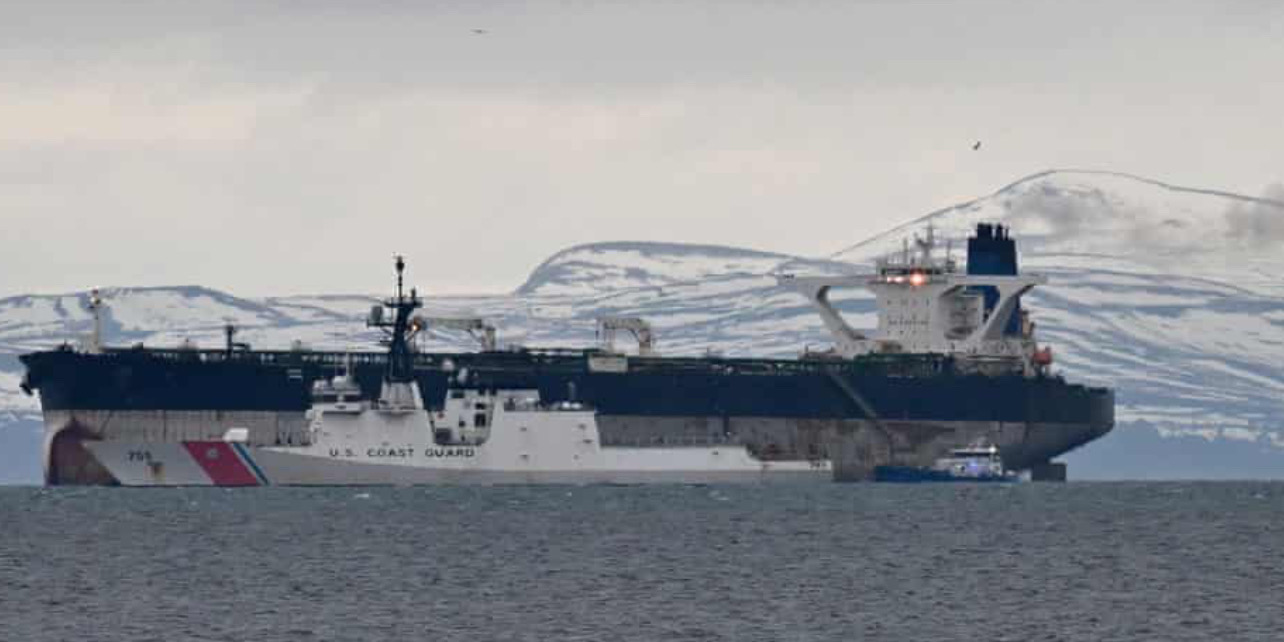
Last month, the United States pursued and seized the Marinera tanker between Scotland and Iceland with British support. The vessel had attempted to evade capture by changing its registration status while being chased. Although Moscow’s response to the US operation was muted, analysts say a British or European-led seizure could provoke a stronger reaction.
Meade said risks could be reduced if an operation were conducted outside sensitive regions such as the Baltic or Arctic seas.
France detention highlights legal complexity
On 22 January, France detained the oil tanker Grinch off the Spanish coast after it departed Murmansk under the flag of Comoros. However, President Emmanuel Macron later ordered its release, citing legal constraints under French law, underscoring the complex legal frameworks governing maritime enforcement.
The UK defence secretary, John Healey, has suggested that any seized oil could be sold and the proceeds transferred to Ukraine to support its war effort against Russia. He also confirmed that Britain would convene a meeting of Baltic and Nordic states to explore military and enforcement options.
Russia’s oil exports and shadow fleet strategy
Russia produces roughly 10 million barrels of oil per day, with about 7 million barrels exported, according to Craig Kennedy of Harvard University’s Davis Center for Russian and Eurasian Studies. Around 5 to 6 million barrels are shipped daily by sea, with China and India accounting for roughly 60% of seaborne exports.
After launching its full-scale invasion of Ukraine, Russia was hit by Western sanctions and a price cap on seaborne crude exports. In response, Moscow spent an estimated $15bn acquiring hundreds of ageing tankers—often more than 20 years old—to create a shadow fleet designed to bypass sanctions and insurance restrictions.
Gonzalo Saiz Erausquin of the Royal United Services Institute described the fleet as opaque, poorly maintained, and frequently underinsured, with vessels often flying flags from jurisdictions with weak regulatory oversight.
Legal vulnerabilities of false-flag vessels
The shadow fleet’s reliance on deceptive practices has also created vulnerabilities. Under maritime law, ships using false flags can be deemed stateless, potentially allowing their seizure. However, legal interpretations differ across European jurisdictions, complicating enforcement.
Despite drone attacks on several shadow fleet tankers since late 2024, Russian export volumes have remained above 5 million barrels per day, although they have fallen from an autumn peak of 6 million barrels per day.
Moscow adapts to seizure threats
Russia has begun re-registering shadow fleet vessels under its own flag to reduce the risk of seizure. The Marinera was among 10 vessels that reflagged to Russia during attempts to circumvent US restrictions on Venezuelan oil exports.
More than 200 Russia-linked shadow fleet vessels remain in operation, while Moscow’s official tanker fleet continues to expand. Analysts say the price cap regime remains relatively easy for Russia to circumvent.
Economic pressure mounts on Russia
The UK’s tough rhetoric comes as Russia’s economy shows signs of vulnerability. Falling global oil prices, partly driven by increased supply from Venezuela, are squeezing the Kremlin’s finances.
Yuliia Pavytska of the Kyiv School of Economics Institute said Russia’s oil and gas revenues fell by 24% in 2025 to 8.5 trillion rubles, accounting for just 22% of state income, down sharply from 41% in 2022.
She added that the EU is considering a full ban on maritime services such as insurance for Russian vessels, a move that could severely disrupt Moscow’s ability to export oil, especially if combined with military enforcement actions.
Background: shadow fleets and global sanctions enforcement
Shadow fleets have been used previously by Iran and Venezuela to evade sanctions, but Russia’s operation is far larger and more sophisticated. Western governments have struggled to balance enforcement with the risk of military escalation and disruption to global energy markets.
Any UK-led seizure would mark one of the most aggressive maritime enforcement actions taken against Russia since the start of the Ukraine war, potentially reshaping the sanctions regime and the geopolitical dynamics of the global oil trade.