
The debate over the planned fuel duty rise UK has intensified as opposition parties urge Chancellor Rachel Reeves to reconsider increasing the tax on petrol and diesel amid rising global energy prices linked to the conflict in the Middle East.
Under current government plans, fuel duty is scheduled to increase from September as a temporary 5p cut introduced during the energy crisis triggered by Russia’s invasion of Ukraine begins to be phased out.
However, critics argue that escalating tensions involving Iran, along with fears of prolonged disruptions to global oil supplies, make this an unsuitable time to raise taxes on fuel.
Political pressure is growing as energy prices climb and motorists face the possibility of higher costs at petrol stations across the UK.
Opposition parties call for fuel duty freeze
Several opposition parties have called on the government to abandon the planned fuel duty rise UK, warning that it could place additional financial strain on households already struggling with living costs.
Reform UK, the Conservative Party and the Liberal Democrats have all urged the Treasury to maintain the existing 5p fuel duty cut.
They argue that rising oil prices caused by geopolitical tensions in the Middle East could push fuel prices higher in the coming months.
The concerns stem from fears that the conflict involving Iran could disrupt energy supplies, particularly if shipping through critical routes such as the Strait of Hormuz is affected.
Reform UK proposes cutting green subsidies
Reform UK outlined a proposal on Tuesday suggesting that the cost of maintaining the fuel duty cut could be offset by reducing certain environmental subsidies.
The party suggested scrapping government grants that encourage households to install heat pumps or purchase electric vehicles.
It also proposed cancelling £9.4bn in planned subsidies for carbon capture and storage projects scheduled over the next three years.
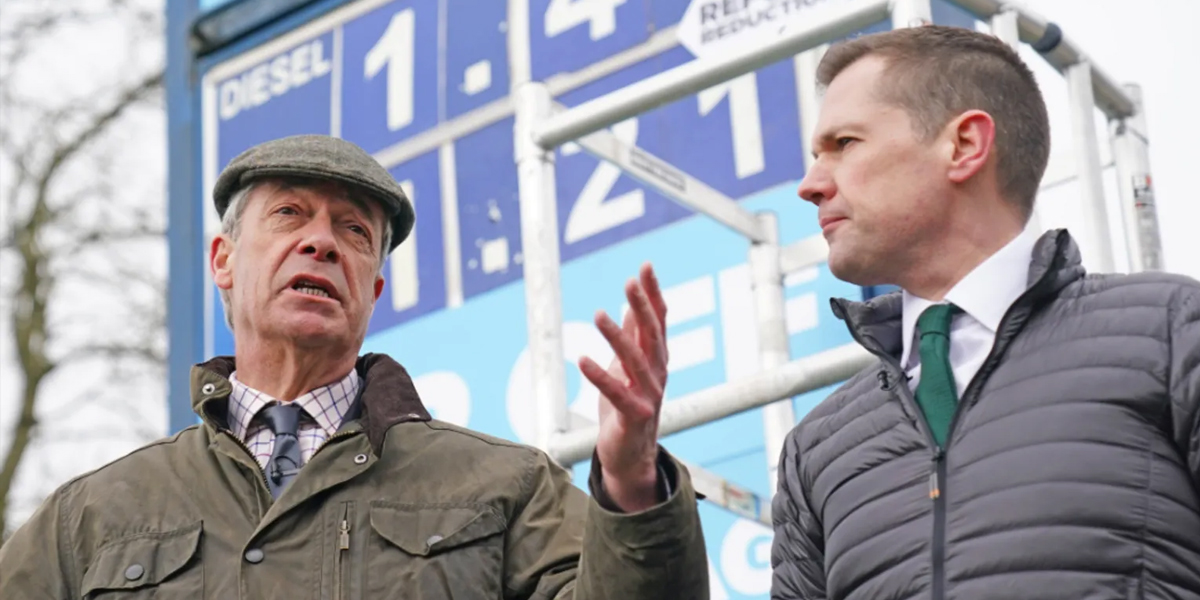
At a press conference held at a petrol station in Derbyshire, the party’s Treasury spokesman Robert Jenrick said the current international situation made it the “worst possible moment” for a fuel tax increase.
Jenrick appeared alongside Reform UK leader Nigel Farage in front of a petrol price display board branded with the party’s campaign message highlighting lower fuel prices.
Conservatives push for parliamentary vote
The Conservative Party has also called for the government to abandon the planned fuel duty rise UK.
On Tuesday, Conservative MPs introduced a parliamentary motion aimed at triggering a vote on whether the increase should proceed.
They argue that maintaining the fuel duty cut would help protect motorists from further increases in living costs.
Fuel prices have become a politically sensitive issue in the UK as inflation and rising energy bills continue to affect household budgets.
Reeves defends government position
Chancellor Rachel Reeves has defended the government’s approach to the issue, arguing that broader geopolitical developments will have a greater influence on fuel prices than domestic tax policy.
Speaking in the House of Commons, Reeves said the government’s priority should be helping to reduce international tensions.
She said the “most important thing” ministers could do to keep energy prices stable was to support efforts aimed at de-escalating the conflict in the Middle East.
Reeves also pointed to a recently launched government initiative designed to help motorists find cheaper fuel.
The scheme provides drivers with real-time data about petrol and diesel prices at forecourts across the country, allowing them to compare costs and choose the most affordable options.
Possible changes to mileage allowance
The chancellor also suggested that the government may consider adjusting tax rules affecting motorists.
Reeves indicated that the tax-free mileage allowance – currently set at 45p per mile – could be reviewed.
She noted that the rate has remained unchanged since 2011 despite significant changes in motoring costs over the past decade.
A potential increase in the allowance could help offset rising travel expenses for workers who use their personal vehicles for business purposes.
Origins of the fuel duty cut
The temporary reduction in fuel duty was first introduced in 2022 by then chancellor Rishi Sunak following the global energy price surge caused by Russia’s invasion of Ukraine.
The 5p per litre cut was originally intended to last for 12 months but was extended several times by successive governments.
The Conservative government extended the measure in 2023, and the policy was later maintained by the Labour administration after it entered office.
At last year’s Budget, Reeves confirmed the cut would remain in place temporarily but would gradually be removed beginning in September.
Under current plans, the reduction will be fully phased out by March 2027.
Fuel duty policy and inflation pressures
Successive UK governments have historically aimed to increase fuel duty in line with inflation.
However, fuel duty has effectively been frozen since 2011 due to political concerns about the impact on household budgets.
Economists say fuel duty changes can have a noticeable impact on inflation because transport costs affect the prices of many goods and services.
As a result, governments often delay increases when energy prices are already rising.
Debate over green policies and energy security
During the Derbyshire press conference, Nigel Farage criticised environmental policies linked to the energy transition.
He described government green levies as excessive and criticised restrictions on new oil and gas exploration in the North Sea.
Farage argued that domestic energy production could help reduce the UK’s reliance on imported fuels.
However, the event also raised questions about Reform UK’s position on the Middle East conflict.
Farage acknowledged that members of his party hold differing views on whether the UK should directly participate in military strikes on Iran.
He said that although the United States and Israel would likely have proceeded with their actions regardless of British involvement, the UK’s ability to participate militarily had been limited by previous defence spending reductions.
Fuel prices and geopolitical tensions
The debate over the fuel duty rise UK comes at a time when global energy markets are highly sensitive to geopolitical developments.
Oil prices tend to rise sharply during conflicts involving major energy-producing regions.
The Middle East plays a critical role in global energy supplies, and disruptions in shipping routes or production can quickly affect international oil prices.
Because the UK relies heavily on imported energy, fluctuations in global markets often translate into higher costs for British consumers.
With fuel duty set to increase later this year, policymakers now face mounting pressure to balance government revenues, environmental policies and the financial pressures faced by motorists.