
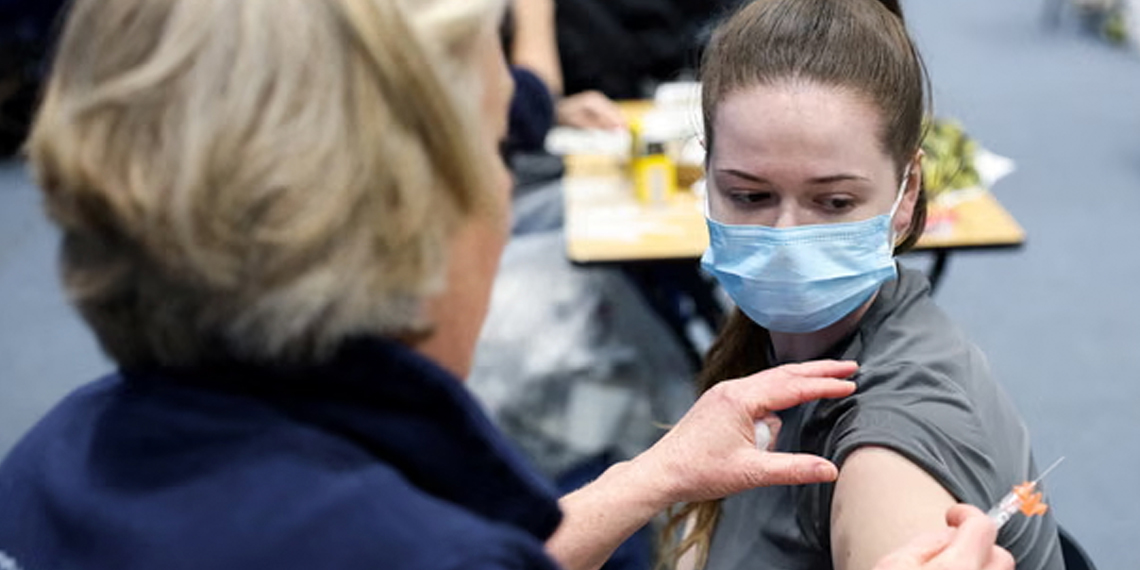
Health officials have confirmed that the meningitis B (MenB) vaccination programme in Kent will now include year 11 pupils at schools affected by the outbreak.
According to the UK Health Security Agency (UKHSA), the number of confirmed meningitis cases is beginning to fall. As of 12.30pm on Monday, 20 cases had been confirmed, with three further cases under investigation, bringing the total to 23. This compares with 29 cases reported on Sunday, when 20 were confirmed and nine were under review.
Vaccinations began for University of Kent students on Wednesday 18 March. On a visit to the campus the following day, Health Secretary Wes Streeting confirmed the programme would expand to more people, including sixth-form pupils at four schools with confirmed or suspected MenB cases. Ministers have now agreed to offer jabs to year 11 pupils at these schools as a precaution to provide long-term protection.
UKHSA data shows the median age of those affected is 19. Most cases involve students, although five patients are not in education. The majority of patients (87%) had attended Club Chemistry in Canterbury at least once between 5-7 March before falling ill. Three cases linked to the University of Kent did not attend the nightclub but lived in halls connected to those who did.
Officials reported the earliest known case fell ill on 9 March, with the latest case on 16 March. The peak of the outbreak occurred on 13 March, when the highest number of cases was reported.
Laboratory analysis confirmed the outbreak strain belongs to group B meningococci, a recently emerged subtype present in England since 2020. UKHSA experts noted that the bacterial genome shows “multiple potentially significant genetic differences” compared with closely related strains, which are being studied to understand their impact on transmission.
Preliminary results indicate that the MenB vaccine and antibiotics remain effective against this strain. Professor Robin May, UKHSA chief scientific officer, said: “This preliminary analysis offers strong reassurance that our existing vaccinations and antibiotic treatment offer will be effective against this strain. We will continue intensive laboratory investigations to determine how bacterial behaviour, social and environmental factors, and population immunity have influenced the outbreak.”
All patients have required hospital care, with nine admitted to intensive care, four of whom remain in critical condition. Tragically, two students have died: 18-year-old Juliette Kenny, described by her family as fit and healthy, and a University of Kent student.
The UKHSA continues to provide updates on vaccination efforts and urges anyone eligible for preventative antibiotics or vaccines to seek medical advice promptly.