
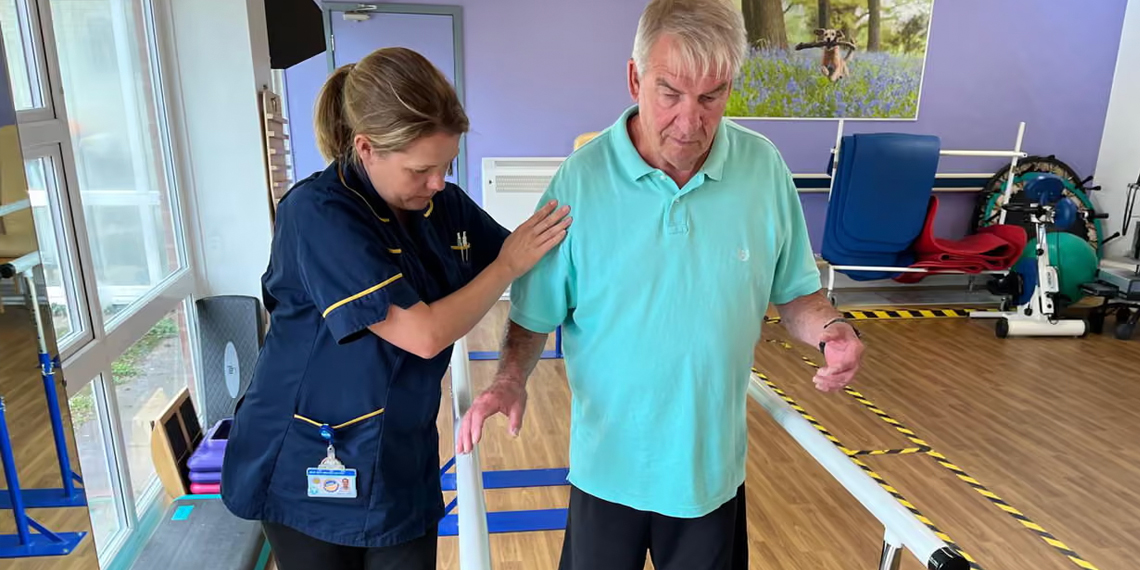
Stroke patients across the UK are being failed by the NHS due to a shortage of rehabilitation staff, according to leading health organisations.
Experts say that while more people are surviving strokes than ever before, many are not receiving the specialist care needed to support recovery, significantly affecting their long-term outcomes.
The Chartered Society of Physiotherapy and the Association of Chartered Physiotherapists in Neurology warned that a lack of physiotherapists and support staff is preventing services from meeting national care standards.
Guidelines recommend that stroke patients receive three hours of therapy-based rehabilitation a day, five days a week. However, data suggests patients are typically receiving therapy just three to four days a week in hospital, and only one to two days after discharge.
Ash James, director of practice and development at the Chartered Society of Physiotherapy, said: “Something is going seriously wrong in our health system if the NHS is failing to turn workforce growth into the posts required to meet even the minimum standards for stroke rehabilitation.”
He added: “It is deeply concerning that our members are going above and beyond to advocate for their patients and secure the staffing they need, only to have their concerns dismissed.”
A national survey covering 159 NHS stroke services found significant staffing shortages across multiple areas, including acute care, community services and rehabilitation support.
The findings revealed that community stroke services have 26 per cent fewer physiotherapists than recommended, while acute stroke teams are operating with a 15 per cent shortfall. Community rehabilitation support roles are even more stretched, with staffing levels 36 per cent below guidance.
Adine Adonis, chair of the Association of Chartered Physiotherapists in Neurology, said: “More people are surviving strokes in the UK than ever before, but survival must be matched with the chance to recover well.”
She added: “This is not good enough. It is failing people every day and limiting their potential for recovery.”
Charities warn that the consequences for patients can be severe. Stroke Association said around 240 people in the UK are affected by stroke every day.
Its chief executive, Juliet Bouverie, said: “Stroke survivors are at risk of being unable to see, speak, move or even swallow, which has a huge impact on their ability to enjoy a full and independent way of life.”
She added: “But there is no escaping the fact that progress to improve the availability and intensity of rehabilitation is far too slow.”
Health leaders are calling for increased investment in staffing and services to ensure patients receive the level of care set out in national guidelines.
Bouverie said: “Much greater investment in both people and processes to meet the national guidelines of care are desperately needed to ensure stroke survivors are supported both in hospital and the community for as long as they need it.”
The Department of Health and Social Care acknowledged the challenges, stating that more must be done to improve recovery support for stroke patients.
A spokesperson said: “We’re working to fix that. We’re rolling out specialist stroke rehabilitation in people’s homes, so more people can get the right care without having to rely on hospital stays.”
The government also reiterated its goal of reducing stroke deaths by 25 per cent over the next decade.