
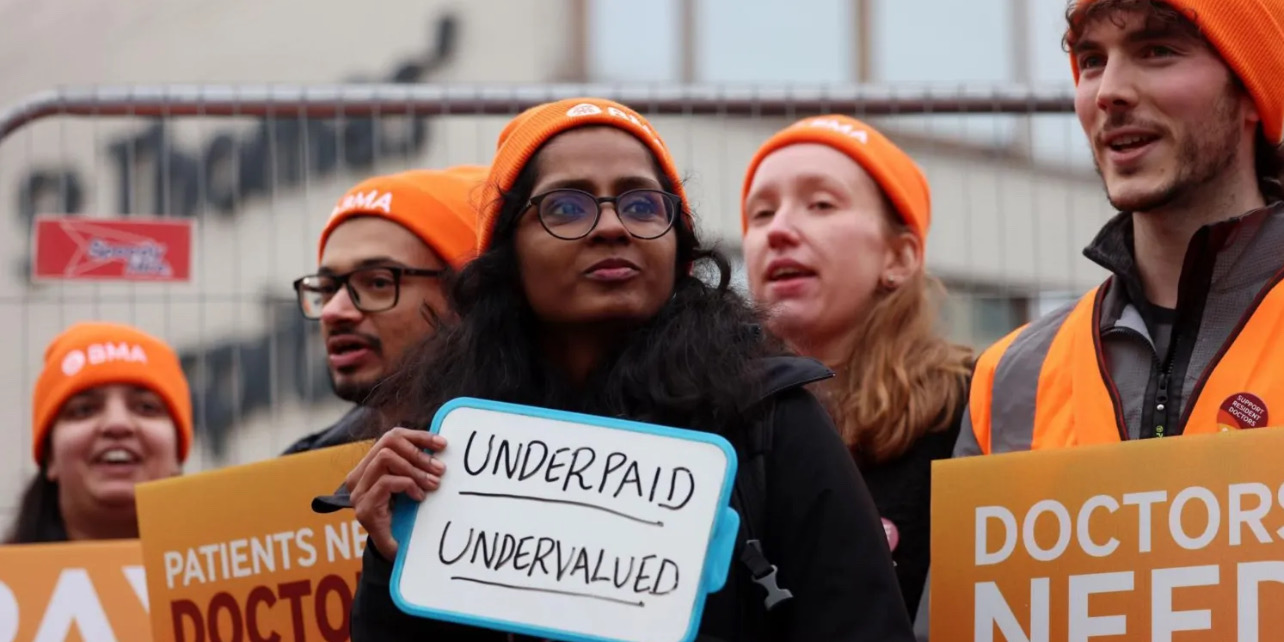
The NHS doctor strike England 2026 is set to begin on Tuesday, with health officials urging patients not to delay seeking medical care despite a six-day walkout by resident doctors across England.
The industrial action, involving tens of thousands of medics, marks the latest escalation in a long-running dispute over pay, working conditions and career progression. NHS leaders insist that services will remain operational, with contingency plans in place to minimise disruption and ensure patient safety.
NHS Urges Patients to Attend Appointments as Normal
Health authorities have stressed that patients should continue to access NHS services as usual during the strike period. Officials confirmed that senior doctors, consultants and non-striking staff will remain on duty to maintain essential services.
Patients are advised to attend scheduled appointments unless they are contacted directly about cancellations or changes. Emergency services, including A&E departments and urgent care pathways, will remain fully operational.
The NHS has also reiterated that individuals with urgent or emergency conditions should contact 111 or 999 as appropriate, while those with less serious concerns can seek help from GPs or pharmacies.
Six-Day Walkout Follows Breakdown in Talks
The latest strike represents the 15th round of industrial action in a dispute that has continued for more than three years. The walkout will run from early Tuesday morning until just before 07:00 on Monday 13 April, coinciding with a period of increased pressure on healthcare services following a bank holiday weekend.
Negotiations between the government and the British Medical Association (BMA), which represents resident doctors, broke down at the end of March, prompting the union to proceed with further strike action.
Resident doctors — previously known as junior doctors — account for nearly half of the medical workforce in the NHS, making their participation in industrial action particularly significant for service delivery.
Dispute Centres on Pay and Career Progression
At the heart of the dispute are concerns over pay levels and job opportunities for early-career doctors. While the government has accepted recommendations for a 3.5% pay rise for all doctors, the BMA argues that real-terms pay remains significantly lower than it was in 2008 once inflation is considered.
Over the past four years, resident doctor pay has increased by around a third, but the union maintains that this has not kept pace with rising living costs, particularly when measured against higher inflation indices.
In addition to pay, disagreements over career progression and training opportunities have intensified tensions. The government had proposed measures including faster salary progression and support for professional expenses, but these offers were revised during negotiations, leading to further dissatisfaction among union representatives.
Withdrawal of Training Posts Adds to Tensions
A key turning point in the dispute came when the government withdrew plans to introduce 1,000 additional specialist training posts. Officials said the decision was driven by financial and operational constraints, although they insisted it would not reduce the overall number of doctors in the NHS.
The move has been criticised by the BMA, which argues that limiting training opportunities could hinder career progression and worsen workforce shortages in the long term.
The dispute reflects broader challenges within the NHS workforce, including retention issues, workload pressures and morale concerns, which have been highlighted in multiple reviews in recent years.
NHS Prepared for Disruption but Warns of Pressure
NHS leaders have acknowledged that the strike will create operational challenges, particularly given its timing after a bank holiday period when demand for services typically rises.
However, officials say that “tried and tested” contingency plans will help maintain the majority of services, drawing on the experience of previous strikes. During earlier industrial action, the NHS reported that it was able to deliver the vast majority of planned care.
Despite these assurances, medical leaders have warned that the reliance on senior doctors to cover for striking staff may place additional strain on an already stretched workforce.
Ongoing NHS Workforce Crisis
The current dispute forms part of a wider crisis facing the NHS, with long waiting lists, staffing shortages and increasing demand continuing to challenge the health service.
In recent years, the NHS has struggled to recruit and retain staff across multiple roles, including doctors, nurses and allied health professionals. Industrial action has become a recurring feature of the healthcare landscape, reflecting deep-rooted concerns about pay, working conditions and career sustainability.
The government has pledged to reform workforce planning and improve conditions, but progress has been gradual, and tensions remain high between ministers and healthcare unions.
As the NHS doctor strike England 2026 unfolds, the immediate priority for health officials is to maintain patient safety and minimise disruption. At the same time, pressure is mounting on both sides to return to negotiations and find a long-term resolution.
With further industrial action likely if no agreement is reached, the dispute continues to raise questions about the future of the NHS workforce and the sustainability of healthcare delivery in England.