
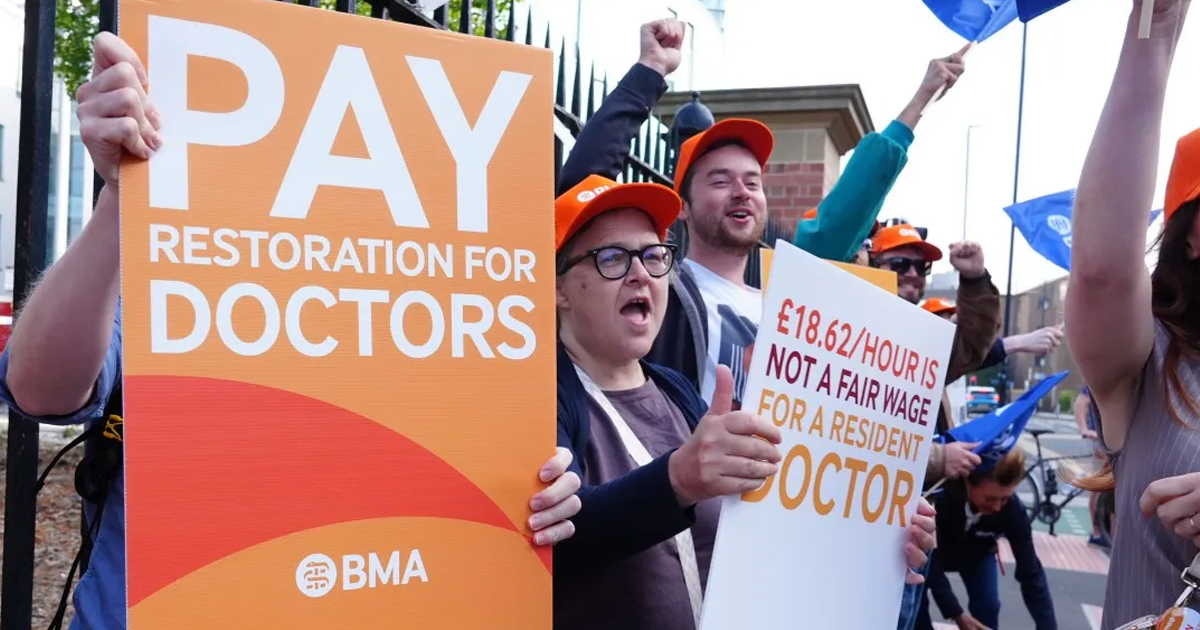
Resident doctors across England are set to begin a six-day strike, raising concerns over disruption to NHS services and patient care.
The industrial action, led by the British Medical Association, will start at 7am on Tuesday and continue until 13 April, marking the latest escalation in an ongoing pay dispute.
The NHS England has urged the public not to delay seeking urgent medical help during the strike period.
Health leaders warned that while disruption is expected, services will remain open and priority treatments will continue.
Ramani Moonesinghe said: “Staff across the NHS will be doing everything they can this week to keep patients safe and ensure people can continue to get the care they need.”
She added: “The NHS remains open for you this week – as ever, please call 999 or come to A&E in an emergency.”
Health Secretary Wes Streeting warned the strike could lead to delays in planned operations and appointments, leaving families “left waiting in pain”.
NHS officials described the timing as “particularly challenging”, coming immediately after the busy Easter bank holiday and being announced at short notice.
Patients with scheduled appointments are advised to attend as normal unless contacted otherwise.
Emergency services, GP practices and NHS 111 will continue to operate throughout the strike.
Resident doctors, formerly known as junior doctors, confirmed they would “press ahead” with the walkout after negotiations with the government broke down.
The strike marks the 15th round of industrial action by doctors in the past three years.
The government had offered a pay rise of up to 7.1 per cent this year, which would have brought total pay increases to around 35 per cent over three years.
However, union representatives rejected the proposal, describing it as a “crushing blow” amid rising inflation.
Streeting criticised the decision to proceed with strikes, saying: “It is disappointing for patients and staff alike that the BMA has decided to press ahead with strikes this week.”
He added that the NHS had previously maintained most services during strikes, stating: “the health service delivered almost 95 per cent of planned activity during December strikes”.
Responding, Jack Fletcher said: “The Health Secretary may well be ‘disappointed,’ but he is failing to acknowledge a deal was taking shape until his government quietly watered it down.”
He added: “We are willing to bring an end to industrial action, but we are not seeing that willingness from [the] Government so far.”
Tens of thousands of doctors are expected to take part in the strike, with hospitals preparing contingency plans to minimise disruption.
Patients are being reminded to seek urgent care when needed and to use NHS services appropriately during the six-day period.