
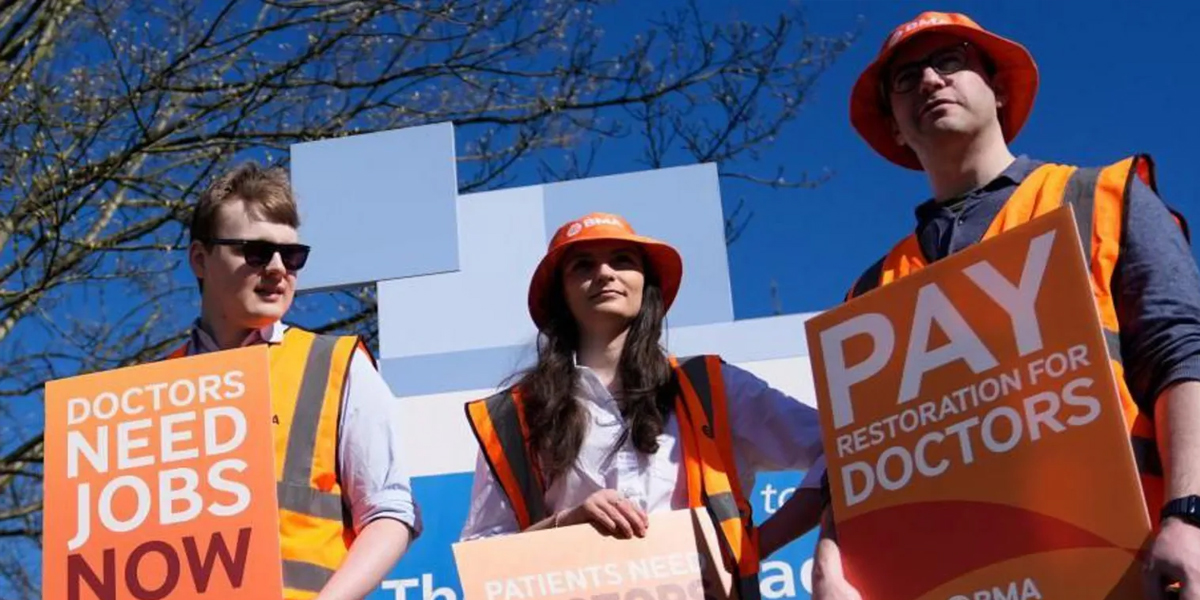
The ongoing NHS doctor pay dispute has intensified after Wes Streeting insisted the government “categorically” did not alter its offer to resident doctors, amid continued industrial action across England.
Speaking to the BBC, Streeting rejected claims from the British Medical Association that the deal to resolve the long-running dispute over pay and career progression had been changed at the last minute. The disagreement comes as a six-day strike by resident doctors continues to disrupt NHS services, with the walkout scheduled to end early Monday morning.
Government Rejects Claims of Last-Minute Changes
Streeting firmly denied accusations that ministers had shifted the terms of negotiations, arguing that such a move would not have been in the government’s interest.
He suggested that union representatives may have misunderstood the details of the agreement or chosen to criticise the government instead of accepting the offer. According to Streeting, the deal on the table already includes significant pay improvements and opportunities for career progression.
He said resident doctors had already received a 28.9% pay increase shortly after the current government took office, with further rises proposed under the latest offer, including an average 4.9% increase this year and up to 7.1% for lower-paid doctors.
Union Disputes Government Version of Events
However, the BMA has strongly contested the government’s account of negotiations.
Jack Fletcher said discussions had initially included the possibility of one- or two-year settlements, but that ministers insisted at the final stage on a three-year deal with reduced financial commitments.
Fletcher argued that this shift undermined progress made during talks and contributed to the breakdown in negotiations. Despite the dispute, he said the union remains open to further discussions and continues to seek a resolution.
He added that the BMA had engaged in negotiations “in good faith” throughout the process.
Strike Action Continues to Impact NHS Services
The latest round of industrial action marks one of the longest walkouts in the dispute, with thousands of resident doctors participating.
NHS leaders have warned that the strike is placing additional strain on already stretched services, particularly as it coincides with a busy period following the Easter holidays.
Hospitals have been forced to rely on senior doctors and non-striking staff to maintain essential care, while some appointments and procedures have been postponed.
Disagreement Over Pay and Working Conditions
At the heart of the NHS doctor pay dispute is a disagreement over the long-term value of doctors’ salaries.
While the government highlights cumulative pay increases of around 33% over the past four years, the BMA argues that real-term pay has declined by approximately 20% since 2008 when adjusted for inflation.
The union is seeking what it describes as “full pay restoration,” alongside improvements to working conditions and training opportunities.
Training Places and Workforce Concerns
A key point of contention in the negotiations is the future of specialist training places.
Streeting confirmed that while most elements of the deal remain available, the government can no longer bring forward 1,000 additional training positions originally planned for this year, citing the financial and operational impact of the strikes.
The proposal had been part of a broader plan to expand training capacity by up to 4,500 places over several years, aimed at addressing workforce shortages within the NHS.
Calls for Renewed Talks Amid Deadlock
Despite the ongoing tensions, Streeting said he remains willing to resume discussions with union leaders, describing them as the key decision-makers in the dispute.
However, he claimed previous attempts to engage directly had been refused, adding that resolving the conflict would require compromise from both sides.
The BMA, meanwhile, maintains that it is prepared to return to the negotiating table, raising hopes that further talks could still take place after the current strike ends.
A Prolonged NHS Workforce Crisis
The dispute is unfolding against a backdrop of wider challenges facing the NHS, including staff shortages, rising patient demand and pressure to reduce waiting lists.
Resident doctors form a significant portion of the medical workforce, and their participation in industrial action has had a noticeable impact on service delivery.
Over recent years, repeated strikes have highlighted deeper concerns about pay, morale and retention within the health service, prompting calls for long-term reform.
Outlook Remains Uncertain
As the latest strike nears its conclusion, uncertainty remains over whether a resolution can be reached.
Both the government and the BMA continue to defend their positions, with significant differences still unresolved.
Unless progress is made in upcoming negotiations, further industrial action remains a possibility, prolonging disruption for patients and adding pressure on the NHS during a critical period of recovery.