
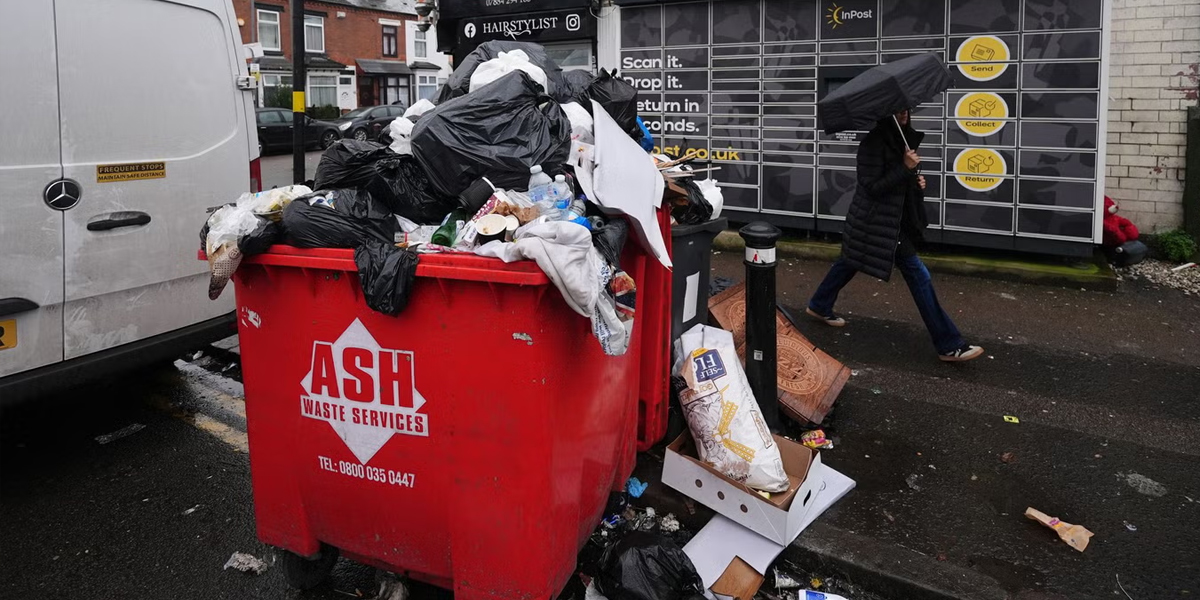
The Birmingham bin strike is set to end after a year-long dispute moved closer to resolution following a new deal between Birmingham City Council and the trade union Unite the Union.
Council leader John Cotton said an agreement to bring the industrial action to an end is now “within sight” after significant progress in negotiations over pay, job roles and waste services reform.
The long-running dispute began after the council proposed changes to its waste collection and recycling service, including the removal of a job role it argued was needed to modernise operations and align Birmingham with other local authorities across the UK.
Unite, however, claimed the changes would result in pay cuts of around £8,000 for hundreds of workers, a claim the council has repeatedly disputed.
The strike has caused widespread disruption across Birmingham, with rubbish piling up in residential streets and residents raising concerns about hygiene and public health. Reports of increased rat activity have also added to frustration in affected neighbourhoods.
John Cotton said a negotiated settlement is now close after months of discussions, describing the talks as difficult but constructive. He said the latest offer addresses key issues raised during mediation through the Advisory, Conciliation and Arbitration Service (ACAS).
He added that any agreement must be fair to workers while also delivering value for taxpayers and avoiding long-term financial risks for the council.
Cotton also said he had instructed officials to continue negotiations so a final agreement can be reached as soon as possible, stressing the importance of restoring regular waste collection services for Birmingham residents.
A representative from Unite, Onay Kasab, confirmed that a deal is on the table but said it must still be put to union members for a vote before it can be formally accepted.
The breakthrough comes shortly before local council elections in Birmingham, although no official details of the proposed agreement have been released.
The dispute has also had political repercussions, with Unite previously announcing cuts to its financial support for the Labour Party in response to its handling of the strike.
Cotton said that if re-elected, the council would prioritise final approval of the agreement and focus on restoring reliable refuse and recycling services across Birmingham, West Midlands.
He also reiterated his commitment to addressing long-standing pay inequality issues affecting council workers, particularly women who he said had previously been underpaid under past administrations.
The council leader thanked Birmingham residents for their patience during months of disruption and said the resolution of the dispute would allow the city to move forward with improved services and stability.