
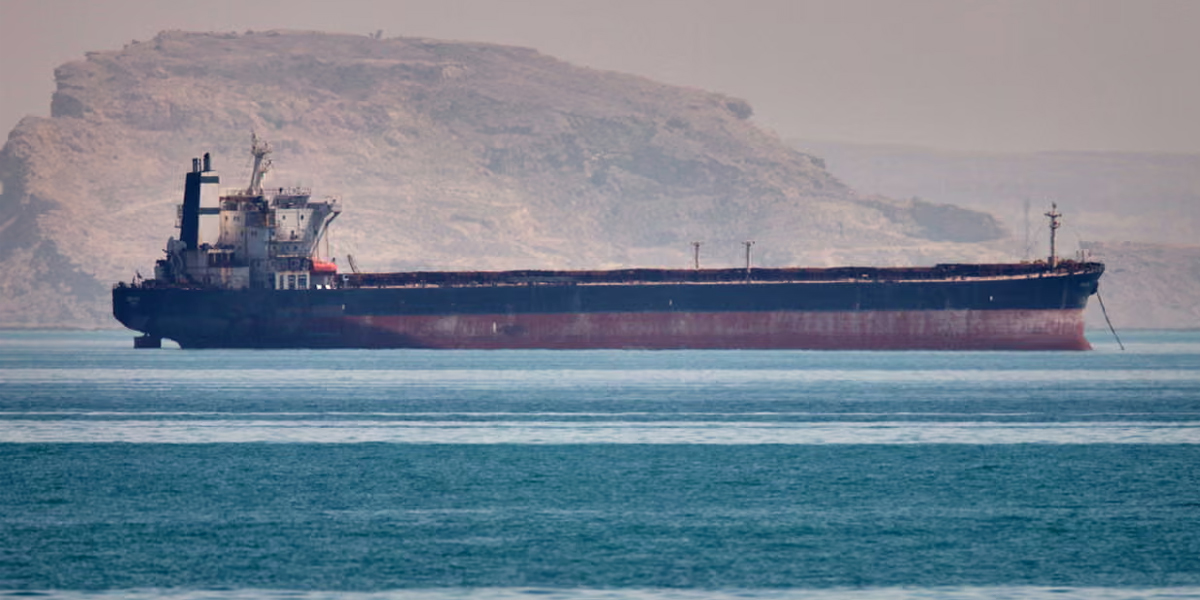
Global shipping companies have raised serious concerns over the safety of vessels in the Strait of Hormuz following Donald Trump’s announcement of a new US-led initiative aimed at reopening the critical waterway.
The US President stated on Monday that the American navy would “guide” stranded commercial ships out of the strategic passage, describing the mission, named “Project Freedom”, as a humanitarian operation involving the United States, Middle Eastern nations, and “in particular, the country of Iran”.
However, the announcement was quickly followed by conflicting reports. Iran’s Fars news agency claimed a US warship attempting to enter the strait was struck by two missiles and forced to retreat after ignoring warnings from Iranian forces. The United States denied any vessel had been hit. Meanwhile, Brent crude oil prices climbed by around 2% to $110.36 per barrel amid heightened uncertainty.
The US Central Command (Centcom) later confirmed that two US-flagged merchant vessels had successfully passed through the Strait of Hormuz.
Despite this, maritime experts remain uncertain about the practicality and safety of the plan, questioning whether it represents a sustained protection effort or a short-term operation to extract trapped ships.
Sascha Meijer, general secretary of the seafarers’ union Nautilus, said crews would welcome protection but warned that serious risks remain.
Seafarers stuck in the strait would really appreciate protection to get ships sailing out. But is this protection certain? What about mines? Are ships insured? Is this offer sufficient? It is too early to say whether this is good news or increases danger
Concerns were echoed by Raman Kapoor, an oil tanker captain currently affected by the situation, who told BBC Radio 4’s World at One that he would not risk attempting to leave under current conditions.
As a captain it is my duty to assess the situation. I must take the consent of the entire crew on whether they are willing to put their lives at risk. It is a long process
President Trump did not provide operational details regarding how more than 850 vessels reportedly trapped in the Gulf would be escorted to safety.
He said on Truth Social that he had instructed representatives to communicate with affected parties and ensure maximum effort is made to secure the safe passage of ships and crews. However, he added that vessels would not return until conditions in the region were deemed safe for navigation.
Shipping industry leaders have also called for clarification. Jakob Larsen, chief safety and security officer at maritime group Bimco, warned that the risks remain significant without Iranian cooperation.
He said that without consent from Iran for commercial transit, it is unclear whether the threat to shipping can be reduced or controlled. He added that there remains a real risk of renewed hostilities if the operation proceeds without coordination.
Centcom stated that US military involvement in “Project Freedom” would include guided missile destroyers, more than 100 air and sea-based aircraft, unmanned systems operating across multiple domains, and around 15,000 personnel.
The development comes amid escalating tensions in the Middle East, with wider economic concerns growing as oil prices remain roughly 50% higher than pre-conflict levels, raising fears of a potential global recession.