
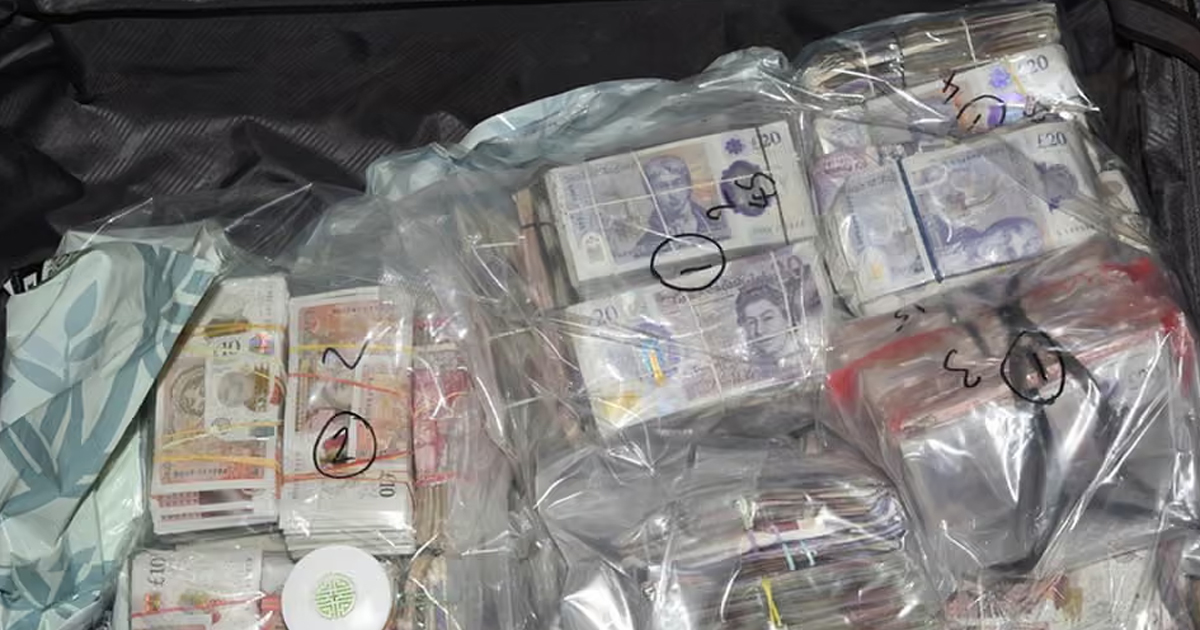
The UK is being used as a major global hub for illicit finance, with at least £325 billion in “dirty money” flowing through the country every year, according to a new report that has raised fresh concerns about economic crime, money laundering and the government’s ambitions to expand the cryptocurrency sector.
The study, published by the Finance Innovation Lab, estimates that illicit financial flows linked to the UK now amount to more than 10% of the country’s annual gross domestic product.
Researchers say the figure includes money connected to financial crime, corruption, tax evasion, illegal trade and money laundering activities operating through Britain’s banking system and financial networks.
The report also warns that when British overseas territories and crown dependencies such as Jersey and the Cayman Islands are included, the total amount linked to the UK rises dramatically to more than £788 billion every year.
The findings are expected to intensify pressure on ministers to strengthen anti-money laundering enforcement and increase funding for financial crime investigators.
UK Financial Sector Under Growing Scrutiny
Researchers described the report as the first major attempt to calculate the overall scale of illicit financial flows associated with the UK economy and its wider financial network.
The report argues that Britain’s status as one of the world’s largest financial centres has made it attractive not only to legitimate global investment but also to criminal organisations, corrupt officials and tax evaders seeking to move or hide wealth.
According to the study, weaknesses in corporate transparency rules, offshore financial secrecy and limited enforcement capacity have allowed billions of pounds in suspicious money to circulate through British-linked systems.
Researchers said the UK’s international financial influence has increasingly created risks for public trust, market integrity and national security.
The report warned that illicit financial flows damage economies by draining tax revenues, distorting investment markets and helping organised crime groups expand operations globally.
Concerns Over Government Crypto Plans
The findings come amid growing debate over the UK government’s plans to position London as an international hub for cryptocurrency and digital assets.
The Finance Innovation Lab warned that encouraging rapid expansion of the crypto sector could worsen existing vulnerabilities linked to money laundering and hidden financial activity.
The report argues that cryptocurrencies and digital assets are increasingly being used in criminal finance networks because transactions can be difficult to trace and operate across borders.
Researchers urged ministers to slow down plans aimed at making Britain a global crypto centre until stronger regulations and enforcement systems are introduced.
The warning reflects wider international concerns about the use of crypto assets in illegal transactions, ransomware payments, sanctions evasion and underground financial markets.
Governments across Europe and the United States have been increasing scrutiny of digital asset exchanges and crypto-related financial activities over the past two years.
Labour Under Pressure to Act
The report was released shortly after the UK government postponed its planned Illicit Finance Summit from June to December.
The summit was expected to focus on international cooperation against financial crime, money laundering and corruption.
Campaigners and anti-corruption groups are now urging the Labour government to use the delay to introduce stronger measures targeting economic crime and offshore secrecy.
Jesse Griffiths said the scale of illicit finance linked to Britain shows the country must confront its role in enabling global financial crime.
He referenced comments by Chancellor Rachel Reeves describing Britain’s financial sector as a “crown jewel” of the economy.
Griffiths argued that while the City of London remains economically important, parts of the system are also helping facilitate harmful financial activity.
“Our report shows that, all too often, it is in fact playing a central role in supporting illicit financial flows,” he said.
Researchers said understanding the true scale of the problem is essential before effective reforms can be introduced.
Calls for More Funding for Investigators
The report has received support from the All-Party Parliamentary Group on Anti-Corruption and Responsible Tax, which is calling for a significant increase in resources for Britain’s financial crime investigators.
Campaigners argue that agencies such as the National Crime Agency and the Serious Fraud Office have struggled for years with limited budgets despite growing economic crime threats.
Supporters of increased funding say stronger enforcement could eventually pay for itself through larger fines, confiscated criminal assets and recovered tax revenues.
The report argues that Britain’s current enforcement system is underpowered compared with the scale of international money laundering activity flowing through UK-linked financial structures.
Researchers also warned that economic crime damages public confidence in government institutions and the wider economy.
Offshore Secrecy and Tax Havens Highlighted
A major focus of the report is Britain’s relationship with offshore financial centres and overseas territories.
Campaigners argue that territories linked to the UK continue to offer high levels of corporate secrecy that make it easier for shell companies and hidden ownership structures to operate.
The study specifically calls for full transparency over the real owners of companies registered in offshore jurisdictions.
Researchers say anonymous shell companies can be used to hide criminal proceeds, avoid taxes or move illicit funds across borders.
Anti-corruption groups have repeatedly urged British governments to impose stricter transparency requirements on overseas territories connected to the UK financial system.
Economic Crime Becoming Major Political Issue
Economic crime has become an increasingly important political issue in Britain over recent years.
Successive governments have faced criticism over the use of London’s property market, financial institutions and offshore structures by wealthy foreign individuals accused of corruption or criminal activity.
The UK introduced new anti-money laundering measures following Russia’s invasion of Ukraine, particularly targeting hidden ownership of property and corporate assets.
However, campaigners argue that enforcement remains inconsistent and underfunded.
Phil Brickell said Britain must stop being viewed internationally as a safe destination for suspicious money.
“After years of inaction from previous governments it is time for us to become part of the solution, not part of the problem,” he said.
Brickell also called on overseas territories linked to Britain to end corporate secrecy practices that allow financial crimes to remain hidden.
Global Financial Risks Growing
Experts warn that illicit financial flows are becoming increasingly sophisticated as criminal groups use digital technology, offshore structures and international networks to move money around the world.
The report argues that tackling financial crime will require stronger international cooperation, tougher regulations and greater political willingness to confront powerful financial interests.
Researchers say failing to address the problem risks damaging Britain’s international reputation as a trusted financial centre.
The findings are expected to increase pressure on the Labour government ahead of the delayed Illicit Finance Summit later this year.