
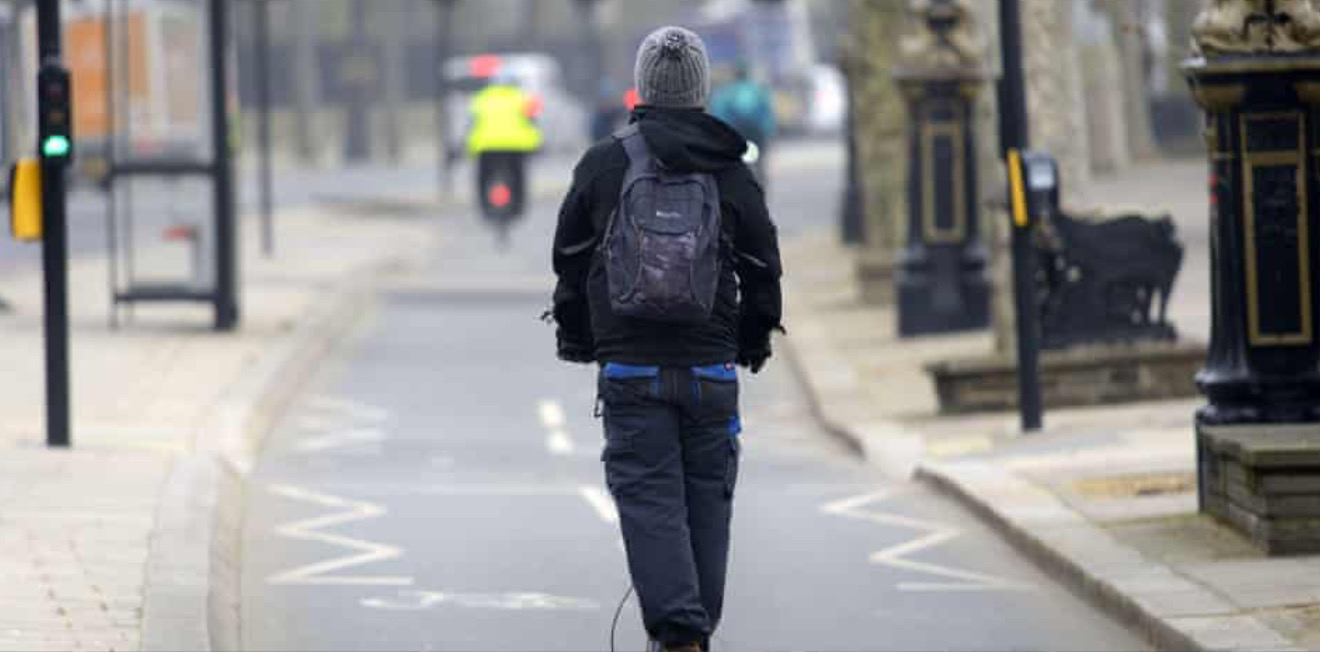
Nearly 500 people suffered serious injuries in collisions involving e-scooters across Great Britain in 2026, according to newly released government figures that have intensified concerns over road safety and the growing use of electric scooters in towns and cities.
New data published by the Department for Transport showed that an estimated 1,484 casualties were recorded in crashes involving e-scooters during the year, marking another increase compared with 2024.
Officials said approximately 485 people were seriously injured in e-scooter-related incidents last year, up from 428 in the previous year. Another 989 people suffered minor injuries, compared with 956 recorded in 2024.
The figures also revealed that 10 people died in e-scooter collisions in 2026, with all fatalities involving e-scooter riders. That compares with six deaths linked to e-scooter crashes in 2024.
The statistics are expected to increase pressure on the UK government to introduce stricter regulations covering e-scooter use, road safety standards and enforcement measures.
E-Scooter Casualties Continue to Rise
The latest figures show that e-scooter collisions remain a growing concern across Britain despite wider long-term declines in overall road fatalities.
According to the Department for Transport, the rise in serious injuries linked to electric scooters reflects the increasing popularity of the vehicles, particularly among younger commuters and urban travellers.
Rental e-scooters are currently allowed only as part of government-approved trial schemes operating in selected towns and cities across England. However, privately owned e-scooters remain illegal for use on public roads, pavements and cycle lanes under existing UK legislation.
Despite these restrictions, privately owned e-scooters are widely used in many urban areas, leading to growing calls for clearer laws and tougher enforcement.
The government acknowledged that current legislation no longer reflects the rapid growth in e-scooter use and confirmed that a consultation on updated regulations is expected within the next year.
Government Plans New Road Safety Measures
The rising number of e-scooter injuries comes as ministers attempt to reduce deaths and serious injuries on British roads.
Earlier this year, the government unveiled a new road safety strategy aimed at cutting the number of people killed or seriously injured on UK roads by 65% by 2035.
The strategy also includes a target of reducing road casualties involving children under the age of 16 by 70%.
Officials say the plan will focus on stronger enforcement, improved driver education and new safety measures for emerging forms of transport, including electric scooters.
A government spokesperson said ministers were aware that the law surrounding e-scooters needed updating to improve public safety.
The spokesperson said the government would consult on possible regulatory reforms over the coming year, while also considering broader changes to road safety legislation.
Among the proposals already under discussion are a lower drink-driving limit and a mandatory minimum learning period for drivers.
Overall Road Fatalities Fall Across Britain
While e-scooter injuries increased, overall road deaths in Great Britain continued to decline.
The Department for Transport said there were an estimated 1,556 fatalities in reported road collisions across Britain during 2025, representing a 3% fall compared with the previous year.
However, the total number of people killed or seriously injured reached 29,911, marking a 4% increase from 2024.
Overall casualties of all severities totalled approximately 127,870.
Officials described the broader trend as a continuation of long-term reductions in road deaths seen over the past decade, although safety campaigners argue progress remains too slow.
Road Safety Campaigners Demand Faster Action
Road safety groups say the latest figures underline the urgent need for stronger government intervention.
Rod Dennis, senior policy officer at RAC, warned that Britain was still failing to make significant progress in reducing serious injuries and fatalities on the roads.
Dennis said the figures demonstrated why the government’s road safety strategy was critically important.
He noted that an average of four people still lose their lives on British roads every day and argued that such casualty levels would trigger far greater scrutiny if they occurred in other forms of transport.
Safety experts have repeatedly warned that the rapid growth of e-scooter use has outpaced the legal framework governing the vehicles.
Campaigners say confusion over where e-scooters can legally operate, combined with inconsistent enforcement, has contributed to rising accident rates.
Young Men Most Frequently Involved in Road Casualties
The latest government statistics also highlighted demographic trends in road collisions across Britain.
Men accounted for 77% of road fatalities during 2025 and represented 61% of all casualties regardless of severity.
People aged between 17 and 29 were involved in 23% of fatalities and 28% of all recorded casualties.
Meanwhile, people aged 70 and over accounted for 24% of fatalities despite representing only 8% of total casualties.
Analysts say these figures continue to show that younger road users remain among the highest-risk groups, particularly when using newer forms of personal transport such as e-scooters.
Debate Over E-Scooter Legalisation Continues
The government has been testing rental e-scooter schemes in several areas since 2020 as part of efforts to explore greener transport alternatives and reduce traffic congestion.
Supporters argue that e-scooters provide affordable, environmentally friendly transport options for short urban journeys.
However, critics say safety concerns remain unresolved, especially regarding helmet use, speed limits, rider behaviour and pedestrian safety.
There have also been repeated concerns about e-scooter use on pavements, near schools and in crowded city centres.
Police forces and local councils have faced increasing pressure to improve enforcement against illegal e-scooter use while awaiting updated national legislation.
Calls for Stronger Regulation and Public Awareness
Transport experts say Britain now faces a critical decision over whether to fully legalise private e-scooters or introduce stricter controls on their use.
Some campaigners are urging mandatory insurance, licensing systems and compulsory safety training for riders.
Others want tighter restrictions on speed capabilities and stronger penalties for dangerous riding.
Public awareness campaigns are also expected to form part of future government plans as officials attempt to reduce injuries involving pedestrians, cyclists and e-scooter riders.
As the number of e-scooter users continues to grow across Britain, pressure is mounting on ministers to deliver a clear legal framework balancing innovation, environmental goals and public safety.
The latest casualty figures are likely to intensify the debate over how Britain should regulate electric scooters in the years ahead.