
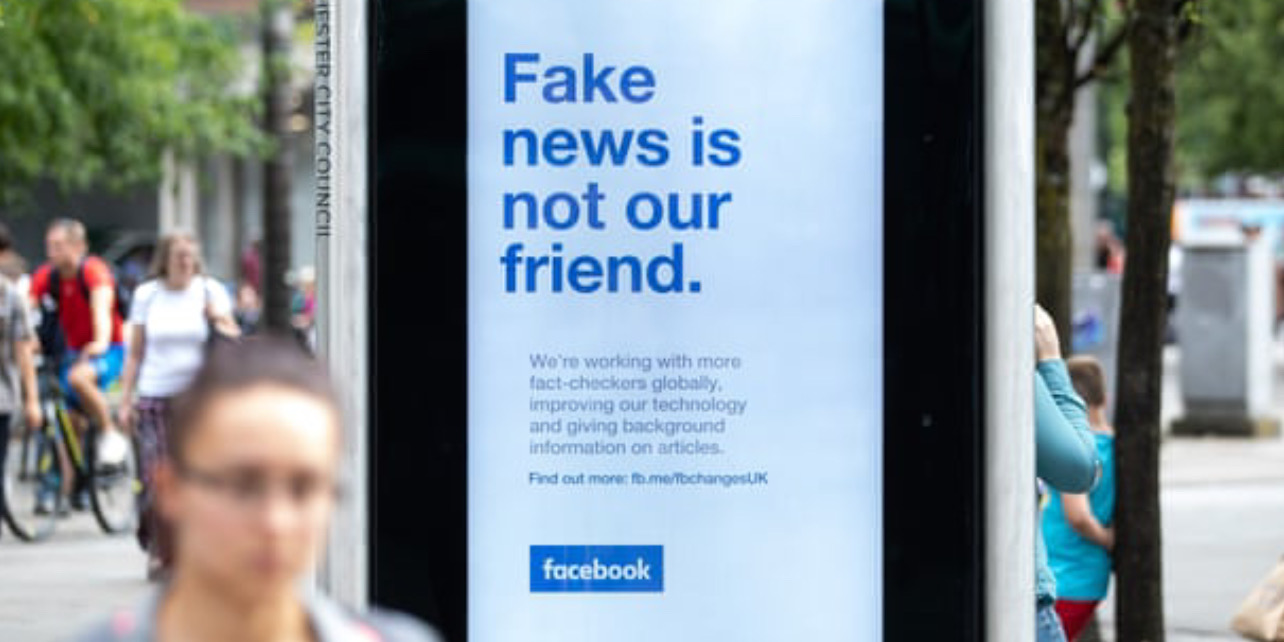
Local social media groups across the United Kingdom are increasingly fuelling misinformation and undermining public trust in institutions, according to a major new report that warns of the growing dangers posed by the decline of reliable local journalism.
The investigation, conducted by the Social Market Foundation (SMF), found that misinformation is significantly more prevalent in communities lacking trusted local news outlets, with false or misleading content spreading rapidly across platforms including Facebook, X and Nextdoor.
Researchers concluded that misinformation was nearly three times more common in so-called “news deserts” — areas with little or no recognised local journalism infrastructure. Immigration-related claims and Islamophobic narratives emerged as the most common categories of misleading content circulating online.
The report raises fresh concerns about the impact of online misinformation on democratic participation, community cohesion and public confidence in local institutions, particularly during politically sensitive periods such as elections and by-elections.
Election Periods See Sharp Rise in False Information
The SMF study identified substantial spikes in misinformation during local election campaigns. Researchers found that misleading content accounted for 12.9% of all news-related social media posts immediately before polling day, compared with 8.2% earlier in the year — representing a 56% increase.
The findings are based on the analysis of more than 125,000 posts collected from local Facebook groups, X searches and Nextdoor communities across 95 locations in the UK.
Researchers uncovered a broad range of misleading or fabricated material, including fake local authority announcements, AI-generated political content and false accusations directed at councils and political parties.
Among the examples identified in the study were fabricated claims suggesting Birmingham council meetings were “no longer conducted in English”, false allegations concerning an expansion of London’s congestion charge, and misleading posts claiming local authorities were attempting to make the countryside “less white”.
The report described local online groups as “the silent killer of trust in Britain”, warning that misinformation is increasingly filling the vacuum left by the decline of professional local journalism.
Decline of Local News Creates Information Vacuum
The report highlights growing concern among MPs and media experts over the weakening state of local news in Britain. Financial pressures, newsroom closures and declining advertising revenues have forced many local newspapers and broadcasters to reduce coverage or shut down entirely in recent years.
As a result, online forums and social media groups are increasingly becoming the primary source of local information for many communities — despite often lacking professional editorial standards, legal oversight or fact-checking procedures.
One MP cited in the report warned that some local Facebook groups in his constituency now attract larger audiences than established regional news outlets, despite being operated by administrators with openly partisan political views or no journalistic experience.
According to the SMF, more than 4.4 million people in the UK now live in areas classified as “news deserts”, where there is no dedicated local news provider.
The absence of reliable reporting has created fertile ground for misinformation, conspiracy theories and politically motivated content to flourish online unchecked.
Misinformation Detected Across Major Platforms
The study found that misinformation is widespread across major social media platforms used by local communities.
Researchers discovered that:
Two in five local Facebook groups contained at least one piece of misinformation within their latest 1,000 posts.
More than four in five X searches featured misleading or false information.
Nearly one in 26 news-related Facebook posts contained misinformation.
On X, more than one in four news-related posts included misleading or false claims.
The report also found that approximately 20% of misinformation posts related directly to local issues such as planning disputes, transport policies, council services and local political campaigns.
The findings have intensified concerns about the role social media algorithms play in amplifying emotionally charged or divisive content, particularly in areas where trusted journalism has weakened.
Political Concerns Grow Ahead of Key Elections
The issue has gained additional political significance following misinformation incidents linked to recent elections and by-elections.
Researchers identified misleading content in three out of four local social media groups connected to the recent Gorton and Denton by-election in south-east Manchester, where the Green Party secured victory with Reform UK finishing second.
False posts targeted multiple political parties, including Labour, Reform UK and the Greens. One fabricated quote falsely attributed to Reform candidate Matthew Goodwin claimed he described “Mancunians” as “thick”. Another misleading image falsely connected Labour figures to extremist political narratives.
The findings are expected to heighten concerns ahead of the upcoming Makerfield by-election, where Greater Manchester Mayor Andy Burnham is attempting to return to Parliament amid speculation over future Labour leadership tensions.
MPs Demand Stronger Regulation
Senior politicians have responded to the report by calling for tougher regulation and stronger safeguards against online misinformation.
Chi Onwurah, Labour chair of the science and technology select committee, described the findings as “deeply concerning” and criticised the government for rejecting earlier parliamentary recommendations aimed at strengthening protections against misinformation.
“It’s clear that far more must be done to safeguard the public from unreliable online sources that are filling the void left by trusted local news,” Onwurah said.
She urged ministers to embed stronger principles of transparency, accountability and responsibility within the UK’s online safety framework.
The government has acknowledged the dangers associated with misinformation but said its approach remains focused on addressing the “most prevalent and concerning harms”.
Social Media Companies Defend Existing Policies
Major technology companies responded to the report by highlighting existing moderation systems and misinformation policies.
Meta stated that it removes misinformation likely to contribute directly to physical harm or interfere with democratic processes. Nextdoor said reports of misinformation are escalated to specialist moderation teams rather than handled solely by volunteer moderators.
X, formerly Twitter, did not respond to requests for comment.
However, media experts and campaigners argue that existing moderation efforts remain inconsistent and insufficient given the scale of misleading content circulating online.
Experts Warn of Erosion of Public Trust
Jamie Gollings, deputy research director at the SMF and co-author of the report, warned that failing to act quickly could have serious consequences for British democracy and social cohesion.
“Local misinformation is the silent killer of trust in Britain,” he said. “Not acting fast enough would be a mistake — affecting how people vote, how they feel about their neighbours and whether they trust the institutions that serve them.”
Theo Bamber, chief executive of the News Media Association, echoed those concerns and called for stronger government support for local journalism.
“This report illustrates exactly why a strong local news media sector is vital in combating the growing threat of misinformation on social networks,” he said.
The report ultimately concludes that rebuilding trusted local journalism may be one of the most effective long-term defences against the rapid spread of misinformation across British communities.