
British armed forces have successfully intercepted and boarded a Russian shadow fleet oil tanker in the English Channel, marking the first operation of its kind led by the United Kingdom.
The mission represents a significant escalation in efforts to disrupt Russia’s ability to fund its war in Ukraine through sanctioned oil exports.
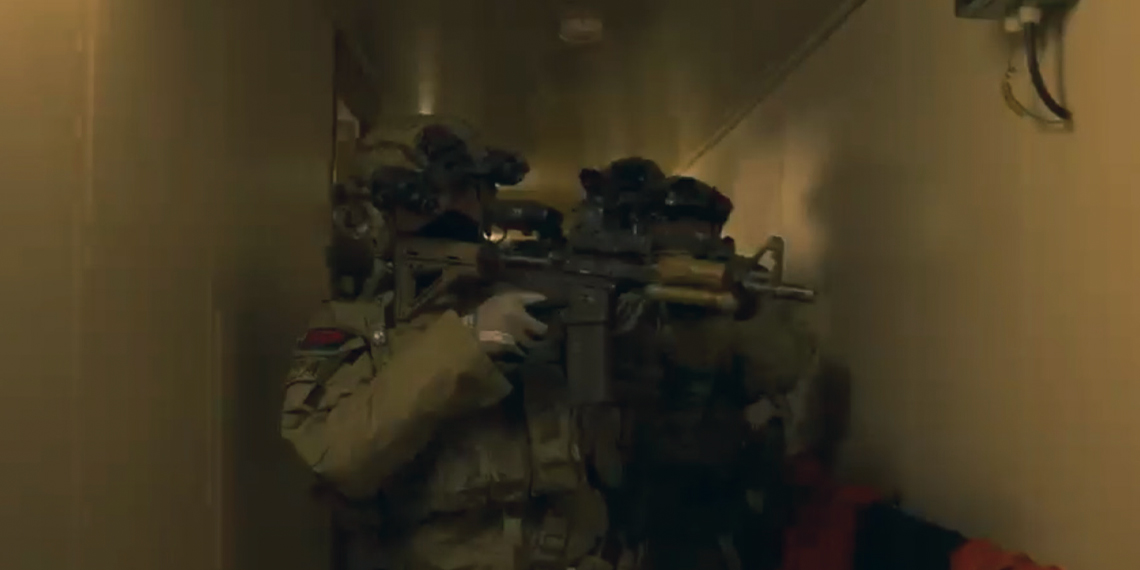
Prime Minister Keir Starmer confirmed that Royal Marine commandos and officers from the National Crime Agency carried out the operation during the early hours of Sunday.
The six-hour mission targeted the oil tanker Smyrtos, which was sailing under a Cameroonian flag as it attempted to enter the English Channel.
Following the operation, the vessel was escorted and is now anchored off the Dorset coast near the town of Weymouth. Authorities said the ship will remain under close monitoring for any environmental or safety concerns.
British officials believe the tanker is part of Russia’s so-called shadow fleet, a network of vessels used to transport oil and bypass international sanctions imposed following Moscow’s invasion of Ukraine.
According to UK authorities, the shadow fleet consists of around 700 vessels and is responsible for transporting approximately 75% of Russia’s oil exports.
Western governments argue that these ships provide a vital financial lifeline for the Kremlin by enabling sanctioned oil sales, generating revenue that can be used to support military operations in Ukraine.
The interception is being viewed as a direct attempt to weaken Russia’s ability to continue financing the conflict.
Prime Minister Starmer said he personally authorised the operation and described it as another significant setback for Russian President Vladimir Putin.
He stated that the mission sends a clear message that countries and organisations helping to sustain Russia’s war effort will not be allowed to operate freely through British waters.
The Prime Minister also praised the armed forces and law enforcement personnel involved in the operation for their professionalism and commitment.
New Defence Secretary Dan Jarvis, who recently replaced John Healey, described the mission as a highly complex operation requiring exceptional skill and courage.
He said Russia continues to depend on its shadow fleet to fund military operations in Ukraine and argued that the interception delivers a significant blow to Moscow’s war effort.
The Ministry of Defence confirmed that the operation involved a range of military assets, including aircraft from the Maritime Air Group, RAF surveillance support and naval vessels.
Among the equipment deployed were Chinook, Merlin Mk4 and Wildcat helicopters, alongside an RAF P-8 maritime patrol aircraft. Naval support was provided by the warships HMS Sutherland and HMS Ledbury.
Officials said the operation was conducted in close coordination with French authorities.
The British government has increasingly targeted Russia’s shadow fleet in recent months. Ministers say more than 500 vessels linked to the network have already been sanctioned.
The Ministry of Defence claims these measures are having an impact, with Russia’s oil and gas revenues falling significantly over the past year.
Earlier this year, the government expanded military powers to allow British forces to board sanctioned vessels travelling through UK waters, creating the legal framework for operations such as the one carried out on Sunday.
Former Armed Forces Minister Al Carns suggested the successful interception could pave the way for further action against sanctioned vessels in the future.
He noted that British forces have previously supported similar operations conducted by allies, including France and the United States, but this was the first time the UK had taken the lead.
Security analysts believe the operation signals a tougher British stance on enforcing sanctions and disrupting networks that continue to support Russia’s economy and military campaign in Ukraine.