
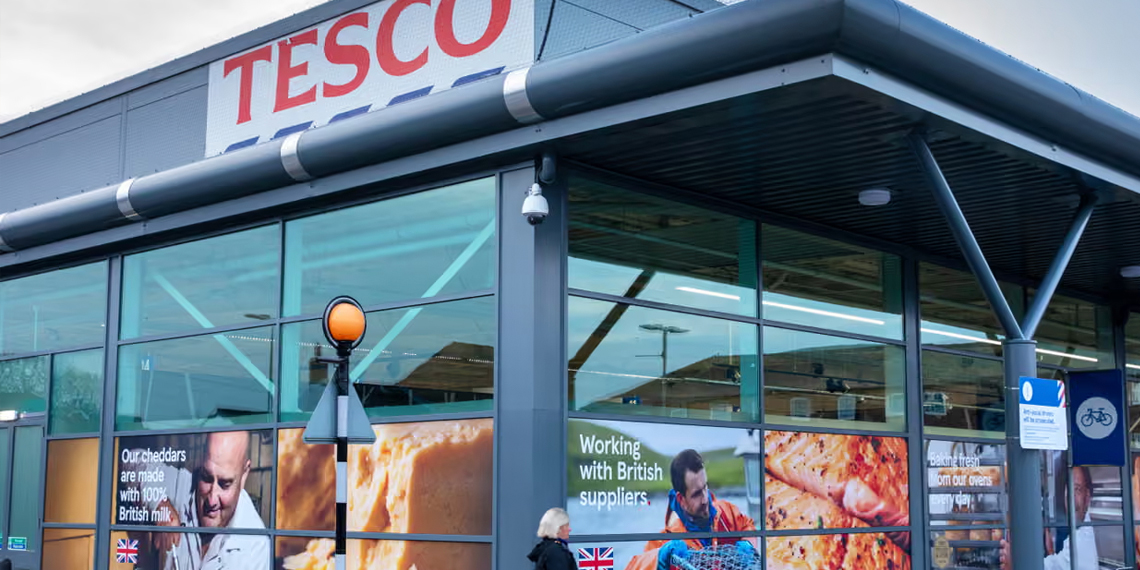
Tesco has reported slower sales growth during the spring, with chief executive Ken Murphy insisting that weather conditions have a far greater impact on grocery spending than football success or geopolitical tensions.
The UK’s largest supermarket said sales growth more than halved during the three months to the end of May, as wet weather and concerns over the conflict in the Middle East weighed on consumer confidence.
Murphy said sunshine remains the biggest driver of supermarket spending, encouraging families and friends to gather more often and spend more on food and drink.
“The biggest impact on the market will be the weather,” he said, adding that sunny conditions encourage households to “eat together more, celebrate more and spend more on groceries”.
While acknowledging the excitement surrounding the FIFA World Cup, Murphy suggested its impact on overall grocery sales is relatively limited.
“It will be fantastic for the country if [England and Scotland] did well,” he said. “It would give the country a real lift.”
Tesco did, however, see notable spikes in demand linked to major football matches. Orders through its rapid delivery service, Whoosh, surged by 40% during England’s clash with Croatia, while sales rose even more in Scotland following the national team’s victory over Haiti.
Demand for popular Scottish soft drink Irn-Bru increased by 50%, while canned cocktail sales jumped by 185% ahead of the match.
Despite these boosts, Murphy maintained that “the weather effect is the big difference”.
Industry research suggests football fans could contribute more than £267 million in additional retail spending ahead of England’s next World Cup fixture, including nearly £70 million spent in pubs and hospitality venues.
However, historical data from previous tournaments indicates that the overall impact on supermarket sales tends to be modest, as households simply shift spending patterns rather than significantly increasing them.
Tesco reported like-for-like sales growth of 1.8%, reaching £13.4 billion during the quarter. This was lower than the 4.2% growth recorded in the previous quarter and below analysts’ forecasts.
Online sales remained a bright spot, rising by 8.9%, while total group sales increased by 1% to £16.8 billion.
Murphy said uncertainty surrounding the conflict in the Middle East had affected consumer sentiment, particularly due to concerns over fuel and energy costs. However, he noted there had been little evidence of major changes in shopping habits.
He also pointed to easing food inflation, helped by lower commodity prices and actions taken by manufacturers to shield themselves from previous energy price shocks.
Murphy said he did not expect grocery inflation to return to the levels seen in recent years and noted that petrol prices were already beginning to fall amid hopes of a lasting agreement between the United States and Iran.
Tesco has continued investing in its competitive pricing strategy, extending its Aldi Price Match programme to more than 2,000 Tesco Express stores and launching over 500 new products.
The retailer said it remains “well placed to build on our progress to date”.
However, sales at Tesco’s Booker wholesale division fell by 3.2%, reflecting continued challenges facing independent retailers and hospitality businesses on Britain’s high streets.
Despite the slower sales growth, Tesco maintained its profit guidance for the year. Analysts currently expect the retailer to generate around £3.25 billion in annual profit.
The company previously warned that profits could decline this year for the first time since 2023, although its most recent annual results showed profits rising by 8.5% to £2.4 billion, supported by strong sales growth across the UK.