
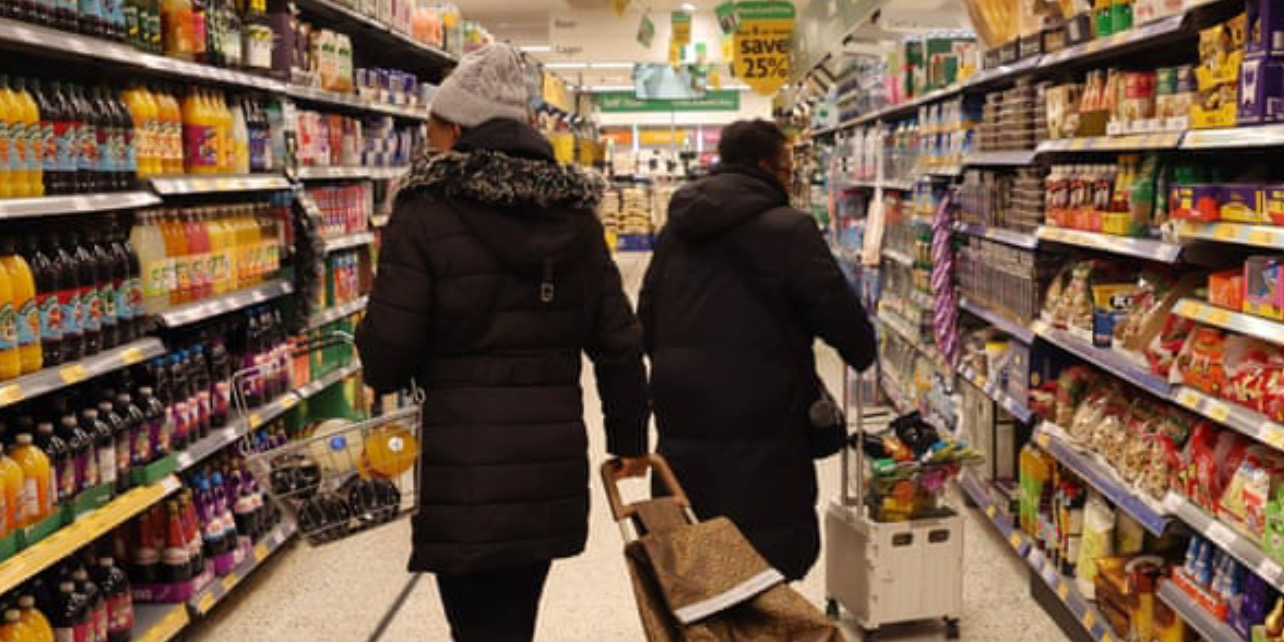
UK shoppers faced an unexpected rise in grocery inflation last month, ending four consecutive months of falling prices, amid warnings that ongoing tensions in the Middle East could push costs even higher.
According to the market research firm Worldpanel by Numerator, grocery price inflation climbed to 4.3% in the four weeks to 22 February, up from 4% in January and down from 4.7% in December. This increase adds further strain on households already grappling with the cost of living.
The European Central Bank’s chief economist cautioned that a prolonged conflict in the Middle East could disrupt oil and gas supplies, causing a “substantial spike” in inflation and a “sharp drop in output” across the eurozone. Rising energy costs threaten UK consumers too, potentially pushing petrol prices up and adding pressure to household gas and electricity bills.
Philip Lane, in an interview with the Financial Times, said: “A jump in energy prices puts upward pressure on inflation, particularly in the near term, and such developments would be negative for growth,” noting the effects would extend to the UK.
Fraser McKevitt, head of retail and consumer insight at Worldpanel, highlighted seasonal trends. Chocolate prices remained high, up 9.3% year-on-year ahead of Easter, although the pace of inflation in this category has begun to ease, reaching its lowest level since September 2025.
Retailer Greggs suggested easing inflationary pressures could support stronger consumer spending, despite reporting a near 18% fall in pre-tax profits to £167.4m for the year ending 27 December.
Worldpanel data also revealed spikes in seasonal shopping. Pre-made pancake mix sales soared 114% in the week leading up to Shrove Tuesday, while homemade batter ingredients rose nearly 6% year-on-year to £7.77. Flour, sugar, and lemons saw sharp increases, up 34%, 17%, and 70% respectively.
Valentine’s Day spending also surged, with almost 12% of households purchasing premium meal deals on the Friday before the holiday. Steak and chocolate sales peaked in the days leading up to and on Valentine’s Day itself, while premium meal deals priced at £10 or more accounted for £39m in spending—a sevenfold increase on the previous week.
Online grocery shopping continues to grow in popularity. Over the four-week period, more than 18 million orders were placed online, up 9.7% year-on-year, accounting for 13% of total grocery sales—the highest share since July 2021. McKevitt noted that while online shopping is still most popular among affluent families in London and the South East, its appeal is widening to households across different economic backgrounds.
Ocado led online growth with 15.1% sales increase and a 2.1% market share, maintaining its top position since September. Lidl achieved double-digit growth for the 12th consecutive month, up 10% with a 7.8% market share.
Tesco increased sales by 4.5%, raising its market share to 28.5%, while Sainsbury’s sales rose 5.2%, lifting its share to 16.1%. Waitrose recorded its strongest growth since March 2021, with sales up 5.6% and market share at 4.8%.
Meanwhile, Asda and Co-op experienced declines, with sales down 2.6% and 1.6% year-on-year respectively.