
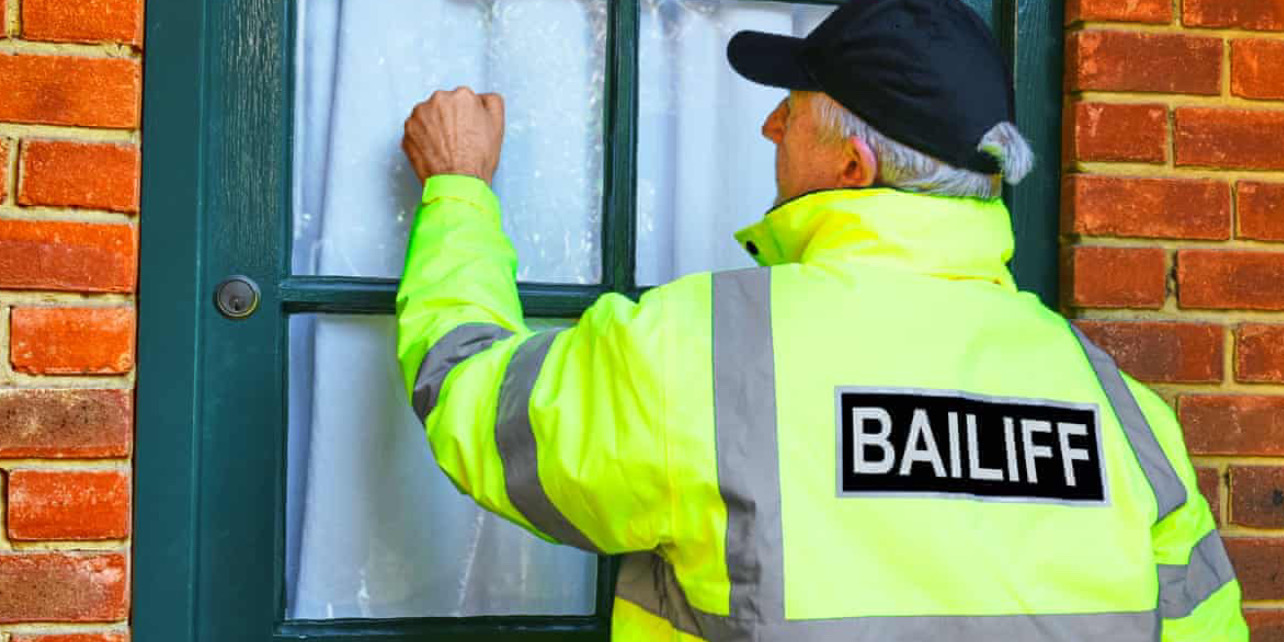
Water companies in England and Wales have sent bailiffs to tens of thousands of households each year to recover unpaid bills, including many cases involving debts of less than £1,000, according to new parliamentary data.
Figures released by the Environment, Food and Rural Affairs Committee show widespread use of court-appointed enforcement agents by water suppliers attempting to collect unpaid customer bills.
Bailiffs have the legal authority to seize goods — including electrical items, jewellery or vehicles — from people who fail to pay court-ordered debts.
The data reveals significant differences between companies in how often bailiffs are used.
Some water suppliers have avoided enforcement altogether. Wessex Water has not used bailiffs in the past decade.
However, the companies making the most frequent use of bailiffs in 2025 — adjusted for population — were South West Water, Southern Water and Yorkshire Water.
At Yorkshire Water, bailiff visits rose dramatically over the past decade. The company recorded 405 visits in the 2016–17 financial year, rising to 6,124 visits in 2024–25.
Other companies have also reported peaks in enforcement activity. Severn Trent instructed bailiffs 11,574 times in 2022, while Southern Water authorised 15,707 bailiff actions in 2019.
Policies on when to send bailiffs differ between companies, leading critics to describe the situation as a “postcode lottery”.
For example, Northumbrian Water told the committee it does not send bailiffs to households receiving means-tested benefits.
Southern Water said those customers may still be eligible for legal action, although it confirmed people suffering from dementia or critical illness would not be pursued through litigation.
Severn Trent said it does not routinely check whether customers receive means-tested benefits before instructing bailiffs.
John McDonnell criticised water companies for pursuing struggling households while executives face little accountability for environmental breaches.
“Only five directors of water companies have been prosecuted in the last 30 years. Contrast that with the thousands of mainly poor people the water companies set the bailiffs on each year,” he said.
“The system is more interested in prosecuting families that are struggling to pay their water bills than the company directors responsible for polluting our rivers and seas while lining their pockets from profiteering at the expense of both their customers and our environment.”
Alistair Carmichael, chair of the Environment, Food and Rural Affairs Committee, said the findings raised concerns, particularly during a period of financial pressure for households.
“It is interesting and concerning to see the extent of their use of bailiffs over time and to see such differing approaches,” he said.
“For any family or individual to be subject to legal action is no small matter and can be a cause of severe stress and anxiety.”
He added that the committee had referred the findings to Citizens Advice and the Consumer Council for Water for further scrutiny.
Several water companies said bailiffs were used only as a last resort and that support was offered to customers struggling with bills.
A spokesperson for Yorkshire Water said enforcement action is taken only against customers believed to have the ability to pay but who choose not to.
Southern Water said it provides assistance through social tariff schemes and is investing £8.5bn in improving services and protecting the environment.
South West Water and Severn Trent also said they prioritise financial support programmes for customers and only pursue enforcement in limited circumstances.
The debate comes as water companies across England and Wales face criticism over rising bills, mounting debts and environmental breaches, while households continue to struggle with the cost of living.