
The UK military repair facilities Ukraine initiative has expanded with the establishment of four maintenance, repair and overhaul (MRO) sites designed to restore damaged armored vehicles and key battlefield equipment used by the Armed Forces of Ukraine.
The facilities, operating under contracts from the UK Ministry of Defence and managed by British defence companies, are designed to rapidly repair military vehicles and artillery systems used by Ukrainian forces during the ongoing war with Russia.
The project allows damaged equipment to be repaired within Ukraine rather than being transported abroad, significantly reducing repair times and returning vital assets to the battlefield more quickly.
Officials say the programme also supports Ukraine’s industrial sector by creating skilled engineering jobs for local workers.
Facilities repair UK-supplied armored vehicles and artillery
The new repair hubs are tasked with maintaining and restoring a wide range of military equipment used by Ukrainian forces.
Among the systems supported at the UK military repair facilities Ukraine sites are UK-supplied CVR-T armored reconnaissance vehicles, Husky tactical support vehicles, AS-90 self-propelled artillery systems and L119 light guns.
The facilities also work on legacy Soviet-era equipment still used by Ukraine’s armed forces.
Through cooperation with Swedish partners, the sites are also capable of servicing Archer artillery systems supplied by Sweden.
British engineers are working alongside Ukrainian specialists at the repair hubs to ensure damaged vehicles and artillery can be restored quickly.
According to the UK government, the collaboration helps combine British technical expertise with Ukrainian battlefield experience.
British engineers supporting Ukrainian technicians
In a statement released in early March, the UK government confirmed that British engineers are currently working in Ukraine as part of the programme.
“British engineers are on the ground in Ukraine, working side-by-side with Ukrainian counterparts to service and repair military vehicles,” the government said.
Officials stressed that the personnel involved are civilian engineers rather than British military troops.
This distinction is intended to avoid any perception that UK armed forces personnel are directly operating within the conflict zone.
UK defence minister visits repair site
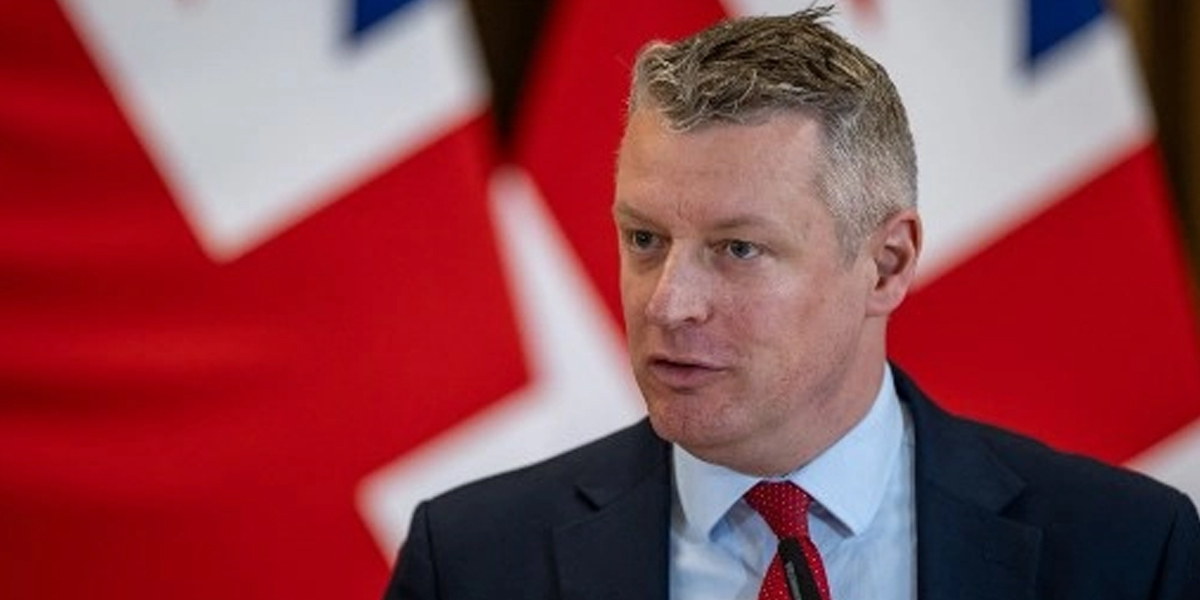
UK Minister for Defence Readiness and Industry Luke Pollard recently visited one of the repair facilities during a trip to Ukraine.
Pollard said the programme reflects Britain’s continued commitment to supporting Ukraine despite global attention shifting toward other international conflicts.
“While the world’s attention is focused on conflict across the Middle East, the UK is standing firmer with our friends in Ukraine,” he said.
Pollard also described visits to Ukraine as emotionally powerful and reaffirmed the UK government’s strategic position on the war.
“The UK will never waver in our support for Ukraine, and we are clear that Ukraine’s security is Britain’s security,” he said.
Facilities designed to speed up battlefield repairs
Defence analysts say establishing repair infrastructure inside Ukraine is a critical step in maintaining the operational readiness of Ukrainian forces.
Before the creation of these facilities, damaged equipment often had to be transported to neighbouring countries for maintenance and refurbishment.
According to defence reporting, that process could take weeks or months depending on the severity of the damage and transportation logistics.
Locating MRO facilities within Ukraine allows repairs to take place much closer to the front line.
This approach reduces turnaround time and allows restored vehicles to return to service more rapidly.
Industrial cooperation with Ukrainian companies
The UK military repair facilities Ukraine programme is also intended to strengthen Ukraine’s defence industrial base.
The repair hubs operate in partnership with Ukrainian companies and engineering specialists, providing technical training and employment opportunities.
Officials say the initiative is part of a broader effort to help Ukraine rebuild its industrial capacity while continuing to support military operations.
By combining Western defence technologies with Ukrainian expertise, the programme aims to develop long-term capabilities that could remain valuable even after the conflict ends.
Programme Lyra expands UK-Ukraine defence cooperation
The repair facilities are part of a wider defence partnership between the United Kingdom and Ukraine.
The two countries signed an agreement under Programme Lyra, a technology cooperation framework announced in June 2025 by UK Prime Minister Sir Keir Starmer and Ukrainian President Volodymyr Zelensky.
The initiative focuses on sharing advanced defence technology, including electronic warfare systems and battlefield integration.
Under the programme, British technology will be combined with Ukrainian platforms to improve Ukraine’s defensive and operational capabilities.
UK remains one of Ukraine’s largest supporters
Since Russia launched its full-scale invasion of Ukraine in February 2022, the United Kingdom has emerged as one of Kyiv’s most significant international supporters.
The UK government has committed more than £21.8 billion in military, financial and humanitarian assistance to Ukraine.
This support includes weapons systems, training for Ukrainian troops, intelligence sharing and long-term defence cooperation projects.
Officials say the new UK military repair facilities Ukraine initiative demonstrates how Western allies are adapting their support strategies to ensure Ukrainian forces can sustain equipment and maintain operational readiness during the prolonged conflict.
Evolving logistics in modern warfare
Military experts note that maintenance and repair capabilities are increasingly crucial in modern warfare, where advanced equipment plays a central role in battlefield effectiveness.
Armored vehicles, artillery systems and electronic equipment require regular maintenance to remain operational.
Establishing local repair infrastructure allows armed forces to keep equipment functioning even during extended campaigns.
For Ukraine, which has received a wide variety of Western-supplied military equipment since 2022, such infrastructure is essential for sustaining its defensive capabilities against Russia’s continuing military operations.