
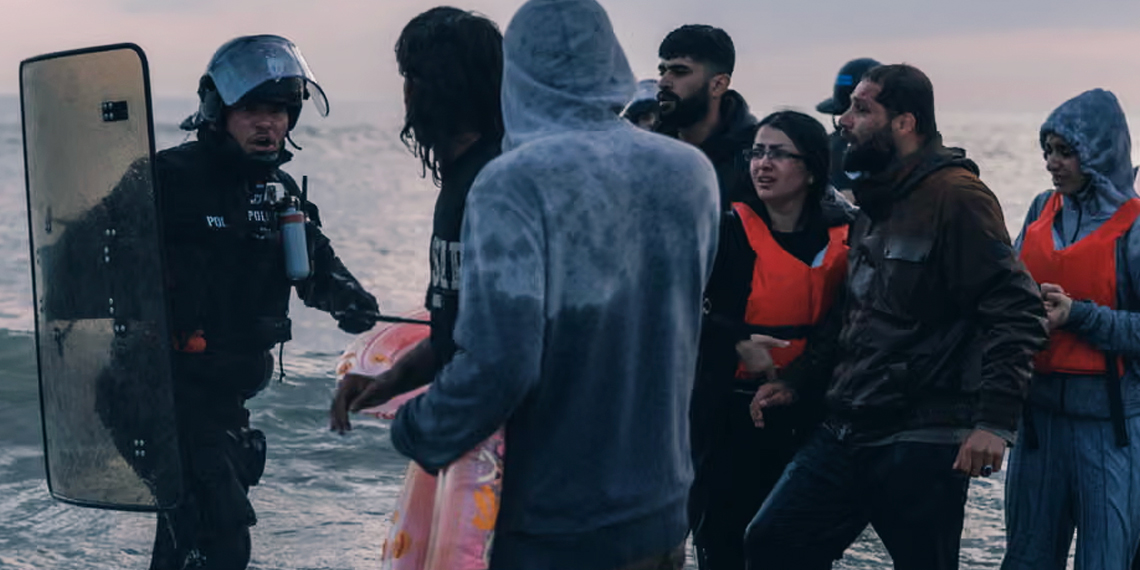
The UK-France small boat deal delay has sparked growing concern over border security and migration control, as a new agreement to curb Channel crossings remains unsigned just days before the current deal expires.
With the existing £468 million arrangement set to lapse, uncertainty is mounting over whether enforcement efforts along France’s northern coastline could weaken, potentially allowing people smugglers to exploit any gap in coordination between the two countries.
Deadline looms as negotiations continue
The UK-France small boat deal delay comes as talks between London and Paris continue without a final agreement in place.
The previous deal, announced in March 2023 by Rishi Sunak and Emmanuel Macron, committed the UK to funding around two-thirds of the cost of French border policing aimed at preventing small boat crossings.
Negotiations on a renewed agreement began last summer during the 37th UK-France summit, with further discussions held in Paris in recent weeks. However, with the current arrangement expiring imminently, officials have yet to confirm whether a new deal will be signed in time.
Disagreements over enforcement measures
At the centre of the UK-France small boat deal delay are reported disagreements over enforcement expectations.
Home Secretary Shabana Mahmood is understood to be pushing for stronger commitments from France, including increased interception of migrant boats before they reach UK waters.
The Home Office has indicated it is seeking to introduce greater “flexibility and innovation” into the agreement, potentially linking funding to performance outcomes. However, sources familiar with the negotiations suggest French authorities may resist such conditions, arguing that border security cannot be treated as a transactional arrangement.
Concerns have also been raised that attempts to secure a tougher deal could prolong negotiations, increasing the risk of a temporary gap in enforcement.
Rising crossings despite previous agreement
The UK-France small boat deal delay comes against a backdrop of continued high levels of migration across the English Channel.
Although officials claim that tens of thousands of crossing attempts have been prevented in recent years, 2025 recorded the second highest number of arrivals since small boat crossings began in 2018, with around 41,500 people reaching the UK.
So far this year, more than 4,000 individuals have already made the journey, underscoring the ongoing scale of the challenge.
Critics have questioned the effectiveness of previous agreements, noting that despite significant financial investment, crossings have remained persistently high.
Concerns over potential enforcement gap
Experts warn that the UK-France small boat deal delay could have immediate operational consequences if no replacement agreement is finalised.
While some level of French coastal patrol activity is expected to continue, analysts caution that reduced coordination or intensity could create opportunities for smuggling networks to increase activity.
Even a short-term reduction in enforcement efforts could lead to a spike in crossings, particularly during favourable weather conditions when attempts typically rise.
Criticism from advocacy groups
Human rights organisations and migrant support groups have criticised the broader approach underpinning the UK-France small boat deal delay, arguing that enforcement-focused policies have failed to address the root causes of migration.
Campaigners say that increased policing and border controls have not stopped crossings but have instead made journeys more dangerous, contributing to a rise in fatalities.
They argue that without expanding safe and legal routes for asylum seekers, demand for irregular crossings will persist regardless of enforcement measures.
Government stance on migration control
The UK government maintains that cooperation with France remains central to tackling irregular migration and disrupting people smuggling networks.
Officials say joint operations have helped prevent thousands of crossings and stress that France remains the UK’s most important migration partner.
The UK-France small boat deal delay, however, highlights the complexity of balancing diplomatic negotiations, enforcement strategies and domestic political pressures in addressing migration challenges.
Channel crossings and policy responses
Small boat crossings across the English Channel have become a major political issue in the UK since 2018, driven by conflicts, economic hardship and limited legal migration pathways.
Successive governments have pursued agreements with France to strengthen border controls, alongside domestic measures aimed at deterring arrivals.
Despite these efforts, crossings have continued at significant levels, with fluctuating annual totals influenced by weather conditions, enforcement intensity and broader geopolitical factors.
The current UK-France small boat deal delay underscores ongoing questions about the effectiveness of existing policies and the need for long-term solutions that combine border security with humanitarian considerations.