
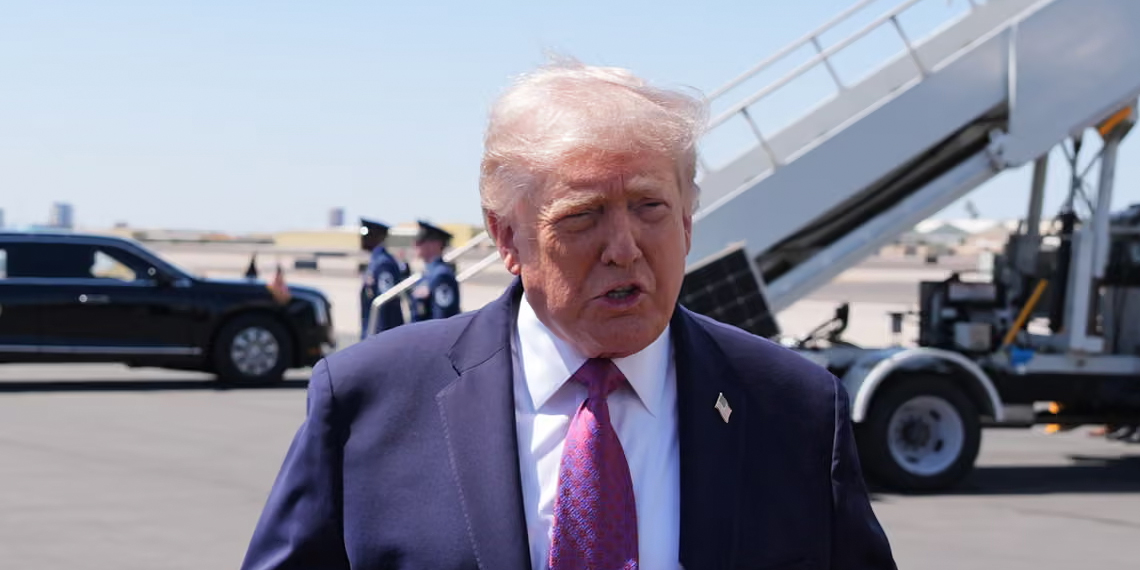
Donald Trump has warned he may impose significant tariffs on UK goods if Britain does not scrap its digital services tax targeting major American tech firms.
Speaking from the White House, Trump said the United States could respond by introducing “a big tariff” on the UK, signalling a potential escalation in trade tensions between Washington and London.
The UK’s digital services tax, introduced in 2020, applies a 2% levy on revenues generated from UK users by large technology companies with global digital income above £500 million. Firms such as Amazon, Google and Apple are among those affected, although the cost is often passed on to businesses using their platforms.
Trump argued that the policy unfairly targets American companies and warned that the US would retaliate if the tax remains in place. He said any tariffs imposed would match or exceed the revenue the UK collects through the levy.
The dispute centres on long-standing tensions over how global technology firms are taxed. The UK previously agreed to phase out the digital services tax as part of an international effort led by the Organisation for Economic Co-operation and Development to reform corporate taxation rules. The proposed system would ensure multinational companies pay tax where they generate revenue, alongside a global minimum corporation tax rate of 15%.
However, delays in implementing the OECD agreement have led several countries, including the UK, France, Italy and Spain, to retain their own digital taxes.
The issue was raised during discussions surrounding the UK–US trade deal agreed in 2025, but no changes were made to the tax at the time.
Trump’s latest remarks come amid broader strains in UK–US relations, including disagreements over foreign policy and the UK’s stance on the Iran conflict.
He has previously criticised digital taxes globally, arguing they are designed to disadvantage American technology firms, and has threatened similar trade measures against other countries maintaining such policies.
The warning raises the prospect of renewed transatlantic trade friction, with potential implications for UK exports if tariffs are introduced.