
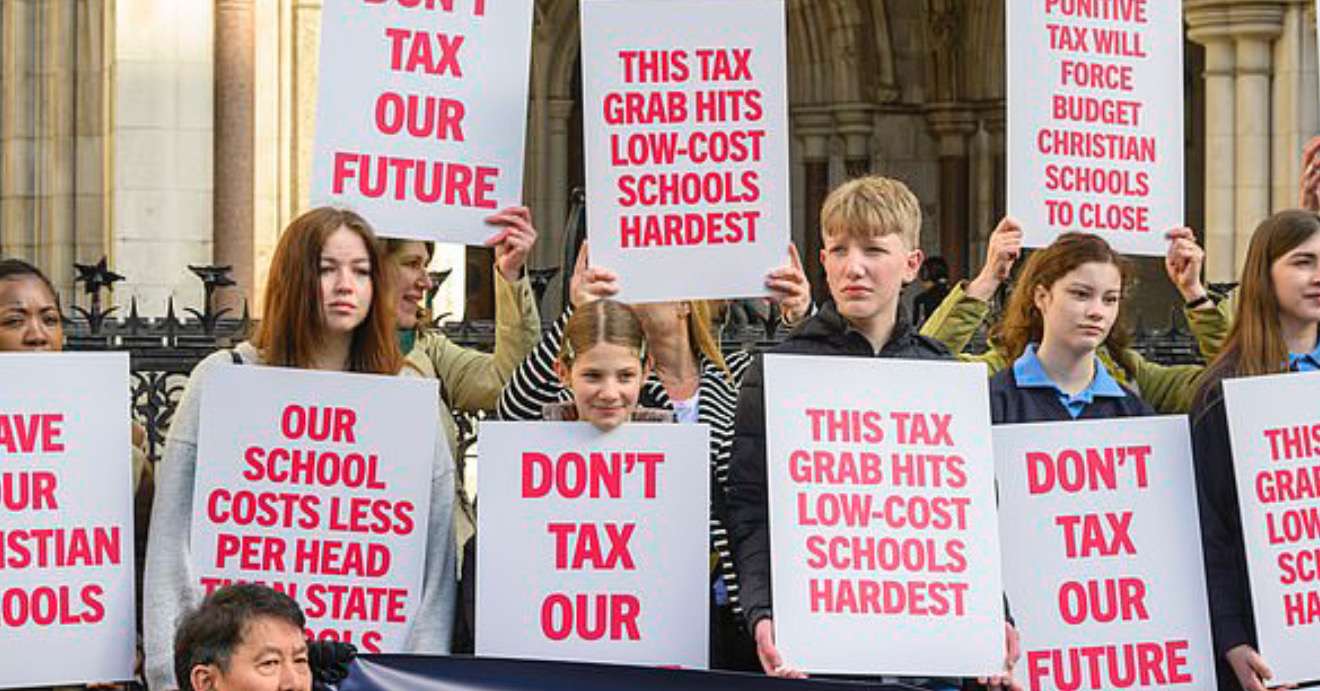
More than 65,000 children may have been pushed out of private schools across the UK following Labour’s decision to impose VAT on school fees, according to a new report from the Adam Smith Institute.
The think tank claims the number of pupils leaving the independent sector could now exceed one in ten of the UK’s total private school population of around 650,000 — far higher than the government’s original estimate of 17,000.
The report argues that spiralling fees caused by the VAT policy are placing increasing financial pressure on families, forcing many to move children into the state sector.
Joanna Marchong said: “We already know more than 25,000 children were displaced by last September. That number is likely to have risen sharply since then and could now easily be more than one in ten private school pupils nationwide.”
She warned that the policy could ultimately cost the Treasury more than it raises.
“VAT receipts are already on course to be wiped out by the cost of educating displaced pupils,” she said.
According to the institute, if 65,000 additional pupils enter the state system, the annual cost to the government could exceed £500 million.
The report also claims the government may fail to generate the £1.5 billion in revenue originally projected from the policy.
Marchong added: “If this trend continues nationwide, the fiscal damage could quickly outweigh any short-term revenue gains.”
The findings follow wider concerns over the impact of the VAT changes on independent schools.
Figures from the Independent Schools Council reportedly show that 115 mainstream private schools have closed since Labour came to power, including schools merged into larger institutions.
Historic schools have also announced closures, raising fears about local economic consequences and reduced educational choice for families.
The government has defended the VAT policy, insisting it will help fund state education and public services.
A Department for Education spokesperson said: “Ending tax breaks for private schools will raise more than £1.8 billion a year by 2029/30 to help fund public services and a better education for the 94% of children who go to state schools.”
Officials also rejected claims of excessive pressure on state schools, arguing that “the manufactured crisis of pressure on the state system has simply failed to materialise”.
Debate over education funding continues
The policy remains highly controversial, with critics warning of long-term impacts on families, schools and local economies, while supporters argue it will create a fairer education system.
As pupil numbers continue to shift, the debate over private school taxation and state school funding is expected to intensify.