
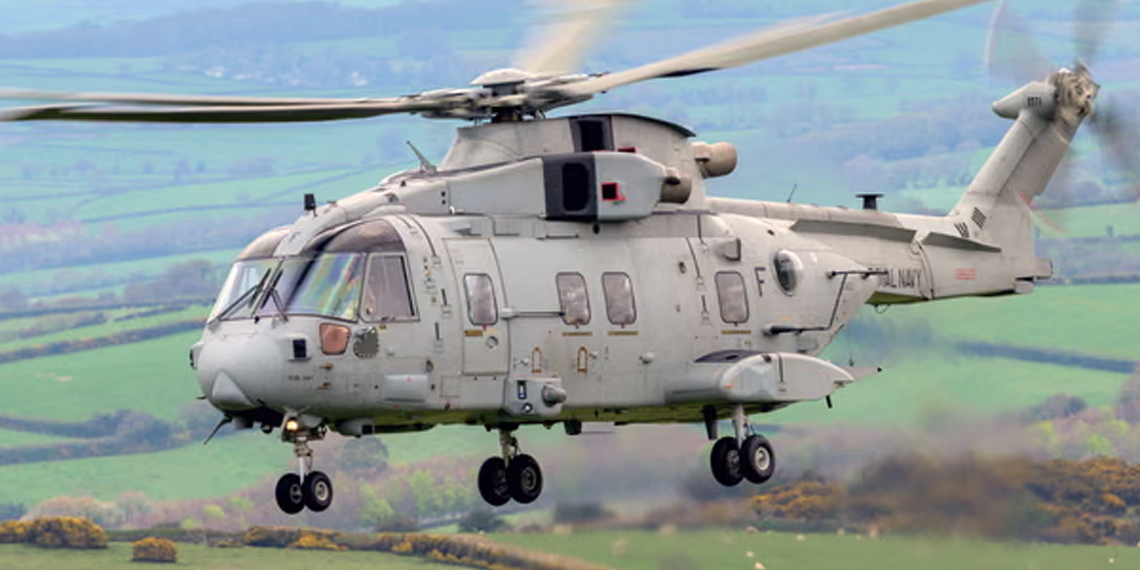
A major emergency operation is under way following a Royal Navy helicopter crash in Devon, after a military aircraft came down in a field near Sourton Down, close to Okehampton, prompting road closures and a coordinated response from police, emergency services and the Ministry of Defence.
Authorities confirmed that the helicopter involved in the incident belonged to the Royal Navy, although officials have not yet disclosed the type of aircraft involved or the circumstances leading to the crash.
Emergency crews remain at the scene as investigations continue into the incident, which occurred near the edge of Dartmoor in Devon.
Emergency Services Respond to Helicopter Crash Near Okehampton
According to Devon and Cornwall Police, emergency services were dispatched to the crash site at Sourton Down after reports of a helicopter going down in a rural field near the A386 and A30 junction.
Several roads surrounding the area, including access routes near Sourton Cross services, were temporarily closed to allow emergency personnel to secure the site and carry out response operations safely.
A spokesperson for Devon and Cornwall Police confirmed that the incident remains ongoing.
“The incident is ongoing and we will share more updates as we have them. The Ministry of Defence have confirmed it was a Royal Navy helicopter,” the force said in a statement.
The Ministry of Defence also acknowledged the incident in a brief statement, confirming that emergency teams had been deployed to the scene following the crash.
No official information has yet been released regarding casualties, injuries or the number of personnel aboard the aircraft at the time of the incident.
Crash Site Located Near Key Military Installations
The location of the crash has drawn particular attention due to its proximity to several major British military and naval facilities across the south-west of England.
The crash site lies near Dartmoor and within operational reach of several strategic naval and military establishments, including HMNB Devonport in Plymouth, widely recognised as the largest naval base in Western Europe.
Other nearby military sites include RM Tamar, CTCRM Lympstone and Britannia Royal Naval College in Dartmouth.
The south-west region serves as a critical hub for Royal Navy and Royal Marines operations, training exercises and aviation activity, making military helicopter flights a relatively common presence across the area.
Questions Remain Over Aircraft Type and Cause of Crash
Officials have not confirmed which model of helicopter was involved in the incident.
The two principal helicopter platforms currently operated by the Royal Navy are the Merlin and Wildcat helicopters, both of which are widely used in maritime operations, surveillance missions, troop transport and anti-submarine warfare.
The Merlin helicopter, manufactured by Leonardo, is considered one of the Royal Navy’s primary multi-role aircraft and is regularly deployed for naval operations from aircraft carriers and warships.
Meanwhile, the AW159 Wildcat is a lighter multi-purpose helicopter used extensively for reconnaissance, surface attack and battlefield support missions.
Defence analysts note that determining the aircraft type will likely play a significant role in assessing the operational context of the crash, including whether the helicopter was engaged in training, transport or active military exercises at the time.
Military Aviation Safety Under Scrutiny
The incident is expected to trigger a formal investigation involving military aviation authorities and defence safety specialists.
Aircraft accidents involving military helicopters are subject to highly detailed technical and operational reviews aimed at determining contributing factors such as mechanical failure, environmental conditions, pilot decision-making or operational risks.
The UK military has, in recent years, continued efforts to modernise aviation safety procedures while maintaining demanding operational schedules across domestic and international deployments.
Although military aviation incidents remain relatively uncommon, crashes involving defence aircraft often attract heightened public and political scrutiny due to their potential implications for operational readiness and personnel safety.
Royal Navy Aviation Operations in the UK
The Royal Navy operates one of Europe’s most advanced naval aviation fleets, supporting a wide range of missions including maritime patrol, humanitarian operations, disaster response and defence deployments.
Helicopters form a central component of Britain’s naval strategy, particularly in anti-submarine warfare and carrier strike operations.
Aircraft such as the Merlin and Wildcat are regularly deployed from naval bases and aircraft carriers including HMS Queen Elizabeth and HMS Prince of Wales.
The Devon region plays a strategically important role in these operations due to its concentration of naval infrastructure and training facilities.
As investigations into the Sourton Down crash continue, authorities are expected to provide further updates regarding the condition of those involved, the type of aircraft and the circumstances surrounding the incident.
The crash has once again drawn attention to the operational demands placed on military aviation personnel and the importance of maintaining rigorous safety oversight within the UK’s defence infrastructure.