
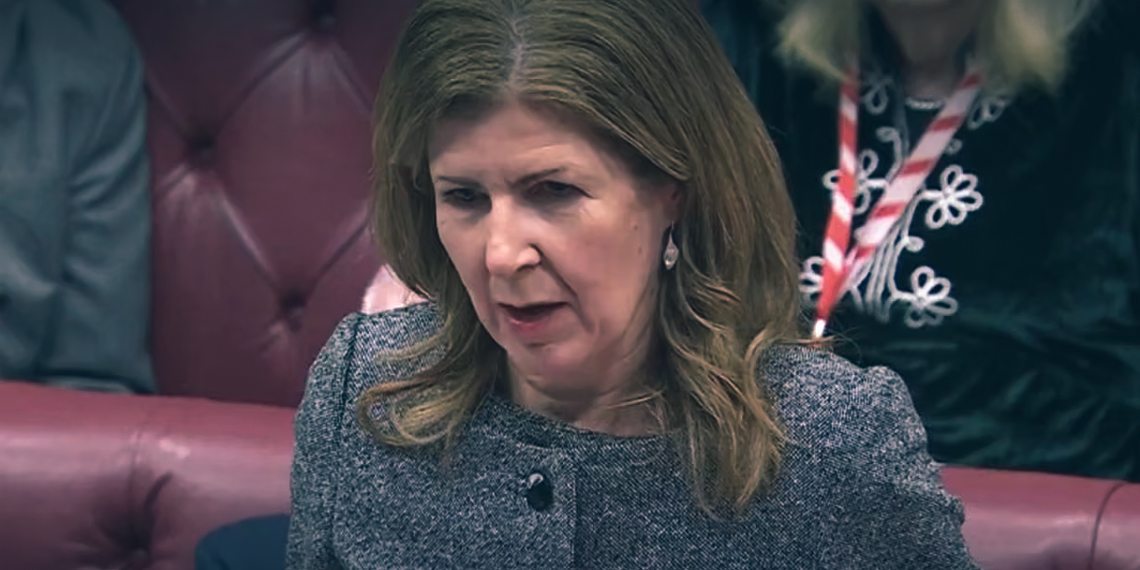
The UK government is facing growing criticism over plans to scrap its independent aid watchdog, amid accusations that ministers are seeking to avoid scrutiny as they push through deep cuts to overseas aid spending.
Jenny Chapman, the development minister and a close ally of Prime Minister Keir Starmer, has confirmed she is actively considering closing the Independent Commission for Aid Impact, the body responsible for scrutinising projects funded by the UK’s £14bn aid budget.
The proposal has sparked concern across Parliament, with senior Labour and Conservative figures warning that abolishing the watchdog could undermine transparency and accountability. One MP accused the government of attempting to “cover up the crime” of cutting billions of pounds from the aid budget.
The move also appears to conflict with Labour’s 2024 general election manifesto, which pledged to work “closely with the Independent Commission for Aid Impact” while in office.
Chapman, a Labour peer and Starmer’s former political secretary, first suggested the watchdog could be abolished while giving evidence to the Commons international development committee earlier this week. Asked about the future of Icai, she said “it would be really odd” not to consider changing the body.
“The question I need to ask myself is: has that investment achieved what it was designed to do and if part of it was sound public confidence? I would say no,” she told MPs.
In comments to the Guardian on Friday, Chapman said the financial pressures facing the aid budget meant nothing was off the table. “With much less money to spend, we need to look at everything,” she said. “As I wrote to the Icai commissioner yesterday, I have to ask myself what is the most strategic use of our funding, and best value for taxpayers. The prime minister wanted a line-by-line review of the aid budget, and there are no sacred cows.”
The comments have drawn a strong response from Sarah Champion, the Labour MP who chairs the international development committee. She said: “At a time of reduced funding and increased need, it is essential that the government spends its aid wisely – and with full transparency. To consider scrapping the independent body that secures value for money for the taxpayer is misguided.”
Andrew Mitchell, the Conservative MP and former cabinet minister who established Icai, said the watchdog played a vital role in maintaining public trust. “I can only wonder, therefore, whether this plan to scrap the watchdog is motivated by a wish to escape scrutiny and hide the inevitable damage caused by Labour’s brutal aid and development cuts – to cover up their crime,” he said.
Icai was created in 2011 under the Conservative–Liberal Democrat coalition to provide independent oversight of aid spending after a series of high-profile scandals. It fulfils a statutory requirement for independent evaluation of the UK’s aid programme.
In recent months, the watchdog has published several critical reports. In April, it warned that using more than a quarter of the aid budget to support refugees in the UK was “wreaking havoc” on overseas development and poverty reduction efforts. In November, it questioned why the Foreign, Commonwealth and Development Office had chosen the “least ambitious” atrocity prevention plans for Sudan despite intelligence warnings about the fall of El Fasher.
The commission’s 10 full-time staff are currently examining government plans to tackle violence against women and girls, an issue championed by the foreign secretary, Yvette Cooper.
Chapman took up her role in February following the resignation of Anneliese Dodds, who stepped down over plans to divert aid funding towards defence. The government is aiming to cut the aid budget by 40% by 2027, reducing spending from 0.5% to 0.3% of gross national income.
Under pressure from Donald Trump to increase Nato defence spending, ministers expect aid cuts to free up £500m for defence in 2025–26, rising to £4.8bn in 2026–27 and £6.5bn in 2027–28.
Tamsyn Barton, Icai’s chief commissioner until July 2024, rejected the argument that the watchdog should be cut because of reduced aid spending. “When there is less money to go round, it is all the more important that independent scrutiny ensures that it is well spent, and that if not, it is called out,” she said.
An Icai spokesperson said the body costs less than 0.03% of the total UK aid budget and provides “robust, independent scrutiny that helps ensure taxpayers’ money has maximum impact around the world, whether it’s funding vaccines, tackling climate change or supporting people caught up in deadly conflict.”