
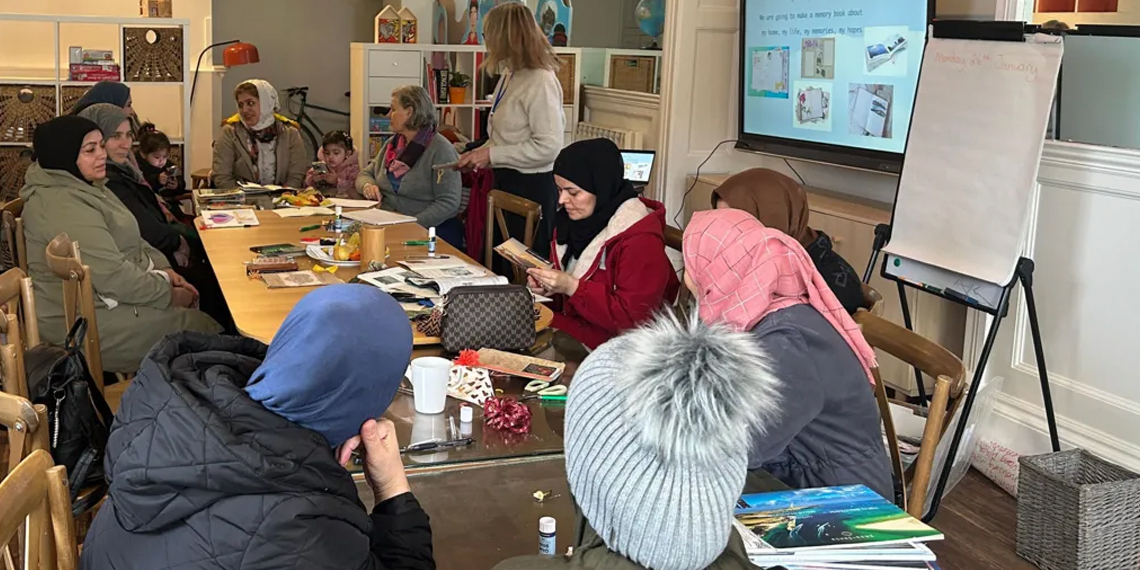
Plans are being drawn up to expand a UK scheme that allows local communities to support refugee families as they settle and integrate, under new government proposals.
The Community Sponsorship Scheme enables groups of residents to welcome refugees by sourcing affordable housing and helping with essentials such as learning English, accessing healthcare and finding work. Ministers are now considering changes that could widen participation and give communities a greater say in who they support.
The Pickwell Foundation, based in North Devon, said it is helping to co-design proposals for a system known as “named sponsorship”. This would allow community groups to choose refugee families they believe would be a good fit, without some of the restrictions that apply under the current scheme.
The Home Office said further details would be “shared in due course”.
Susannah Baker, director for the refugee and asylum programme at the Pickwell Foundation and chair of the Community Sponsorship Alliance, said the changes would “allow communities to choose who they wanted to welcome to the UK”.
She said key details still need to be finalised, including the timescale, funding arrangements, eligibility criteria and the countries from which refugees could be sponsored.
“I would love to see humanitarian protection extended across the world to the people and places which most need it,” Baker said.
“Sponsorship alone cannot stop the boats, but what we do know is people don’t make that journey unless they have to.
“Named sponsorship is a safe way to come to the UK, not just in terms of the journey but also the communities into which they arrive.”
Baker said she hoped expanding the scheme would reduce the number of people forced to take dangerous routes to reach safety.
One of those who has already benefited from community support is Khadeja Alamary, 38, who arrived in the UK in 2017 with her husband and three children after fleeing Syria. The family spent four years living in refugee camps in Jordan.
“The bombs were everywhere. We spent one week in the basement which wasn’t fit for humans. It was really scary,” she said.
A former teacher, Alamary was offered resettlement in North Devon through the UK’s refugee programme. Her children are now in school, her husband has retrained as an electrician, and she works for the Pickwell Foundation supporting other refugees as they build new lives.
“With each family coming over, I see myself arrive again,” she said.
“I just remember how I really needed the care and the love and compassion.
“I would like to help rebuild their life as the community rebuilt mine.”