
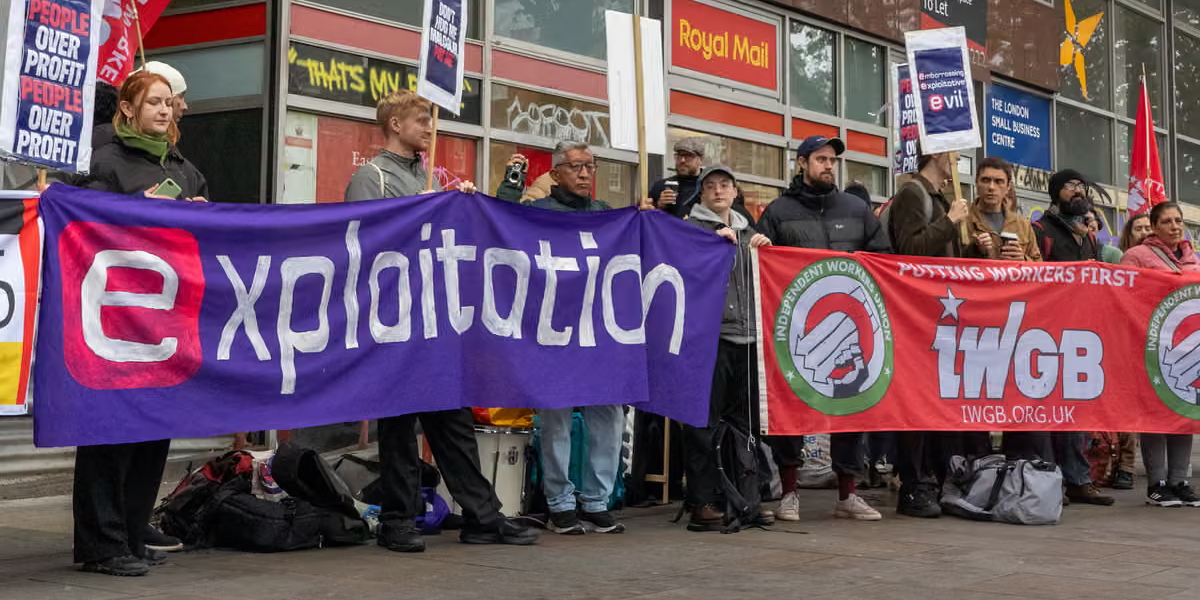
Dozens of drivers are taking legal action against a courier company owned by Royal Mail, arguing that they have been wrongly classified as self-employed and are entitled to full workers’ rights.
A total of 46 drivers working for eCourier are bringing claims to an employment tribunal, which is due to be heard later this year. The drivers carry out round-the-clock deliveries, including transporting critical blood and tissue samples between NHS hospitals.
The claim alleges that eCourier has incorrectly treated the drivers as self-employed contractors, despite working arrangements that the drivers say point to worker status. If successful, the case could entitle them to rights including the national minimum wage and paid holiday.
The drivers are being represented by law firm Leigh Day, which previously secured a landmark ruling for Uber drivers. In 2021, the Supreme Court ruled that Uber drivers should be classified as workers rather than self-employed, setting an important precedent for gig economy cases.
Drivers involved in the case argue that the level of control exercised over their work is inconsistent with genuine self-employment. They say this includes how jobs are allocated, expectations around availability, and performance monitoring.
Some claimants said they hope the case will lead to improved working conditions and fairer treatment. They reported long shifts, variable workloads, and take-home pay that can fall below the minimum wage after deductions. Drivers also say they are required to cover their own vehicle rental, fuel and tax costs.
Much of their work involves delivering patient samples to NHS hospitals, raising further concerns about the treatment of workers providing essential healthcare-related services.
Leigh Day said the drivers are likely to meet the legal definition of workers, rather than self-employed contractors, based on the nature of their working arrangements. If the tribunal agrees, drivers could be entitled to claim backdated holiday pay and national minimum wage shortfalls.
The case is supported by the Independent Workers Union of Great Britain, which said it highlights ongoing problems within the gig economy. The union argued that current arrangements allow companies to avoid providing basic employment protections.
In response, eCourier said it could not comment on ongoing legal proceedings. The company said it offers couriers a choice between being engaged as workers, with access to rights such as holiday and sick pay, or as self-employed contractors, adding that most couriers have chosen the contractor model.
The tribunal outcome could have wider implications for courier firms and gig economy companies across the UK, particularly those operating in logistics, healthcare transport and last-mile delivery services.