
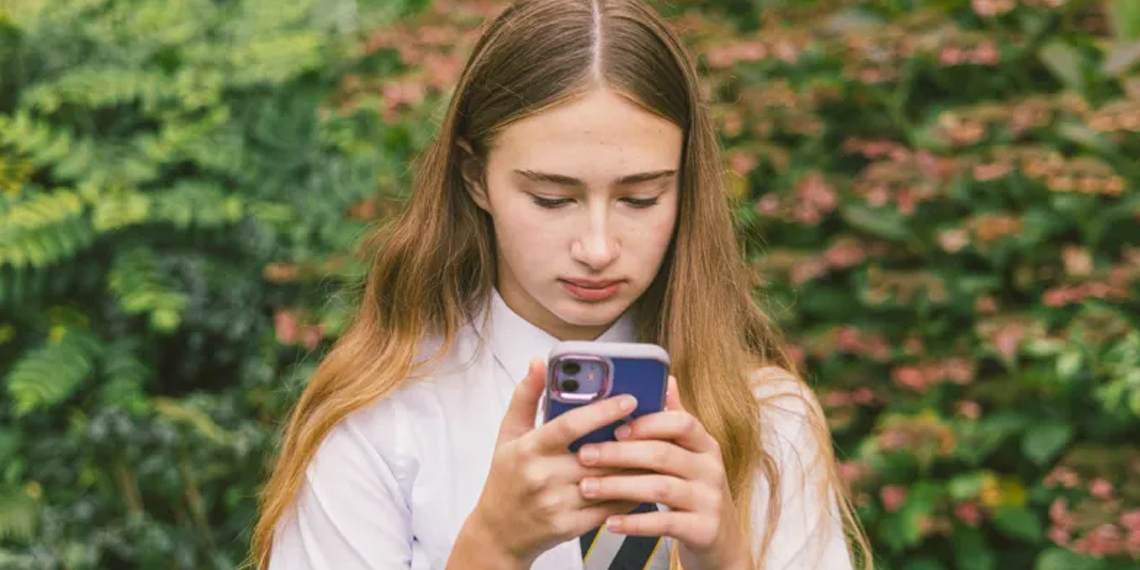
The UK government has launched a UK social media ban trial involving hundreds of teenagers, testing measures such as app bans, digital curfews and daily usage limits in an effort to better understand how restricting access to social platforms affects young people’s wellbeing.
The pilot programme will involve 300 teenagers across the UK and is being conducted alongside a national consultation exploring whether to introduce legislation similar to Australia’s proposed restrictions on under-16s using social media.
UK Government Tests Social Media Restrictions in Real Homes
The trial is being led by the UK government under the direction of Technology Secretary Liz Kendall, who said the initiative is focused on gathering real-world evidence before making policy decisions.
“These pilots will give us the evidence we need to take the next steps, informed by the experiences of families themselves,” she stated.
Participants in the trial will be divided into four groups. Three groups will test different forms of restrictions, while a fourth will act as a control group with no changes to their current social media use.
The first group will have access to popular social media apps completely blocked, effectively simulating a full ban. The second group will be limited to one hour of daily usage, while the third group will experience a digital curfew, restricting access between 9:00 PM and 7:00 AM.
Teenagers and their parents will be interviewed both before and after the trial to assess the impact on areas such as sleep, school performance and family life.
Consultation on Under-16 Social Media Ban Gains Momentum
The pilot is running alongside a broader consultation that asks whether the UK should follow countries like Australia in banning social media access for under-16s. The consultation is open until 26 May and has already received nearly 30,000 responses. The proposal has gained political traction internationally, with nations including France, Spain and Indonesia also considering similar restrictions.
Supporters argue that stricter controls are necessary to protect children from harmful content and excessive screen time, while critics warn that bans may be ineffective or counterproductive.
Debate Over Effectiveness and Risks of Social Media Restrictions
Child safety organisations such as NSPCC have welcomed the government’s efforts but stress the need for stronger regulatory action targeting technology companies.
Rani Govender, a policy lead at the NSPCC, said that while testing interventions is important, companies must also be required to build safety into their platforms and devices.
“This must include ensuring tech companies build safety into every device, platform and AI tool so children do not see harmful or illegal content,” she said, adding that failure to act decisively could leave children exposed to ongoing risks.
The Molly Rose Foundation also supported the consultation approach, emphasising the importance of evidence-based policymaking rather than rushing into blanket bans.
Chief executive Andy Burrows said the trials would provide valuable insights into how practical and effective different interventions might be for families.
However, some experts remain sceptical, arguing that teenagers may find ways to bypass restrictions or migrate to less regulated online spaces, potentially increasing exposure to harm.
How the UK Social Media Ban Trial Will Work
The structure of the trial is designed to compare varying levels of restriction and their real-world impact. By splitting participants into distinct groups, researchers aim to identify which approaches — if any — deliver measurable improvements in wellbeing.
Teenagers involved will be asked about their experiences, including whether restrictions affect their sleep patterns, anxiety levels, social interactions and academic performance. The government will also examine practical challenges, including how easily parental controls can be implemented and whether participants find workarounds to bypass restrictions.
The findings will be analysed by policymakers and academic researchers, alongside responses gathered through the public consultation.
Major Scientific Study to Examine Social Media Impact
The pilot will be complemented by a large-scale independent study funded by Wellcome Trust, described by ministers as the world’s first major scientific trial into the effects of reducing social media use among adolescents.
The study will be co-led by the Bradford Institute for Health Research and researchers from the University of Cambridge, including psychologist Amy Orben.
It will involve 4,000 students aged 12 to 15 from schools in Bradford and will assess how reduced social media access affects mental health, including sleep quality, anxiety levels, school attendance and bullying.
Professor Orben highlighted the importance of the research in addressing gaps in current evidence around the impact of social media on young people.
Growing Global Concern Over Social Media and Youth Wellbeing
The UK’s trial comes amid increasing global concern about the effects of social media on children and teenagers. Governments and regulators are under growing pressure to address issues such as online harm, addiction, cyberbullying and mental health challenges.
Australia has been at the forefront of legislative efforts, proposing strict age-based restrictions, while European countries are exploring similar frameworks.
At the same time, critics argue that outright bans may fail to address the root causes of online harm, instead calling for stronger regulation of tech companies, improved digital literacy and safer platform design.
The debate reflects a broader challenge: balancing the benefits of digital connectivity with the need to protect young users in an increasingly complex online environment.