
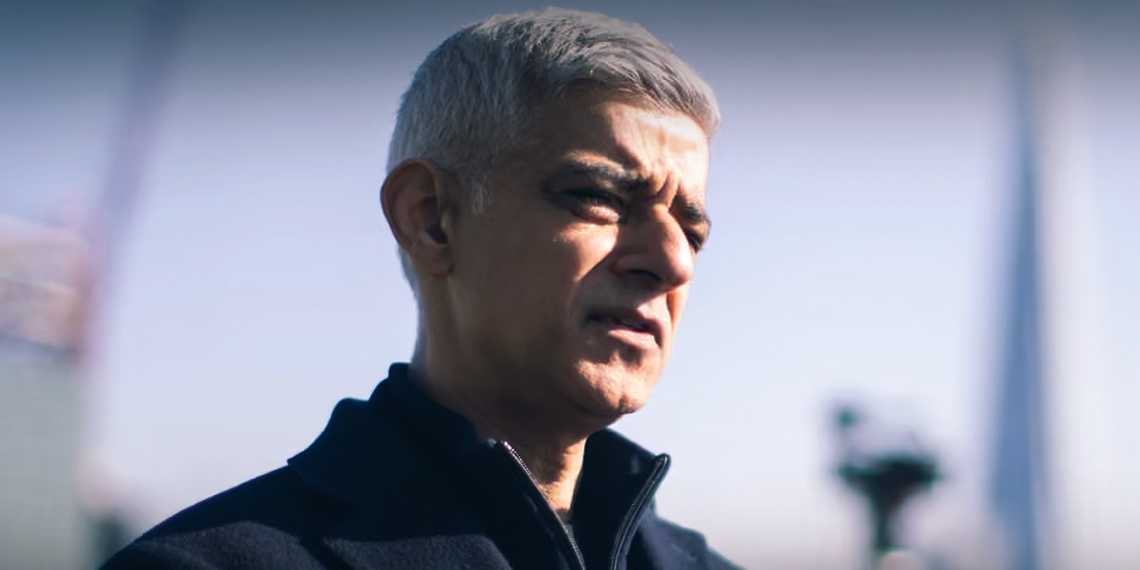
Sadiq Khan has urged ministers to take far stronger action against social media companies over the spread of London disinformation, warning that unchecked online falsehoods about crime, migration and integration risk fuelling extremism and domestic terrorism.
Speaking at a disinformation summit in Cambridge, the London mayor said the government may need to intervene more aggressively if technology platforms and regulators fail to tackle harmful misinformation circulating online. Khan also confirmed he has written directly to social media firms demanding greater accountability.
His remarks come after new research from the Greater London Authority showed a sharp rise in hostile online narratives falsely portraying London as a city overwhelmed by crime, immigration and social breakdown.
Study Shows Sharp Rise in False Narratives About London
According to analysis compiled by a Greater London Authority unit, online narratives depicting London as unusually dangerous have increased by between 150% and 200% over the past two years.
Content focusing on the alleged negative impact of migration on the capital has risen even more sharply, climbing by 350% over the same period.
Khan said the scale of the increase reflected the growth of what he described as an “outrage economy,” in which online platforms amplify divisive and inflammatory content for engagement.
Khan Calls for Stronger Government Powers
The mayor said existing regulation was insufficient and argued that the government should create a new central body dedicated to combating disinformation.
He said stronger enforcement powers were needed to ensure social media companies face meaningful consequences if they fail to act.
Khan stated that regulators such as Ofcom must be given greater authority to penalise firms financially if they do not tackle harmful content effectively.
He said relying on voluntary action by technology companies was no longer enough given the speed and scale of online misinformation.
Warning Over Extremism and Domestic Terrorism
Khan warned that conspiracy theories and false narratives spread online could contribute directly to real-world violence and radicalisation.
He pointed to the case of Kevin Rees, a 63-year-old man jailed after blowing up a London ultra-low emission zone enforcement camera with a homemade bomb.
Police said the blast could have killed someone.
Rees had reportedly become deeply involved in online conspiracy communities after opposing the expansion of London’s ULEZ scheme.
Khan said the case demonstrated the dangers of allowing online falsehoods to go unchallenged.
Foreign Influence and AI-Driven Misinformation Identified
The Greater London Authority’s research found that while some misleading content originates domestically, other misinformation campaigns appear linked to foreign actors.
According to the report, some posts are connected to Russian and Chinese state interests, while AI-generated disinformation is also being produced in countries including Vietnam.
Officials said some of this content masquerades as legitimate local news in an effort to gain credibility and spread false narratives more effectively.
Khan Rejects Claims of Threat to Free Speech
Khan insisted his calls for tougher regulation are not an attempt to suppress legitimate free speech or criticism.
Instead, he argued the goal is to protect individuals and institutions from coordinated abuse, harassment and dangerous misinformation.
He said victims of online abuse include charity workers who have been doxed, religious communities facing intimidation, and staff in schools and hospitals subjected to repeated harassment.
Wider Debate Over Online Regulation Intensifies
Khan’s intervention adds to growing pressure on the UK government to tighten oversight of major technology platforms.
The debate comes amid wider concerns about the role of social media in spreading extremism, conspiracy theories and politically motivated misinformation across the UK and Europe.
The Online Safety Act has already introduced new obligations for platforms, but critics argue enforcement remains weak and too slow to respond to rapidly evolving threats.
Khan said London may be the first major city to experience the full impact of these online disinformation trends, but warned that other cities globally are likely to face similar campaigns.
He added that the capital could become “the canary in the coal mine” unless stronger action is taken soon.