
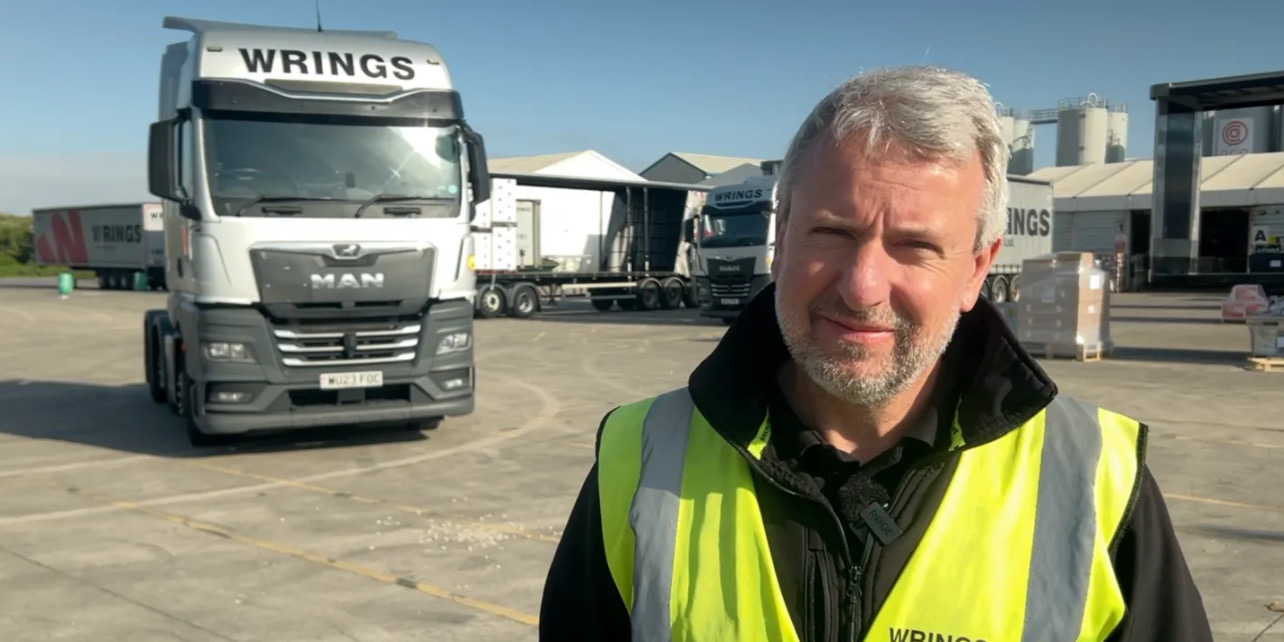
The economic shock from the Middle East conflict is deepening across Britain, with businesses and households feeling the strain of the UK fuel price impact caused by the Iran war. A family-run haulage firm has revealed that soaring diesel prices have added £100,000 to its fuel bill, highlighting how global events are rapidly feeding into domestic costs.
Stuart Wring, who runs Wrings Transport in Avonmouth, Bristol, said the increase in fuel costs has been “crazy,” forcing his company to pass on higher expenses to customers. The ripple effect is now being felt across supply chains, contributing to rising inflation and higher prices on shop shelves.
Haulage sector hit by soaring diesel prices
Wrings Transport operates a fleet of 67 trucks, each requiring up to 450 litres of fuel. As diesel prices surged following the outbreak of the Iran conflict, the company’s monthly fuel costs quickly spiralled beyond expectations.
Wring said his business exceeded its fuel budget by £45,000 in March, with April costs expected to surpass the budget by at least £60,000. Like many in the haulage industry, the company uses a fuel surcharge system that allows it to adjust prices in line with fuel cost changes.
This mechanism ensures transparency with customers but also means that increased fuel costs are passed directly through the supply chain. As a result, supermarkets, retailers, and manufacturers ultimately face higher transport costs, which are then reflected in consumer prices.
Industry experts warn that this cycle is a key driver behind rising inflation, with the Office for National Statistics confirming that fuel price increases were the largest contributor to the UK’s inflation rate reaching 3.3% in March.
Rising costs push up prices across the economy
The impact of higher fuel prices extends far beyond the transport sector. According to the RAC, petrol prices have risen by 24.7p per litre and diesel by 47.8p per litre since late February. For drivers, this means filling a typical family car now costs significantly more, with diesel users paying around £27 extra per tank.
These increases are feeding into broader inflationary pressures. The Food and Drink Federation has warned that food inflation could reach at least 9% by the end of the year, driven partly by rising transport and production costs.
For businesses like haulage firms, passing on costs is essential for survival. However, this practice contributes to a wider increase in the cost of goods, affecting households already dealing with financial pressures.
Workers and carers bear the burden
While some industries can transfer rising costs to customers, many workers cannot. Carers, for example, are facing increased fuel expenses without any corresponding rise in pay.
Margaret Smith, a carer from Somerset, said the additional cost of petrol has effectively reduced her income. She travels between clients using her own vehicle and is paid a fixed mileage rate that has not been updated to reflect higher fuel prices.
She explained that covering around 50 miles a day now costs significantly more, leaving carers to absorb the financial impact. With social care already under strain, workers in the sector are increasingly struggling to cope with rising living costs.
Heating oil prices double for households
The surge in energy costs is also affecting households that rely on heating oil. Around 1.5 million homes in the UK use oil-based heating systems, particularly in rural areas.
Since the start of the Iran war, the price of heating oil has doubled from approximately 60p per litre to more than £1.20. For families, this has led to dramatic increases in heating costs, forcing some to reduce usage or switch off their boilers entirely.
Emma Gwynn, who lives in Somerset, said the cost of refilling her oil tank has risen from around £500 to at least £1,200. Unable to afford the increase, her family has turned off their heating system and is relying on alternative methods for hot water.
Government support schemes exist for some households, but many working families and pensioners do not qualify, leaving them exposed to rising costs.
Global conflict and UK economic pressure
The current surge in fuel and energy costs is directly linked to disruptions in global oil supply caused by the Iran war. The Strait of Hormuz, a critical shipping route for oil, has been affected by the conflict, pushing global oil prices higher.
This has had a cascading effect on economies worldwide, with the UK particularly vulnerable due to its reliance on imported energy. Rising fuel costs have contributed to higher inflation, increased business expenses, and greater financial strain on households.
As the conflict continues, uncertainty remains over how long energy prices will stay elevated. Economists warn that prolonged disruption could further increase inflation and slow economic growth.
For many families and businesses, the consequences are already clear: higher bills, reduced income, and difficult financial choices. The situation underscores how global geopolitical events can quickly translate into everyday challenges for people across the UK.