
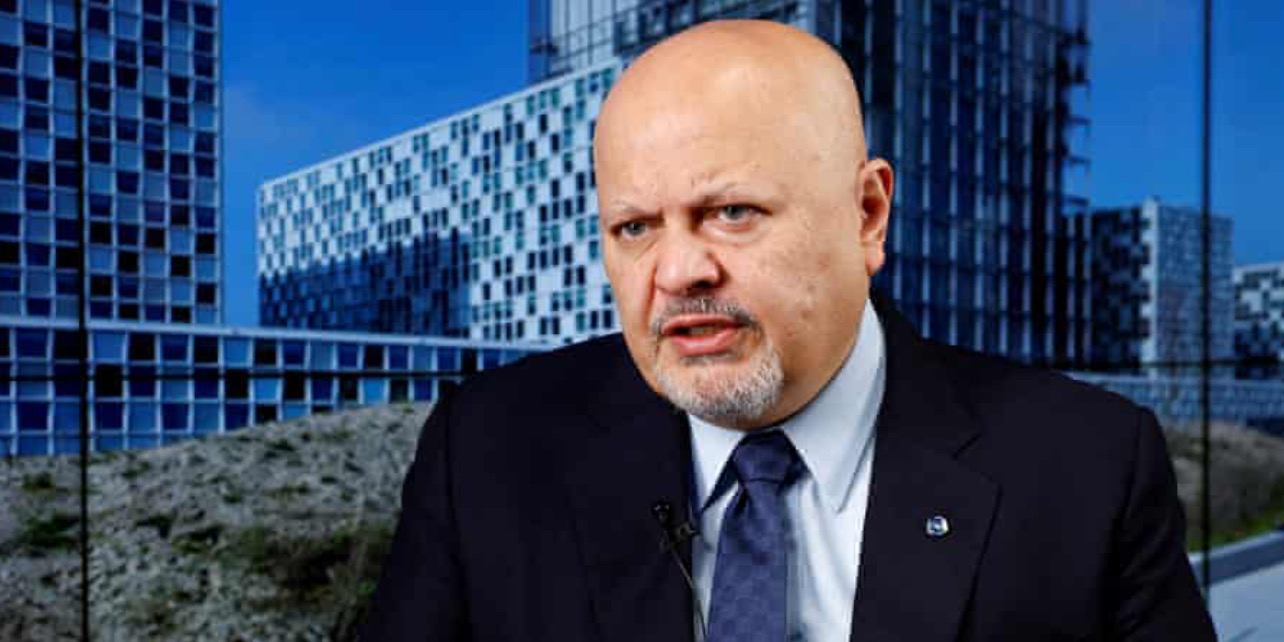
The International Criminal Court (ICC) has formally removed Chief Prosecutor Karim Khan from office after the court’s governing bodyconcluded that he had committed seriousmisconduct in relation to allegations of sexual abuse. The decision marks an unprecedented moment in the institution’s history and brings to a close a prolonged disciplinary process that has cast a shadow over one of the world’s foremost international judicial bodies.
The decision was approved during a special meeting of the ICC’s Assembly of States Parties held at the United Nations headquarters in New York. According to sources familiar with the outcome, 82 of the court’s 125 member states voted in favour of dismissing the British prosecutor, while 13 countries opposed the motion and 11 abstainedin the secret ballot.
Lengthy Disciplinary ProcessCulminates in Historic Decision
The vote follows an extensive internalinvestigation into allegations made by a former ICC employee, who accused Khan of engaging in coercive and non-consensual sexual conduct over an extended period. The allegations first emerged in 2024 and prompted a lengthy disciplinary review that involved multiple investigative bodies.
In June, the executive committee of the ICC’s governing body concluded that Khan had committed serious misconduct connected to the allegations. Following that finding, he was suspended from his position pending a finaldecision by member states regarding hispermanent removal.
Before casting their votes, diplomats reviewedthe executive committee’s findings alongside afact-finding report prepared by a UnitedNations oversight body and an independentlegal assessment conducted by a panel of judges.
Karim Khan Continuesto Reject Allegations
Throughout the investigation, Karim Khan hasconsistently denied all accusations levelled against him. His legal representatives have argued that the disciplinary proceedings failed to meet fundamental standards of fairness and due process.
Following the vote, Khan’s lawyers announcedtheir intention to challenge the decisionthrough every available legal avenue. In astatement, his counsel, Tayab Ali, maintainedthat Khan had been denied a meaningful opportunity to present his defence and described the dismissal as unsupported by lawful or adequately reasoned findings.
His legal team has also repeatedly rejected separate allegations of sexual misconductmade by another woman, who previously accused Khan of inappropriate treatment while serving as an intern earlier in his legal career. His representatives have categorically deniedthat he ever harassed or mistreated any individual.
ICC Rejects Claims of Political Conspiracy
Since the allegations first surfaced, Khan’ssupporters have suggested they may haveformed part of an effort to undermine his leadership following his controversial decisionin 2024 to seek arrest warrants against Israeli Prime Minister Benjamin Netanyahu and his then defence minister.
However, the ICC’s disciplinary report found no evidence supporting assertions that thecomplainant had been manipulated by outsideactors or intelligence agencies. The report concluded that there was no factual basis for claims alleging political interference or coordinated attempts to discredit theprosecutor.
The complainant herself publicly rejected suggestions that her allegations were politically motivated during an interview with CNN’s Christiane Amanpour. She stated that her complaint arose solely from her personal experiences and not from any external influence or political agenda.
Danya Chaikel, the International Federation for Human Rights’ representative to the ICC, described the outcome as recognition of the complainant’s exceptional courage in comingforward despite the significant personal andprofessional risks involved.
Landmark Cases Remain Unaffected
Karim Khan was elected ICC Prosecutor in2021 for a nine-year mandate overseeing the court’s prosecution division, which isresponsible for investigating and prosecuting individuals accused of genocide, crimes against humanity and war crimes. During his tenure, Khan significantly elevatedthe ICC’s international profile through severalhigh-profile investigations.
Among his most notable decisions was seeking arrest warrants for Russian President Vladimir Putin and IsraeliPrime Minister Benjamin Netanyahu. Both cases placed the court at the centre of global geopolitical tensions and intensified scrutinyfrom major world powers.
Although Khan has now been removed fromoffice, the judicial warrants issued during his tenure remain fully valid because they were authorised independently by ICC judges rather than by the prosecutor acting alone.
Court Faces LeadershipTransition Amid Global Pressure
The dismissal leaves the ICC confrontingsignificant institutional challenges. The prosecution division, comprising approximately400 staff members, has endured two years of uncertainty while the disciplinary processunfolded.
The court is simultaneously facing mountingexternal pressure, particularly from the UnitedStates. The Trump administration has imposedsanctions on several ICC judges andprosecutors while pledging to intensify measures aimed at restricting the court’s operational capacity. Senior officials at the ICC’s headquarters in The Hague reportedlybelieve that these geopolitical pressures are unlikely to ease simply because of a change in prosecutorial leadership.
Following Khan’s suspension last year, his two deputy prosecutors assumed responsibility for overseeing the prosecution office on an interim basis. As the ICC begins the process ofselecting a permanent successor, differing views have emerged within the institution. Some officials favour appointing one of thecurrent deputies to ensure continuity, whileothers argue that the organisation would benefit from an entirely new leader capable of restoring confidence after two years of controversy.
The next prosecutor will ultimately be elected by the ICC’s member states, inheriting responsibility for some of the world’s mostsensitive and politically significant internationalcriminal investigations while also working to rebuild institutional trust following one of the most consequential leadership crises in thecourt’s history.