
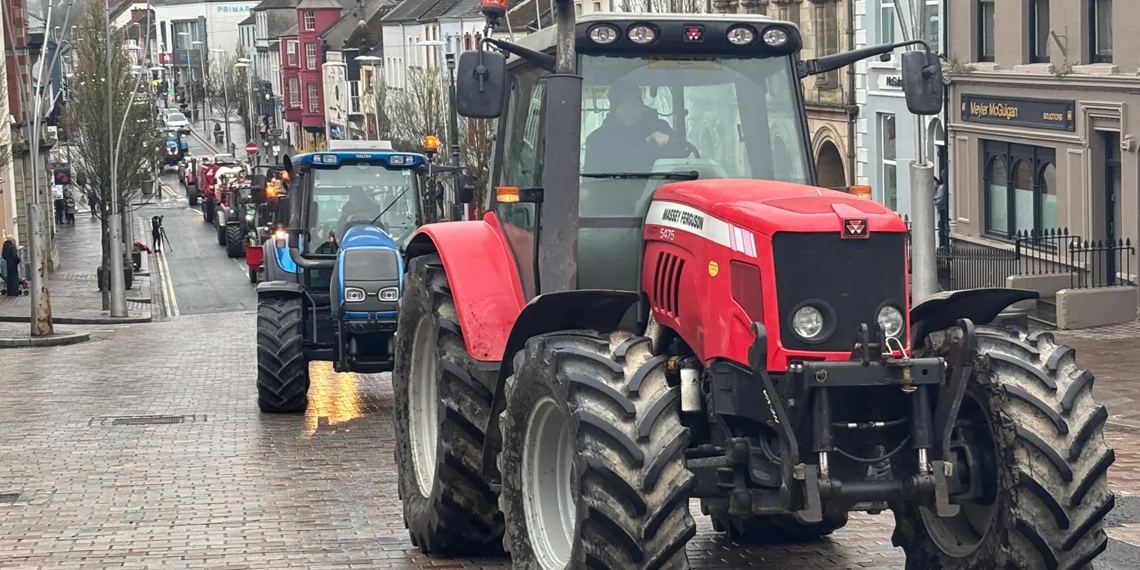
The ongoing Northern Ireland fuel protests have caused widespread disruption across major roads, as demonstrators use slow-moving vehicles to highlight the impact of rising energy costs. The protests come amid a global surge in fuel prices linked to escalating tensions in the Middle East, with drivers, farmers and businesses warning of mounting financial pressure.
Convoys of tractors, trucks and other vehicles have been reported across several key routes, including a major stretch between Ballygawley roundabout and the A4 Enniskillen roundabout. The growing scale of the protests has significantly slowed traffic, with some areas experiencing near standstill conditions.
Convoys Bring Traffic to a Standstill
Around 100 vehicles, including tractors and lorries, formed part of the main convoy in County Tyrone, where traffic disruption intensified shortly after mid-afternoon. Within an hour, congestion had escalated, leaving motorists stranded and travel times severely extended.
Smaller demonstrations have also taken place in areas such as Nutts Corner, Omagh and along the A1 near Hillsborough roundabout, while earlier protests on the Sydenham bypass in Belfast temporarily affected traffic in both directions.
The disruption has extended to air travel, with passengers heading to Belfast City Airport seen walking along roadsides with luggage after being caught in traffic delays. Both Belfast International Airport and Belfast City Airport advised travellers to allow additional time for their journeys.
Protesters Cite Rising Fuel and Living Costs
Participants in the Northern Ireland fuel protests say they are reacting to sharp increases in the cost of fuel, fertiliser and everyday essentials. Farmers, in particular, have warned they are facing financial strain on multiple fronts, with operating costs rising rapidly.
One farmer involved in the Ballygawley protest said the situation had become unsustainable, adding that many participants would prefer to be working but felt compelled to act. Protesters argue that rising costs are affecting not only the agricultural sector but also households and small businesses across the region.
Demonstrators have also expressed frustration over taxation and public spending priorities, calling for more targeted support to ease the burden on consumers.
Emergency Services and Officials Issue Warnings
Authorities have raised concerns about the impact of the protests on essential services. Health officials have urged demonstrators to avoid blocking roads, warning that delays could affect patient care and emergency response times.
Emergency services, including ambulance and fire crews, have called for clear access routes to ensure they can operate without obstruction. Transport authorities have also advised motorists to check for updates and allow extra travel time due to ongoing disruptions.
Police have prepared measures to manage traffic flow and maintain public safety, while public transport providers have warned of potential service delays.
Cross-Border Solidarity and Wider Disruptions
Organisers of the Northern Ireland fuel protests have said their actions are in solidarity with similar demonstrations in the Republic of Ireland, where fuel depots and major roads have been blocked in recent days.
The protests south of the border have already led to fuel shortages, with hundreds of petrol stations reportedly running dry. While some blockades have been lifted, slow-moving convoys continue to disrupt traffic in parts of Dublin and beyond.
The coordinated nature of the protests reflects growing concern across the island of Ireland about the rising cost of energy and its wider economic impact.
Global Energy Crisis Driving Price Surge
The protests are rooted in a broader global energy crisis triggered by geopolitical tensions. A significant portion of the world’s oil supply has been disrupted due to the closure of a key shipping route in the Middle East, leading to sharp increases in fuel prices worldwide.
In Northern Ireland, petrol prices have risen dramatically in recent weeks, while diesel costs have surged even more sharply. The increase has placed additional pressure on households already grappling with higher food and energy bills.
Businesses have also reported substantial increases in operating costs, with some companies facing weekly fuel bill rises running into tens of thousands of pounds.
Political Response and Calls for Action
Political leaders have acknowledged the growing pressure on households and businesses, with calls for intervention to address rising costs. Regional officials have highlighted the limited powers available at the local level, pointing to the need for action from the UK government.
Proposals have included potential tax reductions on fuel and additional financial support measures to help mitigate the impact of rising energy prices.
At the same time, some political figures have urged protesters to avoid causing widespread disruption, warning that prolonged traffic blockages could have unintended consequences for the very communities they aim to support.
Energy Prices and Public Protests
The Northern Ireland fuel protests are part of a wider pattern of public demonstrations linked to rising living costs across Europe. Previous spikes in energy prices, including during the 2022 energy crisis, triggered similar protests as households struggled to cope with increased expenses.
The current situation reflects renewed volatility in global energy markets, with supply disruptions and geopolitical tensions continuing to influence fuel prices. Analysts warn that unless stability returns to key supply routes, prices could remain elevated in the months ahead.
As protests continue, the situation highlights the growing link between global energy dynamics and local economic pressures, with communities increasingly mobilising to demand relief from rising costs.